Follow Us on Google

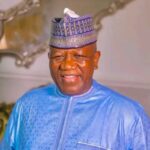
The rising clamour for secession in different parts of the country has been decried by former Head of State, Gen. Abdulsalam Abubakar. Abubakar believes that the secession bid by some groups will not succeed in view of the network of relationships binding the various ethnic groups in the country. Instead of the strident moves for secession, the retired army general enjoined Nigerians, especially the leaders, to manage the nation’s diversity and use dialogue to resolve our present challenges.
Abubakar, who made the remarks at a special event to mark the 80th birthday of former military Head of State, Gen. Ibrahim Badamasi Babangida, argued that the breaking up of the nation into different countries would even be difficult to achieve and advised that rather than separation, Nigerians should work in concert to build a more united and stronger Nigerian nation. Although the former leader acknowledged that Nigeria is passing through a difficult period in terms of insecurity, he expressed optimism that the challenge can be surmounted if Nigerians work together to resolve the problems.
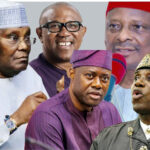
Abubakar’s position on the future of the country is not quite different from those of other prominent Nigerians, who have called for dialogue among the ethnic nationalities that make up Nigeria so that they can eloquently state the terms of our future co-existence as a peaceful and united entity. Emeritus Archbishop of Abuja Catholic Archdiocese, John Cardinal Onaiyekan, had at a time opined that while he did not support the calls for secession by some Nigerians, he believed that the unity of the country could still be negotiated. Similarly, the Nobel Laureate, Prof. Wole Soyinka, Gen. Babangida, erstwhile Vice President, Atiku Abubakar and Peoples Democratic Party (PDP) vice presidential candidate in 2019 general election, Mr. Peter Obi, have also argued along that line.
They have separately expressed concerns over the upsurge in separatist agitations by different groups across the country. In many parts of the country, the demand for self-determination has been strident. Ethnic nationalism has been on the rise with accompanying tensions owing to our unitary federalism. Hunger, widespread poverty, and insecurity remain serious threats to the corporate existence of the country. There are even signs that the situation is likely to degenerate in the months ahead.
No doubt, the brazen disregard for equity and fairness in appointments and allocation of projects by the Federal Government may be fueling the growing ethnic and separatist agitations. Arising from the ugly situation, Nigerians are currently polarised along ethnic and religious lines to the extent that many Nigerians see the government as belonging to a certain ethnic group. Consequently, some Nigerians have lost faith in the country due to alienation. Poor governance has also not helped matters. Without addressing the nation’s mounting challenges, there will be no end to the current ethnic agitations.
A united and workable Nigeria as Abubakar has mooted, would have been the ideal for all Nigerians. For Nigeria to be united, equity and justice must be factored into our governance system. We call on the government to ensure that all Nigerians are given equal and fair treatment. The current selective administration of justice by the government must be discarded. The government needs to be closer to the people. If Nigerians are carried along by the central government, the tension in the land will be drastically reduced. Let our leaders do more to cement the bonds that unite the country. Above all, no part of the country should be favoured at the expense of the others. At the same time, all the federating units must be treated equally and fairly. No Nigerian should be subjected to a second class citizen in his country.
The Federal Government should pay heed to the demands by Nigerians for restructuring the country, especially on issues such as policing, fiscal federalism, devolution of power and others. While the government is dillydallying with the issue of restructuring, it is worth emphasising that restructuring is never a subtle move to disintegrate the country, as being feared in some quarters, but an exercise to give autonomy to the federating units and allow them develop at their own pace. Those against the exercise are getting it wrong. Restructuring is an agenda that Nigeria cannot continue to run away from without dire consequences.