Follow Us on Google
• Bad roads, decrepit infrastructure, staff shortage hamper access to good healthcare
From Aniekan Aniekan (Calabar), Joe Obukata Ogbodu (Warri), Noah Ebije (Kaduna) and Emmanuel Adeyemi, Lokoja
Nigeria’s primary healthcare centres (PHCs), which, are supposed to be the bedrock of the country’s health system, are generally not in a good state of health.
In the second part of this report, which started in yesterday’s edition of Sunday Sun, we look at the situation of primary health centres in some other states.
Cross River: Sometimes one worker caters to two PHCs
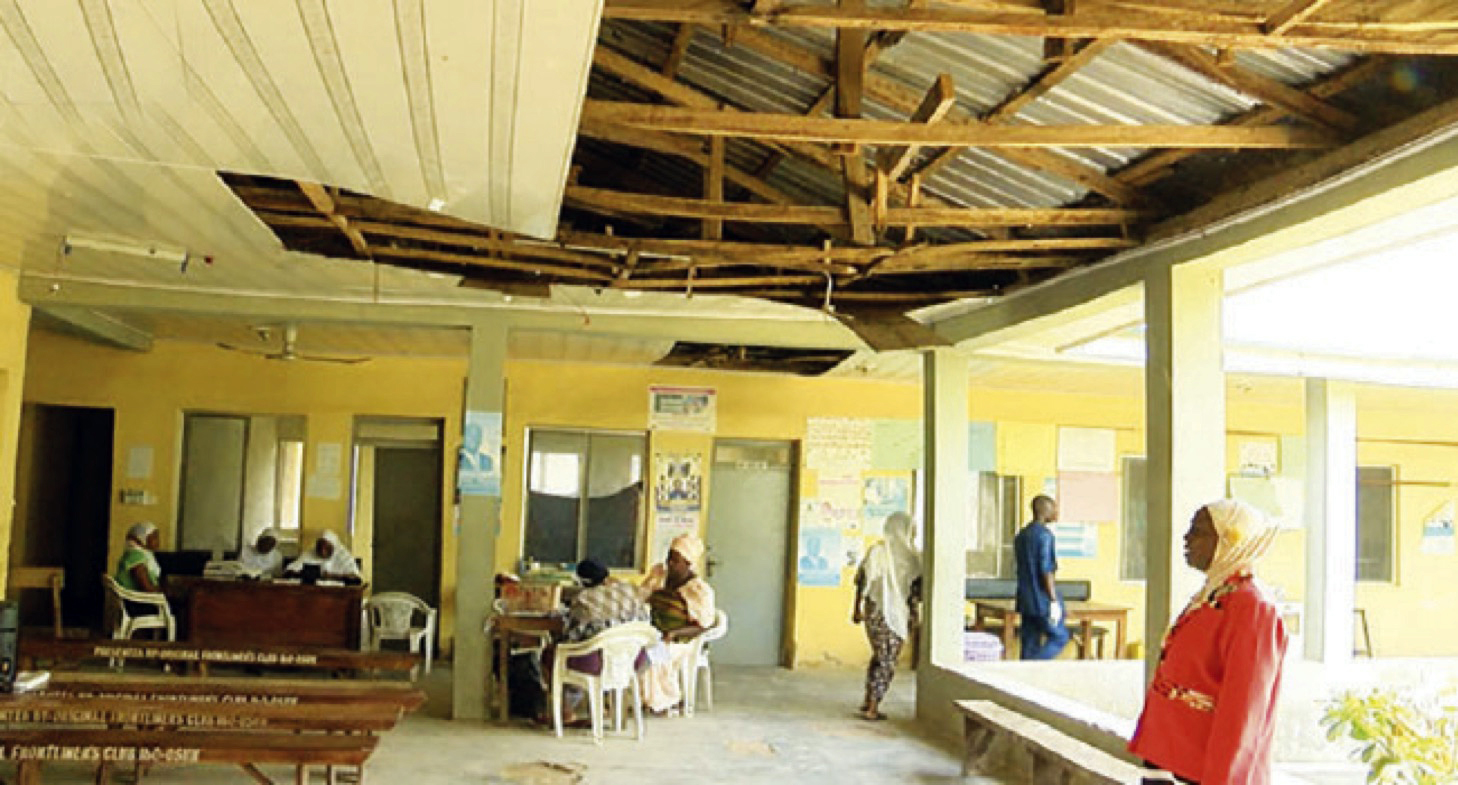
In Cross River State, one healthcare worker is running two primary health centres at the same time in some areas. In others, the gates are locked for good.
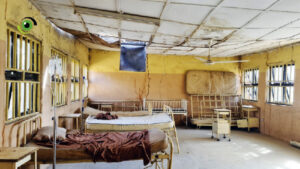
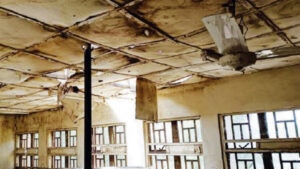
The state’s 1,128 PHCs are collapsing under severe staff shortages, even as the government reviews a controversial recruitment of over 7,000 workers. The AIDS, TB and Malaria Network flagged this during advocacy visits to key stakeholders in the state. The network, comprising the TB Network, NEPWHAN and ACOMIN, is implementing the Global Fund GC7 Project with the Institute of Human Virology, Nigeria.
The project works with civil society organisations and other stakeholders to strengthen the community system, to take ownership of PHCs in their respective communities.
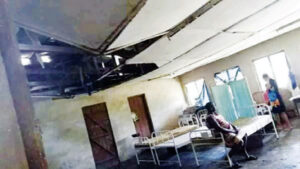
Effiong Udobong, ACOMIN State Coordinator, presented a grim picture of the staffing crisis facing PHCs across the state.
“Cross River currently has only 2,327 community health workers to manage the 1,128 PHC facilities in the state leaving 1 to 2 health workers at some PHC facilities against the WHO benchmark of at least seven community health workers for PHCs. The WHO benchmark is nine staff per PHC to deliver the 13 components of primary health care.
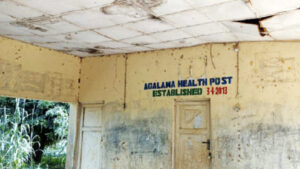
“Rural areas are the worst hit. Obanliku Local Government has 62 PHCs but just 41 health workers. Atan Eki PHC in Odukpani LGA, one staff member does the work of nine,” he said.
In Ukwa Ibom PHC in Odukpani LGA, he said it has only one healthcare worker to cover a population of at least 10,000 people in its six clans of the ward without access to higher health institutions in case of emergency.
Udobong also decried the non-payment of salaries to recently engaged health workers saying it fosters clinic closures and resignations.
“Those employed were not paid. Some were posted from Calabar to Bakassi and had to report daily without salaries,” he said.
The Integrated CLM Project State Programme Officer in Cross River State, Victor Ogwuche said the situation has left communities stranded and has overburdened the few staff left.
“Old and long-term experienced workers are retiring every month, leaving none to mentor the new staff who cannot mentor younger ones. Some are now doing jobs they were never trained for, operating outside their standing orders,” Ogwuche said.
Responding during an advocacy visit by the team to his office, State Auditor General, Abam Eko, said the government lifted the employment embargo and approved 2,000 hires.
But he added that over 7,000 names appeared on the payroll, prompting a panel to review the entire recruitment. “We must ensure due process,” Eko said.
Other News
A Director in the Office of the Head of Service, Edem Eyo, said the government will act on the network’s concerns once the panel submits its report. Also, the Director General of the Cross River State Primary Healthcare Development Agency, Dr. Vivien Otu, said steps were being taken to address the crisis. The network is demanding urgent action. NEPWHAN State Coordinator, Sunday Eminue, called for immediate payment of employed but unpaid workers “to save the system from collapse.”
Delta: Dilapidated PHCs deprives communities of health services
When you approach the Ugborikoko Health Centre in Uvwie Local Government Area, Delta state, what first strikes you is the deplorable state of the road leading to it. The muddy, mushy pathway, and dirty environment often flooded during rainy seasons, paints a bleak picture of the community’s infrastructural neglect.
Despite being an upland town, Ugborikoko’s Primary Health Centre (PHC) is situated in an environment that resembles a riverine settlement, an irony that shows the neglect faced by the community. The road adjacent to the health facility is full of craters and potholes. The signboard is worn out. The health facility, amid the chaos of busy patients and health workers, stands as the only government health institution serving the densely populated town.
The importance of the PHC to the people in the area cannot be overstated by the crowd at the facility, yet the conditions under which it operates leave much to be desired.
The journey to the facility involves crossing a pedestrian bridge, an essential structure that was constructed years ago after the community raised concerns about the flooding and mushy terrain that previously hindered access. Even with the bridge, the road remains a terrible sight, often impassable during heavy rains.
Despite its challenging location and infrastructure, Ugborikoko PHC remains one of the busiest in the town with over 50 patients seeking various health services daily. From pregnant women attending antenatal clinics to other categories of people seeking malaria, syphilis, or HIV screening, the facility caters to a wide range of community health needs.
Although modest, the centre is equipped with basic amenities, including a steady supply of essential medicines through the state government’s Drug Revolving Fund (DRF) scheme.
However, space constraints are evident. The building housing health workers is still somewhat inhabitable, but the crowded waiting area is a cause for concern. Patients often stand outside or gather in the corridors, with pregnant women and the elderly sometimes left to wait in the open, exposed to the elements. The facility’s small waiting room, with only a few decks, leaves many patients standing for hours, especially during peak hours.
Access to doctors remains sporadic. The health workers rely on emergency calls rather than a fixed schedule for doctor visits. The facility’s matron, a no-nonsense woman with a commanding voice, exemplifies the attitude of staff operating under trying conditions.
When contacted on phone for comments, she was blunt: “Oga, you will have to bring a letter from the Honourable Commissioner to assess the facility. Nobody will talk to you here, and you can leave.” Her hostility was met with understanding.
Sunday Sun learnt from a junior worker, who pleaded for anonymity that the government had done its part to equip the health centre, but noted that persistent issues remain. The worker said that power supply is a major challenge. The facility currently relies on solar power, provided by the state government, and a generator used to pump water.
Electricity supply from the Benin Electricity Distribution Company (BEDC), which is often epileptic, is shared with a neighboring household, an arrangement that complicates the facility’s operations. “We pay them to give us light,” she disclosed, lamenting that they do not have their own dedicated power connection.
Water supply is also problematic, especially during the rainy season when the entire area floods, making access even more difficult. The road to the health centre becomes almost impassable, hampering both staff and patients’ movements. The facility also faces shortages of basic office furniture like tables and chairs, essential for efficient service delivery.
On the issue of staffing, it was gathered that doctors visit only on emergency calls or scheduled days, such as Sundays. The irregularity of doctor visits hampers the delivery of consistent healthcare services, forcing the community to rely heavily on the limited staff present. When asked about the availability of drugs and testing kits, the worker said the facility is well supplied by the government, enabling it to conduct tests for malaria, syphilis, HIV, and pregnancy. Nevertheless, the infrastructural deficits, poor roads, unreliable power, and inadequate space, continue to threaten the quality of healthcare provided.
Kogi: PHCs lack staff, basic amenities
Almost all the 21 local government areas of Kogi state have the Primary Health Centres located in their areas but with most of them grossly under staffed and lacking basic amenities to meet the yearnings of the people.
Residents who spoke to our correspondent said the lack of basic amenities in those health centres coupled with non sufficient staff might have contributed in no small measure to health related complications especially in rural communities.
It was also learnt that doctors rarely visit some of these health centres to attend to patients as complicated issues are often referred to general hospitals in the urban areas. Our correspondent also gathered that most of these public health centres have little or no drugs while patients are made to buy available drugs sometimes at exorbitant prices with barely non-existing medical laboratories in those centres . When our correspondent visited one of the PHCs located in Old Market, Lokoja, the state capital, it was observed that there were too many patients including pregnant women and children with few staff to attend to them. Some of them had to wait for hours before being attended to.
One of the staff who pleaded anonymity expressed worry over the pressure of the workload on the staff, stressing that the state government had refused to employ more capable hands to meet the health needs of the people. She also expressed disappointment over the breakdown of some equipment in the centre which she said were yet to be fixed. She also complained that there was poor power supply.
An indigene of Idah who identified himself as Josiah Odaudu narrated how his wife nearly died during childbirth in the PHC located opposite Idah Specialist Hospital due to negligence of staff on duty. He said he had to quickly move her to a private clinic within the town before his wife could put to birth safely. Odaudu decried the level of poor facilities in some health centres. He said most of the communities in the eastern senatorial district lack power supply. He also said doctors were rarely seen in the centre, noting that the health workers on ground could handle only light cases. But the correspondent also learnt that there are quite a number of health centres in the state that have adequate supply of drugs and modern equipment and are providing excellent services to the people. When contacted, Executive Director, Kogi State Primary Health care Development Agency , Dr Musa Omeiza Muazu requested a questionnaire from the correspondent. He later directed the correspondent to the agency’s PRO, who said only the Ministry of Health and the Ministry of Information could respond to the questions.
Kaduna: No cause for alarm; PHCs working well – Residents
Residents of the Television Community in Kaduna South Local Government Area have commended the Kaduna State Government for the transformation of the Primary Health Care (PHC) centre serving the area, saying the facility now offers improved services that have restored confidence in public healthcare.
The residents, who spoke separately with our correspondent, said the upgraded facility now enjoys uninterrupted electricity powered by solar energy, a reliable water supply through boreholes, better availability of essential drugs and improved patient care by health workers.
A resident, Mr. Daniel James, said the difference between the current state of the health centre and what it used to be is remarkable.
“Before now, whenever we came here, we were usually given prescriptions and asked to buy the drugs outside because they were unavailable. Today, most of the medicines we need are available here, and that has reduced the financial burden on many families,” he said. Another resident, Mrs. Grace Yakubu, praised the attitude of the medical personnel, describing them as professional and compassionate.
An insider at the facility, who preferred not to be named because he was not authorised to speak officially, disclosed that although the PHC has witnessed significant improvements, further renovation has already been captured in the 2026 state budget. It was gathered that during the administration of former Governor Nasir El-Rufai, Kaduna State invested heavily in the health sector by renovating and upgrading several primary healthcare facilities, including the Ungwan Maichibi Primary Health Centre in the Television area, to improve access to quality healthcare at the grassroots.
However, the current administration under Governor Uba Sani has continued with an extensive overhaul of the state’s primary healthcare system across the 23 local government areas of the State.
Among the government’s flagship initiatives are the upgrade of all 255 Primary Health Centres to Level-2 status to provide basic emergency obstetric and neonatal care, the recruitment and induction of about 1,800 health workers, and the establishment of a modern Primary Health Care Board headquarters.