Follow Us on Google

By Vivian Onyebukwa
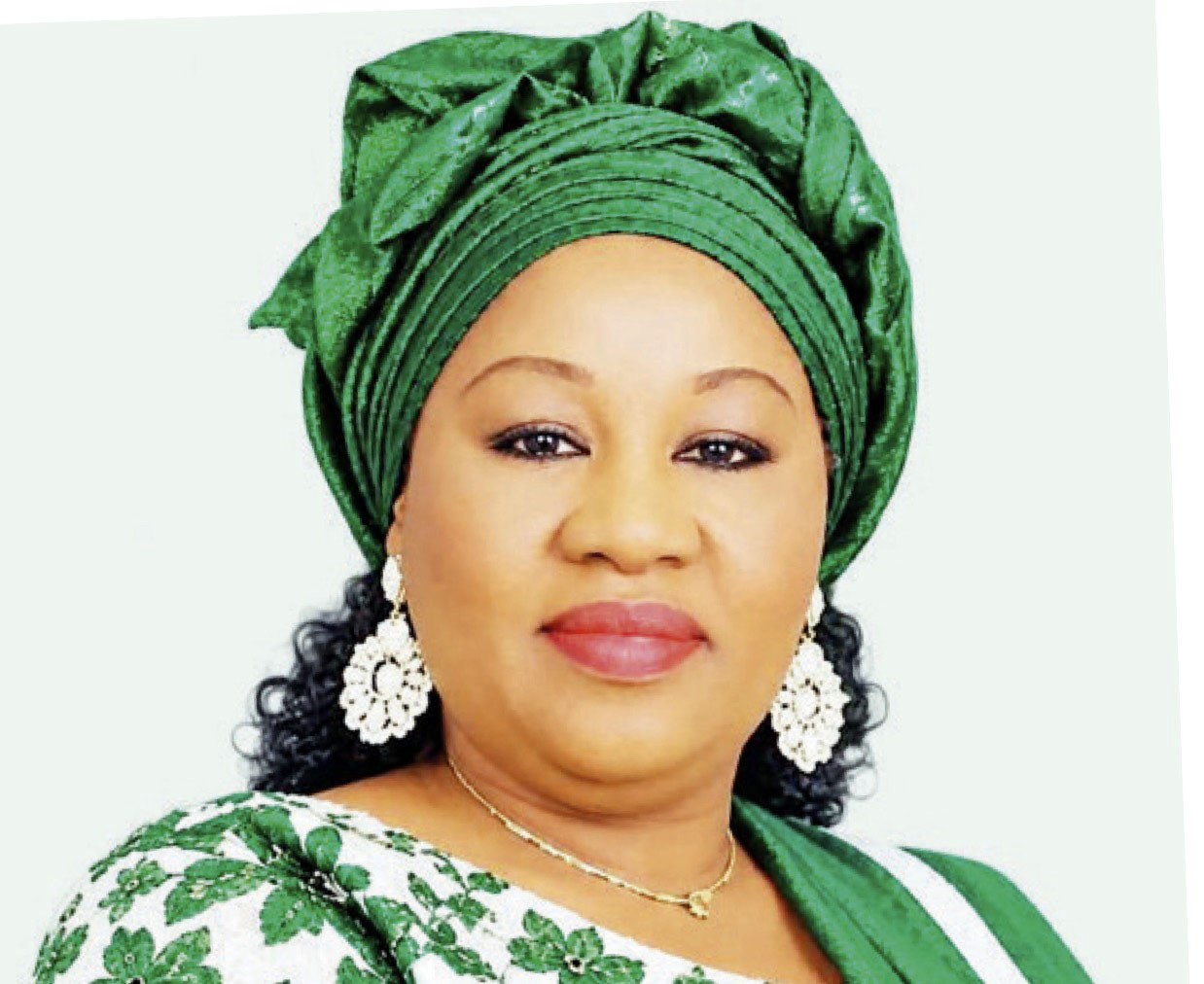
Bishop (Dr) Priscilla Otuya is a multidisciplinary leader, social and civic entrepreneur, institutional builder, media executive, and international development advocate. Her work spans corporate leadership, social enterprise, media and communications, women’s advocacy, creative enterprise, leadership development, faith-informed community transformation, and dredging and marine-sector development.
She is the President and Group Chief Executive of News Nigeria USA International LLC, a Wyoming-registered American company, and the Founder and Global President of KOGA Faith Foundation. Through her various organisations and initiatives, Bishop Otuya said she builds platforms for collaboration, enterprise development, leadership, advocacy, and sustainable social and economic advancement. In this interview, she speaks on a number of issues bordering on women in politics, economy, creative industry, and others.

Why do you use music as a tool for advocacy for women?
My thinking is simple: music is a tool for penetration. It can take a message to places that years of advocacy, meetings, conferences, and campaigns may never reach.
You can be advocating in your little corner for donkey’s years, and nobody knows you, nobody hears your voice. You may have something important to say, but you lack the platform, visibility, and resources to get your message out there. Before now, you would have had to spend so much money advertising what you do just to attract attention. And let us be honest, we live in a world where the system has often favoured men, and where women have had to struggle to be heard, recognised, and taken seriously. But look at the female artistes we know today. Everybody knows Sinach and other popular female music stars because, their music has travelled. Their voices have reached people far beyond their immediate circles. Now, there are so many women out there who can write beautiful songs, sing exceptionally well, and communicate powerful messages through music. Some are carrying messages that could inspire, educate, empower, and transform society. But nobody knows them. Nobody hears them. Their talents remain hidden, not because they lack ability, but because they lack the platform.
That is where “Her Frequency” comes in. Our idea is to use music to give these women visibility first. Let us push their music, amplify their voices, and create opportunities for people to discover their talents. As their music travels, their voices become known, and they can use their songs to communicate their messages and advocate the issues that matter to women. Look at Bob Marley, for example. His music was not just entertainment; it carried messages about freedom, justice, oppression, and human dignity. That is the power of music. It can entertain people while making them think, question, reflect, and act.
But there is another important dimension to this. We are not only talking about advocacy; we are also talking about economic empowerment and financial self-reliance for women with musical talent. These women should be able to develop their gifts, build audiences, access opportunities, earn income, and become financially independent through their creativity. Their talent should not remain a gift they can only demonstrate within their homes, churches, or small communities. It should become an asset that can create value for them and society. So, for me “Her Frequency” is about bringing together women’s voices, musical talents, messages, and economic aspirations on one platform. We want to help women become visible through their music, influential through their messages, and more self-reliant through their talents. The idea is not simply to teach women to advocate. It is to give them a platform through which their voices can travel, their messages can penetrate, and their talents can create economic opportunities, because sometimes, before the world will listen to what you have to say, you must first create a way for the world to hear your voice. And music gives us that opportunity.
As a women’s advocate, how can you access the level of women’s participation in politics?
My candid opinion is that women who venture into politics in Nigeria are, in many respects, exceptionally resilient women. It takes a woman who is dedicated, focused, determined, and very clear about what she wants to achieve to survive the Nigerian political terrain. Let us be honest: it is not a level playing field. For a woman to venture into this environment, she must already possess certain strength of character. She must be prepared to face challenges that go beyond the ordinary demands of leadership. Even when a woman is competent, experienced, committed, and equipped with integrity, she still has to struggle to maintain her position, preserve her values, and retain her sense of balance amid the turbulence, intrigues, and pressures that often characterise politics. The challenge is even greater when the system itself is built on a faulty foundation. I believe women have tremendous leadership potential. Many women are articulate, disciplined, organised, and meticulous in their approach to responsibilities. When a woman is committed to a task, she can bring remarkable dedication and attention to detail. Women have demonstrated these qualities in families, businesses, institutions, and communities. They are natural contributors to leadership and governance.
However, entering Nigerian politics and sustaining oneself in it are two different challenges. It takes another level of strength, strategic thinking, political intelligence, and emotional discipline for a woman to remain effective without losing her values or her sense of self. I have seen women work their way up through hard work, competence, and integrity, only to be edged out because they did not understand how to navigate the political terrain. This is one of the realities that concern me. Sometimes, it is not that these women lack the capacity to lead; rather, they have not mastered the political dynamics required to survive within the system. This is why I believe women’s political empowerment must go beyond encouraging women to contest elections.
We must prepare them for the realities of the political environment. They need leadership development, strategic political education, negotiation skills, strong support networks, access to resources, and the ability to understand power dynamics without compromising their principles. At the same time, we must not place the entire burden on women to adapt to a faulty system. The political environment itself must become more transparent, inclusive, and accountable. My position is that a woman, who enters Nigerian politics and manages to remain effective, focused, and principled has demonstrated considerable strength of character.
But our goal should not merely be to produce women who can survive a difficult system. It should be to build a political system in which competent women can thrive, contribute, and lead without having to fight disproportionately hard simply because they are women.
That, to me, is the real conversation we should be having about women’s participation in Nigerian politics.
What can be done to improve the creative industry in Nigeria?
I believe the creative industry in Nigeria needs to be properly defined, well structured, and organised. We have the talent, and our creatives are doing well in many areas, but there is always room for improvement. We need to establish structures that support not just the development of our talents, but also our capacity, welfare, professional growth, and long-term sustainability.
One of the things that concerns me is seeing creatives return from projects, productions, and engagements sick, broke, or financially distressed. We need to ask ourselves that, what structures are in place to protect their welfare, prepare them financially, and ensure that their creativity translates into sustainable livelihoods? We need regular developmental programmes, professional training, welfare support, financial management education, and proper systems of accountability.
Government and development institutions often need credible, structured organisations to work with. Therefore, we must organise ourselves into professional associations, business clusters, cooperatives, and credible non-profit organisations with clear mandates, responsible leadership, and measurable results. I am not one who believes in talking endlessly, complaining, or finding faults without offering solutions. I believe in taking action. Rather than spend all our time criticising what is not working, we should identify the gaps and build practical solutions.
We must also move away from the mentality of asking, “How much can I get today?” without considering what we can build for tomorrow. When resources are made available, they should be invested responsibly in programmes, infrastructure, capacity development, and systems that will benefit the creative community beyond the immediate moment. We must be as creative in organising our industry as we are in producing our art. And, most importantly, I believe we need to bring the creator back into creativity. Creativity should not be reduced to money, fame, entertainment, or commercial success alone. We must rediscover the purpose, wisdom, originality, and responsibility behind the gifts we have been given.
When we honour the creator, develop our capacity, organise our structures, protect our people, and manage our resources responsibly, we can build a creative industry that is not only successful but sustainable and transformative. My position is simple; let us move from talent to structure, from structure to enterprise, from enterprise to sustainability, and from creativity to purposeful impact.
What motivates you to do many things at the same time?
What motivates me is my deep conviction that God does not create people without purpose, and that no human being is without value or potential. I believe that many of the problems we face as individuals, communities, and nations are not necessarily due to a lack of potential, but a lack of platforms, opportunities, connections, and the right environment for that potential to flourish.
Over the years, I have come to understand that we cannot continue to complain about the problems around us while neglecting the responsibility to become part of the solutions. I believe we must build institutions, create opportunities, connect people, develop talents, amplify neglected voices, and establish platforms through which people can contribute meaningfully to society. My faith is a major part of my motivation.
I see my work as stewardship; a responsibility to use the gifts, ideas, experiences, and opportunities entrusted to me to serve others and contribute to the common good. This is why my interests span different sectors. I do not see them as disconnected activities. Whether I am working in media, social entrepreneurship, women’s advocacy through “Her Frequency”, creative development through the “International Network of Creative Democrats”, or exploring opportunities in the dredging and marine sector, I see a common thread: connecting potential to opportunity and turning ideas into practical action.
I am particularly motivated by the belief that people should not have to remain trapped by the limitations of their circumstances. Women deserve platforms through which their voices can be heard. Young people deserve opportunities to discover and develop their abilities. Creative people deserve environments where their talents can become productive. Communities deserve institutions that help them become more self-reliant. And Nigerians, at home and abroad, deserve meaningful ways to contribute to the development of their country.
Ultimately, I am motivated by the desire to leave behind more than personal achievements. I want to contribute to the building of institutions, networks, and opportunities that can continue to serve people beyond my own lifetime. For me, it is not about doing everything for the sake of doing everything. It is about responding to the different opportunities I see to make a difference. My guiding conviction is simple: if we can identify a problem, we should also be willing to explore the possibilities of becoming part of its solution. That, for me, is the motivation behind the work.
Looking at the economic, situation in the country, what can you tell the women out there?
Looking at the economic situation we find ourselves in today, we cannot afford to work in isolation anymore. Many of us are mothers, caregivers, and breadwinners, carrying multiple responsibilities at the same time. Honestly, it is not easy.
That is why I believe we need to form business clusters, build coalitions, and learn to support one another.
Every great success comes out of a community of people who agree to work together. And I think this is one of the advantages men have over us. Men often find ways to build business relationships with fellow men, sometimes quietly and strategically, while we women can struggle to form clusters and sustain them without allowing little disagreements, bickering, and personal differences to get in the way. But we must learn to move beyond these things. We must rise above the negative labels society has placed on us and prove that women, too, can build strong, successful, and sustainable business communities. In our Women’s Community Club, we have what we call “Know Your Neighbour.”
Once a month, we come together to see what each woman is doing, learn from one another, exchange ideas, and identify how we can support each other’s businesses. I believe we need more of this. Let us patronise one another, share opportunities, collaborate, and deliberately create business relationships that benefit us all. And it must be reciprocal: you must be willing to contribute just as you hope to receive.
Sometimes, I feel that women are seen as people to sympathise with rather than serious business partners. Perhaps I may not be entirely right, but we must recognise that people are more likely to take us seriously when we organise ourselves, demonstrate our capacity, and create tangible value together. Nobody should have to pity us when we have the capacity to empower ourselves. We must learn to take ourselves seriously first, build trust among ourselves, and create the kind of economic strength that commands respect. So, women, let us stop struggling alone. Let us form our clusters, build our coalitions, and work together. We may not all agree on everything, but we must learn to put our common interests above our personal differences. If we want others to take us seriously, let us first take one another seriously. Together, we can build what none of us may be able to build alone.
The world recently celebrated the International day of the girl child. What do you advocate for the Nigerian girl-child?
When I say mothers should stand up for their daughters, I am not necessarily talking about fighting, putting pressure on people, or constantly confronting anyone who seems to stand in their way. I am talking about something much deeper: the responsibility of a mother to begin, from the moment she welcomes a daughter into the world, to train that child to know who she is and what she is capable of becoming.
The moment you give birth to a girl, begin to prepare her for life. Do not wait until society has successfully convinced her that she is less capable because she is female before you start trying to rebuild her confidence. I speak from personal experience. I identified a potential problem in court and realised that I needed to address its root before it escalated. One of the things I had deliberately done was to train my daughters to understand that nobody owes them anything simply because they are female or because they belong to a particular family. I taught them that their brothers do not owe them anything merely because they are male, their father does not owe them a particular future simply because he is their father, and neither their teachers, pastors, nor other people are responsible for defining their worth or determining the limits of their lives.
This does not mean that parents have no responsibilities or that people should not support one another. It means that a girl must not grow up believing that her future depends entirely on someone else’s favour, permission, or willingness to provide for her. She must learn to recognise her rights, take responsibility for her development, pursue opportunities, and understand that she, too, has a place in the world.
We have been conditioned to accept certain limitations simply because we are women. Sometimes, before anybody tells a woman that she cannot do something, she has already convinced herself that she cannot do it. She begins to see another person as superior. She begins to believe that certain opportunities are meant for men and that some positions are beyond her reach. She begins to reduce herself to fit into a mould that society has prepared for her. That is where self-sabotage begins. Sometimes, the first person to limit a woman is the woman herself—not because she lacks ability, but because she has been conditioned to doubt her ability. This is why I believe that mothers must begin to change this narrative from childhood. Let your daughters believe in themselves.
Let them discover their strengths. Let them understand that being female does not make them inferior, incapable, or less deserving of opportunity. Teachers have important roles to play. Government has responsibilities. Religious institutions and society also have a part to contribute. But the mother has a unique opportunity to begin this work at home, long before the outside world begins to influence the child’s understanding of herself. Before the world tells your daughter who she cannot be, help her discover who she can become.
We often think education begins in the classroom. But I believe one of the earliest and most important questions a child must learn to answer is, “Who am I”? “What are my gifts”? “What interests me”? “What am I passionate about”? “What problems am I drawn to solve”? “What has God placed within me that I must discover, nurture, and develop”?
These questions matter because you cannot effectively develop what you have never taken the time to discover.
When a child understands herself, education becomes more than the pursuit of certificates. It becomes a tool for developing her abilities, expanding her understanding, and preparing her to contribute meaningfully to society.
This is why I believe mothers must create room for their daughters to discover, explore, learn, make responsible choices, and grow. We must guide them without suffocating them. We must correct them without destroying their confidence. We must protect them without teaching them to live in fear.
We must raise girls who can think, reason, create, decide, and take responsibility. The Bible says in Proverbs 22:6 (KJV), “Train up a child in the way he should go: and when he is old, he will not depart from it”. To me, this principle challenges mothers to recognise that every child has a life to discover and a purpose to pursue. Training is not about forcing a child into the mould of the parent. It is about providing the guidance, values, discipline, and opportunities that help the child discover and develop the person God created her to be.
Your daughter does not have to see herself through the lens of a brother, a father, a teacher, a pastor, a husband, or society. She must learn to understand herself, recognise her worth, and make responsible decisions from that understanding.
Mothers, we cannot leave all of this to government. We cannot leave it entirely to schools. We cannot assume that society will automatically teach our daughters to believe in themselves.
We must begin the work at home. Let us raise daughters who understand that their femininity is not a disability, that their dreams are not automatically too big, and that their future should not be limited by stereotypes. Let us not merely fight battles for our daughters after the damage has been done. Let us equip them early enough to recognise their worth, navigate challenges, and stand confidently in the opportunities available to them. Mothers, stand up for your daughters. Start by training them to know who they are.
What kind of leadership do you propose for the country?
When we talk about the kind of leadership Nigeria needs, many people will talk about good leadership or a good leader. But from my own perspective of faith, Nigeria needs a wise leader who fears God. There was a time the Lord impressed upon my heart: “I did not call you to be a good woman; I called you to be a wise woman.” To me, the fear of God goes beyond the human definition of good and bad. It speaks to righteousness; discerning what is right in the sight of God and having the courage to act accordingly, whether or not it is convenient or popular.
But let me take this a little further. If we look at Nigeria’s history, particularly the colonial era and the 1914 amalgamation, we see a nation formed from different peoples and territories with distinct histories and interests. From my perspective, it was like a forced marriage, and the country has continued to grapple with the tensions and structural challenges inherited from that history.
I picture Nigeria as a baby placed in a cradle, with apron strings tied to its four corners. Although Nigeria gained political independence in 1960, those strings represent the structures of dependency that can still limit our ability to stand firmly on our own feet. We cannot expect a country shaped by decades of dependency to achieve complete independence in practice without deliberately addressing those foundations. This is why I believe our challenge is not simply about changing leaders; it is also about addressing the foundations and structures that continue to reproduce our problems. I do not believe in complaining endlessly or criticising government merely for the sake of it. There is a difference between constructive criticism and destructive criticism. Constructive criticism identifies problems, proposes solutions, and creates opportunities for improvement. Destructive criticism generates noise without offering a workable way forward.
I started the Nigeria Leadership Forum in 2005 because I believe in developing leadership and finding solutions. During one engagement with approximately 60 to 70 young people in Festac, I asked who wanted a new Nigeria. Everybody raised his or her hands. I then asked who had a plan for a new Nigeria. Again, hands went up. But when I asked them to present their plans, nobody came forward. That experience reinforced my concern; wanting a new Nigeria is not the same as having a plan for a new Nigeria. We cannot continue to shout, protest, and demand change without also developing the ideas, plans, structures, and capacity required to achieve it. Peaceful protest and accountability have their place, but they should be complemented by practical solutions and sustained engagement.
Both leaders and citizens are affected by the circumstances in which our nation operates, although leaders must remain accountable for the responsibilities entrusted to them. As citizens, we must also organise ourselves, build credible institutions, form coalitions, develop practical proposals, and engage government constructively. From my faith perspective, Nigeria needs wise leadership rooted in the fear of God. As a nation, we also need to understand our history, confront the foundations of dependency, strengthen our institutions, and prepare ourselves to contribute meaningfully to national development. As Psalm 11:3 asks in the KJV, “If the foundations be destroyed, what can the righteous do?” For me, recognising damaged foundations should not lead to helplessness; it should compel us to understand what needs to be repaired and how to rebuild. My position is simple: a new Nigeria will require more than a change of leaders. It will require wisdom, responsible leadership, informed citizens, constructive engagement, practical solutions, and the courage to rebuild the foundations of our nation. I do not merely want to complain about Nigeria. I want us to understand Nigeria well enough to help build a better one.