Follow Us on Google

• Lost mother shortly after birth, dropped out of school, became paralysed but refuses to surrender to life’s challenges
• Says a wheelchair will resolve some of his problems
From Noah Ebije, Kaduna
Life has dealt several difficult blows to 45-year-old Lukman Abubakar, a Kwara State indigene but resident in Kaduna.
He said he lost his mother shortly after birth, dropped out of school because of financial difficulties and later became paralysed from the waist down, losing the ability to walk.
Yet, amid these painful experiences, Lukman has found something that has given him renewed hope: love, companionship and a family of his own.
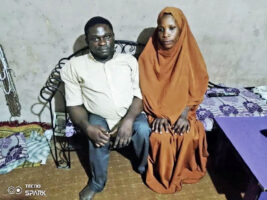
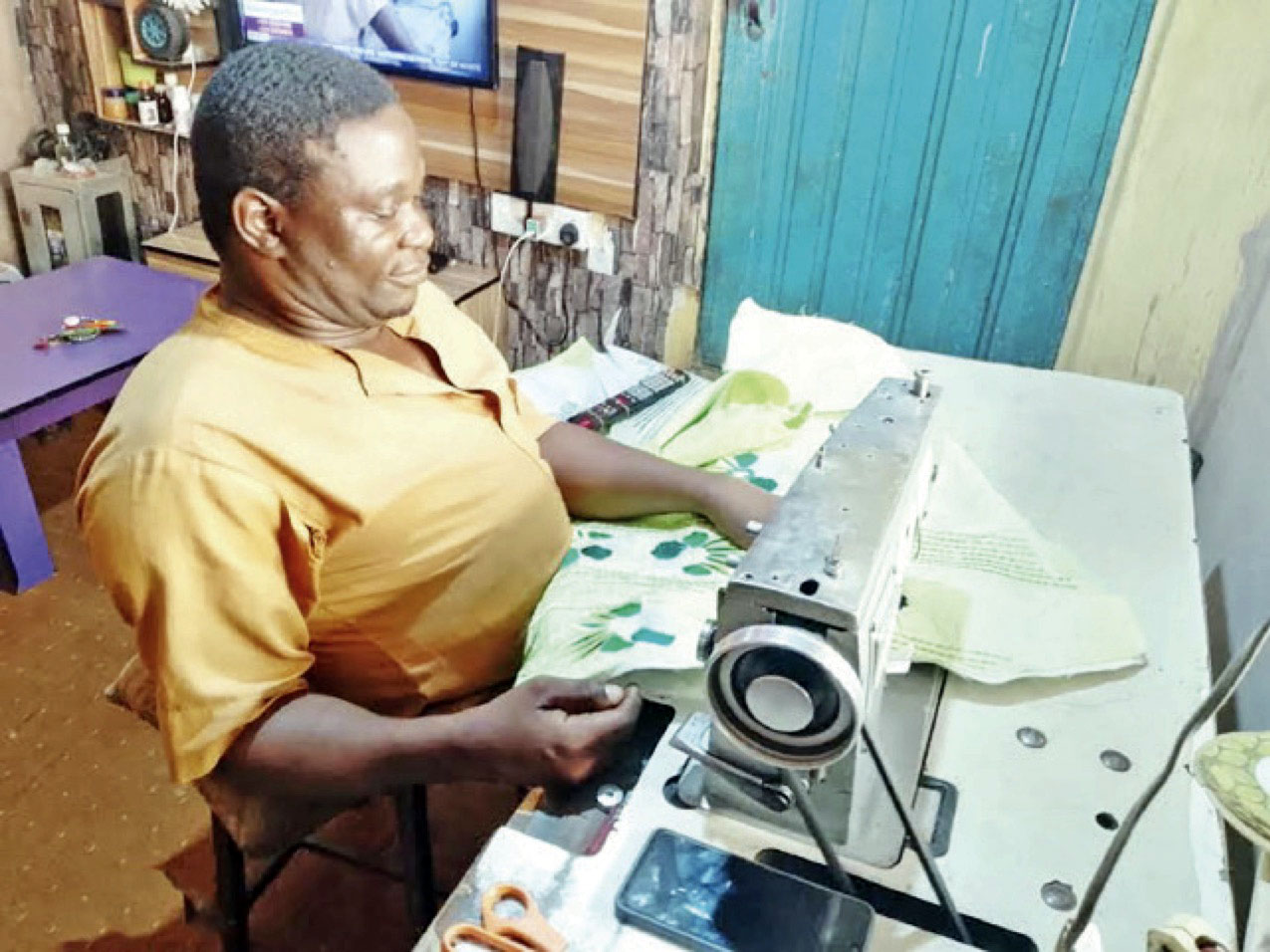
A fashion designer by occupation, Lukman has continued to struggle for survival through tailoring, using his skills to provide for his wife and their four children.
His journey has not been an easy one. Beyond the physical limitations imposed by his condition, he has had to contend with financial hardship, limited opportunities and the daily challenges of raising a family.
But perhaps one of the most remarkable aspects of his story is his marriage to Motunrayo, a woman without a physical disability who chose to build a life with him despite the concerns of friends, family reservations and the uncertainties surrounding their future.
Today, the couple is raising four children, combining their efforts as tailors, with Motunrayo also engaging in bread-selling to support the family.
For her, Lukman’s disability and financial circumstances were not enough reasons to deny herself the opportunity to build a home with someone she loved.
“He did not have money. I just married him because I believed that one day, one day, we must get up,” she said during an interview with Saturday Sun.
Her decision was not without opposition. Some friends questioned why she would marry a physically challenged man when she could have chosen someone without such limitations.
But she remained convinced that wealth and physical appearance were not the only qualities that mattered in a marriage.
Their story is therefore not simply about a woman marrying a man with a disability. It is about two people who have chosen to confront life’s uncertainties together, raising a family and struggling to make ends meet.
Lukman’s life began with a tragedy he was too young to understand.
His mother died less than two weeks after giving birth to him, leaving him to grow up without experiencing a mother’s love and affection.
He said he only learnt about her death from his sister. “I don’t know my mother,” he said.
For him, the absence of his mother remains a painful reality, particularly because he never had the opportunity to experience the relationship other children enjoyed with their mothers.
“If I think of my mother, I am not happy. If my mother were alive, I would not be like this,” he lamented.
As a young child, Lukman could walk and move about like other children. He recalled that he was about three or four years old when he could still use his legs without difficulty.
However, his condition changed unexpectedly. “I could walk before, but suddenly I could not walk again,” he recalled.
Although he did not provide a medical explanation for the paralysis, the condition eventually left him unable to walk and significantly affected his mobility.
The development meant that activities he once enjoyed became difficult or impossible.
One of the things he misses most is playing football. Before losing his ability to walk, he was an active football enthusiast who played as a goalkeeper at a teen age.
“Before, I used to play football. I was a goalkeeper, and they knew me when I was growing up,” he said.
Today, watching other people move freely from one place to another sometimes reminds him of the freedom he once enjoyed.
“If I see my friends going to work or going somewhere, I cannot go. It pains me very much,” he said.
He added that there are occasions when he remains indoors for as long as 24 hours because of the difficulties associated with moving around.
Despite these limitations, Lukman has refused to allow his condition to completely define his existence.
Lukman’s educational journey ended at Junior Secondary School 1 (JSS1), not because he lacked the desire to learn but because of financial difficulties.
He recalled that whenever he needed school materials or clothing, those responsible for supporting him often complained that they could not afford them.
Eventually, he decided to leave school and acquire a vocational skill that could help him earn a living.
“I said I wanted to learn a trade. I told them (helpers) I wanted to learn work, but they did not help me,” he recalled.
He subsequently learnt fashion designing, a trade he has practised for about 20 years.
Today, tailoring is his principal source of livelihood and the means through which he contributes to the upkeep of his family.
Although the business provides him with some income, the financial demands of raising four children remain considerable.
He continues to depend on his tailoring skills despite the physical difficulties associated with his condition.
Lukman said he would appreciate assistance from the government, non-governmental organisations and well-meaning individuals, particularly support that could improve his business and help him provide adequately for his household.
“If the government can help me with my work or provide any assistance, I will appreciate it, because this is the work I do to provide for my wife and children,” he said.
For a man whose educational opportunities were cut short by poverty, fashion designing has become more than an occupation. It is his means of survival, a source of dignity and an opportunity to contribute to his family’s welfare.
Despite the difficulties surrounding his life, Lukman never abandoned the dream of getting married and having a family. That dream became a reality when he met Motunrayo at a wedding in their village.
Their meeting eventually developed into a relationship, with Motunrayo gradually getting to know the man beyond his physical condition.
Other News
For her, Lukman’s disability was not enough reason to dismiss the possibility of a future together.
She recalled that at some point, she asked him whether he believed he would ever walk again.
Lukman expressed hope that his condition could improve someday.
That hope, alongside her growing affection for him, became part of the foundation of their relationship.
Motunrayo admitted that her decision was not based on the promise of an affluent lifestyle. Lukman did not have substantial wealth to offer her, and she understood that marrying him would require patience, sacrifice and determination.
Nevertheless, she believed that money alone could not guarantee happiness in marriage.
“I have seen people who have money, but if I marry someone because of his money and I am not happy, how will we live together?” she asked.
Her decision surprised some people around her, particularly friends who wondered why a woman without a physical disability would choose to marry someone with such a significant mobility challenge.
Some questioned whether she was making the right decision, while others wondered why she would not marry a financially comfortable man.
But Motunrayo insisted that wealth was never her primary consideration.
“He did not have money. I just married him because I believed that one day, one day, he must get up,” she said.
For her, the possibility of building a meaningful life with someone she loved was more important than the appearance of prosperity.
Although Motunrayo had made up her mind, securing the support of her family was not straightforward.
According to Lukman, there were reservations from her family when the relationship became serious.
He recalled that some members of her family were uncomfortable with the relationship, while others advised her to reconsider her decision.
At a point, the couple had to make efforts to resolve the disagreement and secure the family’s acceptance.
Lukman said he and members of his family visited Motunrayo’s parents, appealed to them and eventually completed the marriage arrangements, including the payment of the bride price.
Motunrayo also had to contend with discouraging comments from friends who questioned her choice.
She said some repeatedly asked why she would marry a physically challenged man when she could choose someone else.
However, she remained determined not to allow outside opinions to destroy the relationship she had chosen.
“I don’t want anything that can break my heart or spoil my home,” she said.
For her, marriage requires commitment, understanding and the willingness to work through disagreements and difficult circumstances.
She acknowledged that no marriage is without challenges but maintained that couples must be prepared to face such difficulties together.
For Lukman and Motunrayo, getting married was only the beginning. The greater test was how they would navigate the realities of everyday life.
Motunrayo is not merely Lukman’s wife. She is also an active contributor to the family’s economic survival.
Like her husband, she works as a tailor and also sells bread to supplement the family’s income.
The demands of feeding a family of six, paying school expenses and meeting other household needs can be overwhelming.
Motunrayo, however, said she understands the circumstances under which she married and does not expect her husband to provide money he does not have.
“If he has, he gives me. If he does not have, thank God,” she said.
She explained that she tries not to put unnecessary pressure on him when business is slow because she understands the difficulties he faces.
Her approach reflects the financial realities of their marriage: both partners must work, make adjustments and accept that their combined income may not always be enough to meet every need.
For Motunrayo, supporting her husband does not mean abandoning her own aspirations. Rather, it means contributing what she can while they work towards a better future.
Lukman, on his part, speaks warmly of his wife and the support she gives him.
He described her as a good woman who has stood by him and helped him provide for their children.
Their relationship is not without disagreements. Motunrayo acknowledged that, like other couples, they sometimes quarrel.
However, she said they usually apologise to each other and try to move forward.
The couple is blessed with four children, with the eldest around 13 years old, according to Lukman’s account.
Their children are in school.
For Lukman, providing for his children is one of the major motivations for continuing to work despite his physical condition.
While Lukman has demonstrated determination in making a living through fashion designing, his mobility challenges remain a major concern.
He said he is in dire need of a wheelchair to enable him move around more easily and reduce the difficulties associated with remaining indoors for long periods. He’s appealing to the government or anyone with the financial capacity to help him with a good wheelchair.
For Motunrayo, one of the important lessons she has drawn from her marriage is that a person’s worth should not be measured solely by physical ability or financial status.
She believes that women considering marriage should pay attention to the character of the men they intend to marry rather than making wealth their only consideration. She also warned against assuming that someone who appears financially comfortable today will necessarily remain so in the future.
“Only God knows tomorrow,” she said.
She also spoke about the importance of treating people with dignity, regardless of their financial circumstances.