Follow Us on Google
• Task Tinubu to halt killings, return IDPs home
By Cosmas Omegoh
At the moment, Middle Belt stakeholders want President Bola Ahmed Tinubu to address the insecurity situation in the country, which is getting worse by the day, particularly in their region, with urgency.
Aside from challenges of people living in the North-central part of the country, other Nigerians for a fact, are insecured, unsure of tomorrow.
At every turn, there is fear for life, and property. Fear is in the air, ruling people’s lives more than ever before.
Nigerian security situation assessment
“Insecurity unarguably is the biggest problem in Nigeria at the moment,” Mr Iorbee Ihagh, a retired commissioner of police, who spoke to Sunday Sun, declared.
Hear him: “We can no longer sleep with our eyes closed.”
He was unsparing of ex-President Muhammadu Buhari whom he said kept aloof while herdsmen rioted in the various communities.
“None of those atrocities of herdsmen bothered him,” he said, alleging that “it was because his kinsmen were involved.”
Citing other troubling security situations across the country, he said: “Look at the atrocities of Boko Haram, kidnappers, bandits and even ritualists, for instance. The situation is worrisome. No one is secure, I can tell you.”
Terse Akase, former Chief Press Secretary to the immediate past governor of Benue State, Samuel Ortom, could not agree any less.
Speaking based on what he knew while in government, he said: “The security situation in Nigeria right now is worrisome. Almost every part of the country is affected.”
He too blamed Buhari for failing to tackle the monster headlong, saying: “Nigerians voted for Muhammadu Buhari in 2015 with this optimism that they were voting for one of the most decorated Army Generals in Africa who helped to restore unity after the Nigerian civil war. But unfortunately, the result turned out differently.
“President Buhari’s regime sadly witnessed one of the highest numbers of deaths of innocent Nigerians; something similar to that only happened during the civil war when innocent Nigerians died. That is difficult to explain because he came to power promising improved security, economy and fight against corruption. But according to data available in the last eight years, 63,000 Nigerians died from insecurity alone.”
Against this backdrop, Ihagh reminded all and sundry that “if there is no security, no one can accomplish anything.
“Now, tell me, which foreign investment can come into a place where there is insecurity? Who can come here to establish a factory when he is not sure of his safety?
“Look at the everyday killing. Who will come here to be kidnapped? As long as the situation we find ourselves persists, progress seems far away.”
Indeed, years back, Nigeria ranked as one of the most peaceful places to live in. If ever people entertained fears, it was minimum fears. But now, things have changed. It doesn’t get; it gets worse.
Every now and then, new criminal terminologies enter the Nigerian lexicon, each capturing the hue of criminality the actors engage in: insurgents, bandits, kidnappers, herdsmen, ritualists – all united by orgy of violence – killing, kidnapping, and pillaging. And the beat goes on!
Our insecurity experiences
Speaking on his personal security experiences, Ihagh who is the president general of Mdzough U Tiv, a Tiv social-cultural organisation, said: “We in Benue State are mostly affected by insecurity.
“We are the food basket of the nation. But we cannot farm any longer; our people are scared of being killed by herdsmen that have occupied our bushes, roaming freely with their AK-47. No one challenges them.”
He lamented that “the soldiers drafted to maintain security in our areas are not helping matters. Rather, they are helping the occupiers.”
He spoke about the pathetic situation of displaced persons in Benue State including himself.
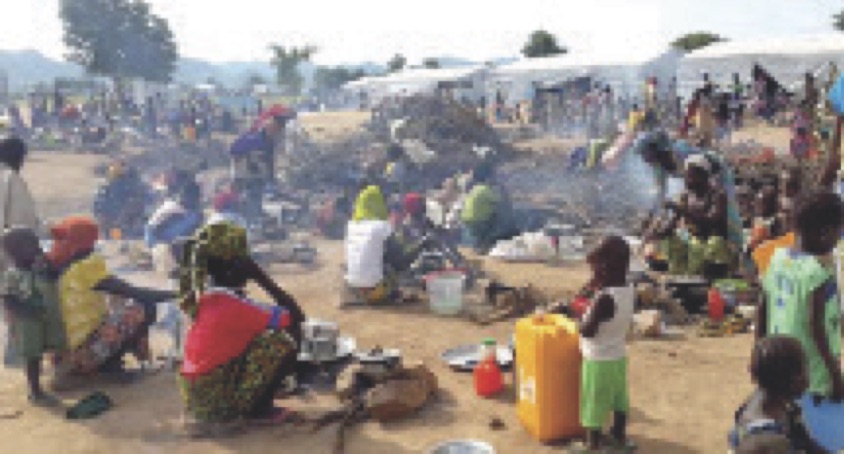
“In Benue, we have well over two million displaced persons living in primary schools.
“I, even as leader of Tiv people, I’m a displaced person.
“Over the past eight years, I have not gone to my ancestral home in Mon ward in Kwande local government. The area is currently being occupied.
“The Fulani occupying our land have destroyed everything we had. They killed people, burnt our houses, hospitals and churches, including schools built by the state government.
“The three houses I built there were all razed to the ground.
“Our people are no more there. Even when our people die in exile, we no longer go home to bury our dead.
“That is why I insist that the new government should give marching order to the army to go and flush out the occupiers so that our people can go back to their farms.
“If we don’t farm, there will be hunger. We are afraid of going to the farms because when we go to the farms the Fulani kill us.”
Commenting on the situation in Benue State, Akase said being the spokesman of the immediate past government in the state, “I have a dossier of what happened in those eight years we were in government. It took the patriotic zeal of ex-Governor Samuel Ortom to spite in the face of injustice.
“That was why his administration enacted the open grazing law in 2017.
“Within that period, a lot of successes were recorded. Cattle rustlers, herders and other criminals were apprehended. Some were fined before their animals were released to them; some were sentenced.”
He too lamented that Benue people had had a rough patch over the past years.
“People have been killed in their numbers. Our records have it that 19, out of the 23 local governments in Benue came under serious attacks by herders. Even those who ran into the IDP camps were pursued to the place and killed.
“Benue has had over two million IDPs. There are other IDPs who ran away from their communities and are now living with their relatives in the townships.”
He too expressed sadness with the “carnage in Southern Kaduna involving innocent people in their thousands, as well as the incidents in Zamfara, Plateau, Taraba states, among other places.”
Not less pathetic is the narrative of Ibrahim Bunu, a Middle Belt youth leader and founder/convener of Middle Belt Patriotic Front.
He said: “If you are talking about insecurity, 80 per cent of this happens in the communities in Southern Kaduna, Plateau, Taraba, Benue and Kogi states.
“It hasn’t been long we started hearing about insecurity in the Northwest region and what is happening there.
“Majority of what is going on there has to do with banditry, illegal mining and land occupation by certain foreign Fulani bandits displacing the original Hausa settlers.
“What is happening in the Northwest is more of economic crisis – bandits going to the villages, ransacking them, collecting residents’ food, taxing the farmers, kidnapping their wives and asking them to pay ransom.
“As a youth leader in the North-central region, I get a lot of detailed information across board because we have a committee that reports and records the killings as they happen. We have a data base of the carnage; I read them on a daily basis; so I know what goes on.”
Speaking about the seemingly hopeless security situation in the Middle Belt region, Bunu said: “All we have been waiting for is this change in government. Every day, our people lose hope.
“I want you to appreciate seeing people being killed regularly in their communities and nothing happens.
“You go to some of the areas all what you see is death, distress.
“The government tells you what is going on is farmers-herders’ clashes, but I can tell you there is nothing of such.”
He believes that “it is the Fulani that are ravaging the land,” and has his reasons.
“Recently, we visited a place near Kura Falls in Barkin Ladi area of Plateau State to see people who were ravaged, and were perplexed by what we saw.
“We saw the displaced Birom living in IDP camps in a primary school. They told us that their farm lands had been taken over and they dared not go there; they said the Fulani who chased them away were already grazing on their fields and feeding their cows with their crops.
“Ironically, soldiers and other security agencies were stationed in those communities. Sadly, no soldier could say to the Fulani ‘why are you here?’ It is the same thing in some other communities that have been taken over and renamed. The real owners cannot go back to their villages because there are new settlers there.
“So, when you see things like this, you come to the brutal conclusion that the government of the day is not ready to speak the truth.
“That is why the last administration was accused of favouring the Fulani and encouraging them to do a lot of things and got away with them.
“These things are open. One does not need to go far to see them.
“It is the same thing that is happening in Katsina. You see the division between the Hausa and Fulani. You hear the Hausa complaining that the Fulani are being left to ravage their communities and nothing is being done.”
People’s wishes/expectation
Speaking on what he needed President Tinubu to do now, Bunu said: “We want him to rise and reverse this injustice in the land, and unite and heal this country.
“We can see how the Northeast is being rebuilt; projects are sited there; schools are being built; a lot of that is needed in the North-central too.
“There are a lot of things that are happening in our communities which are not in the public domain. If you don’t take your time and go there, you will not get to know what is going on.
“We want the security agencies in those communities in the North-central region to show a lot of seriousness.”
He feared that the biggest challenge every government faces is the will to address the core issues.
“What we are lacking now is the will. Insecurity in the North-central is one thing any government can fight and succeed if there is the will.
“But over time, there has been a lot of politicking with the issues; there has been no clear cut agenda to address the issues.
“But I have this belief that if the new administration says it wants to end insecurity in the affected areas, it can do that. There is no body occupying our forests as terrorist that cannot be flushed out in two months,” he said.
On his part, Ihagh called on President Tinubu to ensure that the people in IDPs go home, recalling that “the killings are too many. The present administration has to rise up and defend the people.
“It is sad that in this country, 200 people can be killed in one fell swoop and nothing bothers those in government.
“I challenge President Tinubu, in the next few weeks, let him act. Let him ensure that the displaced persons return to their ancestral homes.”
Ihagh who is also a lecturer at Joseph Saawuan Tarka University, Makurdi, called for fresh blood in the new security system under Tinubu. “Let him bring a new set of security people based on their competence, and not their ethnic persuasion. They should be people selected based on their competence not political patronage. Not APC members who will later be made ambassadors.”
Similarly, Akase called on President Tinubu to urgently consider the plight of the hapless people of Benue State.
“They are victims of injustice perpetrated by a segment of the country who feel they have the proprietorship of this country.
“He should look at the insecurity of Nigeria without fear or favour. He should tackle it decisively without being afraid of anything.
“Nigerians want to see this country functioning again in all sectors – not just security alone. That is my simply agenda for Mr President,” he said.
Underlining need to have the identity of all Nigerians for security purpose, a security expert, Micah Ugalla, said the right way is to build a data base for everyone.
He asked: “How does anyone hope to successfully govern a people whose numbers and identities by data he doesn’t have?
“We need to address the gap between our population and national identity. “With our identities, someone cannot move from one state to another without being identified.”
He talked about the need to organise a national census and to reconcile the figures captured by the National Population Commission (NPC) and the NIMC for better planning and national security.
He called for a need to hold every Divisional Police Officers responsible for crimes that happened in their domains, citing a seeming case of collaboration between a police boss in Abuja and kidnappers.
“The DPO warned the victim not to mention that he paid ransom. What is the business of the DPO with the ransom paid which he didn’t want disclosed?” he queried.