Follow Us on Google
By Fidelis Ugbomeh
Reactions have continued to trail call for stronger rail, road, Inland waterway and barge connectivity to eastern ports while the use of all these modes linked to Apapa port has not been fully maximised.
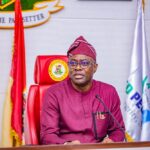
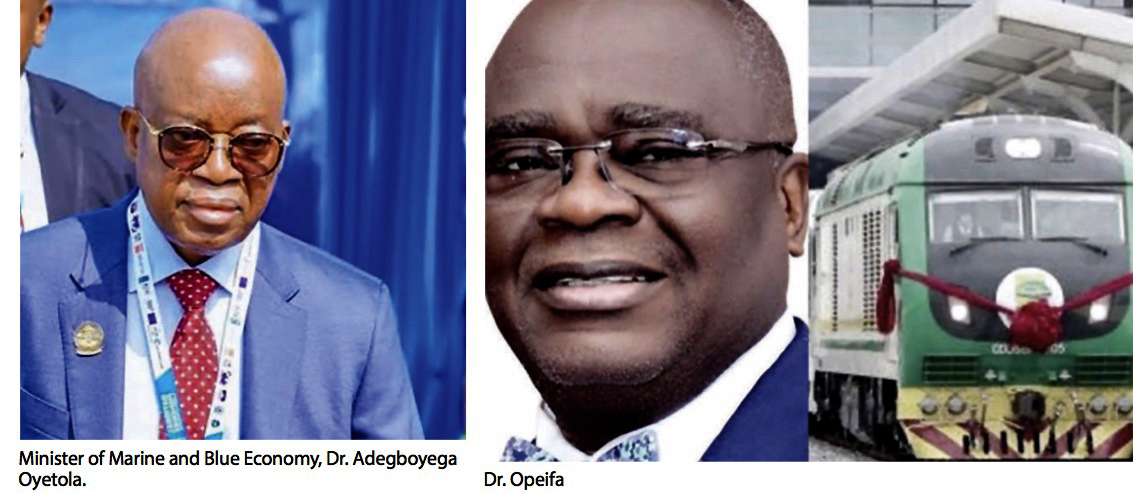
The minister of Marine and Blue Economy Dr. Adegboyega Oyetola had while speaking on why the planned port modernisation will commence from Apapa and Tin-Can Island ports of Lagos said that there is need for stronger connectivity of the aforementioned modes to eastern ports of Port-Harcourt, Onne and Calabar in order to attract patronage.
While supporting the position of minister that the $1bn loan secured from from Citi bank, backed by U.K export finance will used to modernise the ports across the country in phases beginning with Lagos, a freight forwarder and managing director, Honeywell Nigeria Limited Mr. Eric Umeh posited that it should be extended to provision of logistics and not restricted to dredging and expansion.
He suggested that government should encourage the use of other medes through extension of rail infrastructure linking Tin-Can Island port and Ikeja airport as well as grant incentives to barge operators.
Umeh also suggested that the railway line in Lagos should be linked to the airport which is just a few kilometres to Ikeja railway station so that export and import goods can be evacuated by rail in and out of the airport.
In his contribution, director of operations, Bueno Logistics limited Mr. Paul Ndibe wondered why the minister harped in the need to connect eastern ports with other modes, when importers still rely more on the road mode to evacuate their consignments due to limitations of the other modes in Lagos.
He noted that for instance, freight train service through standard and narrow gauge corridors of rail mode is limited only from Lagos to Ibadan and Lagos to Ilorin respectively.
Ndibe pointed out that government should address the challenge of insecurity and rehabilitate sections of vandalised narrow guage rail lines between Ilorin and Kaduna while the standard gauge railway line should be extended to Abuja from Ibadan.
He wondered the justification behind modernising port infrastructures without corresponding investment in the logistics that will enhance seamless evacuation of containers in and out of our ports.
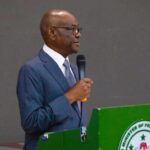
The minister in his remarks at annual general meeting and conference of league of maritime editors said that the development of a balanced multi-port system remains critical to Nigeria’s economic growth.
He noted that shipping lines considered several factors before choosing ports, including draft, berth availability, cargo volumes, turnaround time, security, tariffs and reliability.
Oyetola said further that concentration of cargo traffic at Lagos ports, particularly Apapa and Tin Can Island, had placed enormous pressure on port and connecting infrastructure, while leaving significant capacity in the Eastern corridor underutilised.
He said the imbalance had contributed to congestion, longer cargo dwell and vessel turnaround times, increased demurrage and logistics costs, pressure on roads, environmental challenges and inefficiencies across the supply chain.
According to the minister, ports such as Onne, Port Harcourt, Warri and Calabar possess considerable strategic potential because of their proximity to industrial, agricultural, energy and commercial activities in the South-East, South-South and parts of the North-Central.
He however, identified draft limitations, poor infrastructure, navigational constraints, security concerns, inadequate hinterland connectivity, equipment challenges, operational costs and unpredictable services as some of the factors limiting the ability of the Eastern ports to attract regular vessel calls.
Oyetola said the administration of President Bola Tinubu was pursuing a deliberate strategy to transform Nigeria’s maritime infrastructure and establish an interconnected port system in which Lagos and the Eastern ports would complement rather than compete against one another.
He explained that the modernisation and rehabilitation of the Eastern ports remained an integral part of the Federal Government’s port development strategy, with emphasis on improving channel depths, navigability, port infrastructure, cargo-handling facilities, security and the general operating environment.
The minister also explained why major physical modernisation projects were currently receiving particular attention at Apapa and Tin Can Island ports, saying the decision was not an indication of preferential treatment for Lagos but was driven by operational urgency, economic necessity, project readiness and responsible sequencing.
He said Lagos remained Nigeria’s principal maritime gateway and handled the largest concentration of import and export cargo, making inefficiencies there capable of producing immediate and widespread consequences for the national economy.
Oyetola noted that attempting to reconstruct major Western and Eastern gateways simultaneously, without adequate alternative capacity, could disrupt cargo movement and expose the national supply chain to unnecessary risks.
He said a carefully sequenced approach would allow government to improve capacity while keeping international trade flowing. adding that that the Lagos modernisation programme achieved financial and contractual readiness earlier than some Eastern port interventions, insisting that the sequencing should not be interpreted as neglect of the Eastern ports. Rather,
The minister stressed that the Federal Government’s long-term objective was to create a genuine multi-port system where cargo owners and shipping lines could choose gateways based on efficiency, cost, reliability and proximity to markets.
Oyetola urged maritime journalists to remain active participants in the sector’s transformation by interrogating policies, exposing bottlenecks, demanding accountability and reporting progress objectively.