Follow Us on Google

• Targets 300 investments at COP31
With more than 300 climate-related projects valued at between $25 billion and $50 billion on its investment radar, Lagos State is taking its climate ambitions to the global marketplace, seeking to turn mounting environmental pressures into opportunities for infrastructure development, job creation and sustainable economic growth.
From renewable energy and clean transportation to flood control, coastal protection, waste management and climate-smart agriculture, the state is positioning its climate agenda as an investment proposition for international financiers, development institutions and private-sector operators.
The next major step in that effort will come on November 13, when the Lagos State Government convenes investors, financial institutions, development partners and private-sector leaders at the Lagos Climate Investment Day and Cocktail Reception during the 31st United Nations Climate Change Conference (COP31) in Antalya, Türkiye.
The objective is clear: to move climate action beyond policy declarations and international conference commitments to projects capable of attracting financing, generating economic value and delivering measurable benefits to residents.
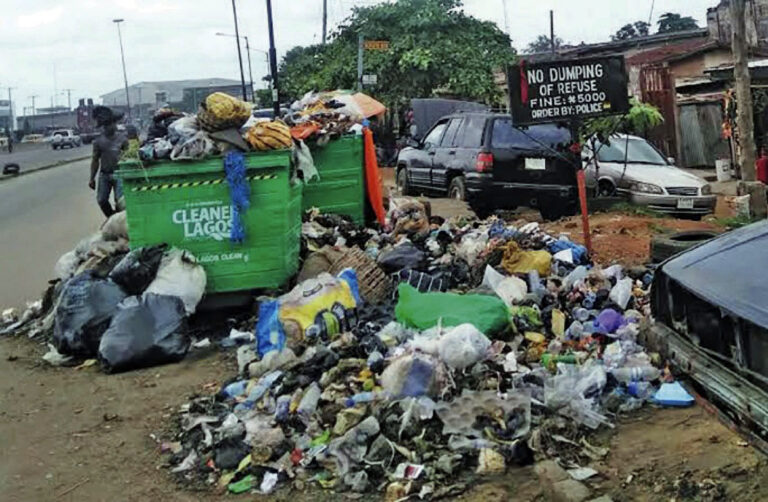
For Lagos, Africa’s most populous urban centre and one of the continent’s leading commercial hubs, the stakes are considerable. Rapid urbanisation, pressure on infrastructure, flooding, coastal vulnerability, rising energy demand and the growing volume of municipal waste have made climate resilience an increasingly urgent economic and development priority.
But the state government believes these challenges can also create opportunities for investment in infrastructure, technology, clean energy and new businesses.
Through the Office of Climate Change and Circular Economy (OCCE), Governor Babajide Sanwo-Olu’s administration is seeking to establish Lagos as Africa’s first Climate Investment Jurisdiction, a proposed model for aligning climate priorities, government policy and investment opportunities within a coordinated framework.
The initiative reflects a broader shift in climate finance: governments are increasingly being challenged to demonstrate not only their commitment to reducing emissions and adapting to climate change but also their capacity to develop viable projects, mobilise private capital and deliver results.
For Lagos, COP31 offers another opportunity to make that case before an international audience.
Governor Sanwo-Olu has described the investment drive as an effort to demonstrate that climate action can support economic transformation while addressing the state’s infrastructure and development needs.
“Our ambition is to turn climate priorities into investable opportunities that strengthen infrastructure, expand access to clean energy, improve transportation, attract capital, create jobs and improve lives,” the governor said.
He added that the state would use COP31 to engage global investors and strategic partners, with the aim of translating its project pipeline into tangible investments and lasting economic value for Lagos and Nigeria.
At the heart of Lagos’ investment strategy is the recognition that identifying climate-related needs is only the beginning. Turning those needs into projects that investors can finance requires detailed preparation, credible financial structures, appropriate risk allocation and partnerships capable of sustaining implementation.
The proposed investment pipeline spans renewable energy, solarisation, electricity infrastructure, sustainable transportation, agriculture, water resources, flood mitigation, coastal protection, waste management and green enterprise.
These sectors address different but interconnected pressures confronting the state.
Investment in renewable energy and solarisation could help expand access to cleaner and more reliable energy.
Sustainable transportation offers opportunities to reduce emissions while improving urban mobility. Better waste management could support recycling, resource recovery and circular-economy businesses.
Meanwhile, investment in drainage, flood mitigation, water management and coastal protection could strengthen the resilience of vulnerable communities and infrastructure against climate-related risks.
Agriculture and food systems also feature in the framework, reflecting the relationship between climate resilience, food security, livelihoods and the cost of living.
However, the breadth of the pipeline presents its own challenge. The projects span sectors with different financing requirements, implementation timelines, revenue models and risk profiles. Some may be suited to commercial investment, while others could require concessional finance, public funding, guarantees or blended-finance arrangements.
Consequently, the central task facing the state is not simply to publicise a multibillion-dollar opportunity but to demonstrate how individual projects can progress from broad policy priorities to investment-ready propositions.
The Special Adviser to the Governor on Climate Change and Circular Economy, Mrs Titilayo Oshodi, said the state’s priority was to move beyond climate commitments to implementation by connecting viable projects with the financing, expertise and partnerships required to deliver them at scale.
“Lagos Climate Investment Day will put this proposition before investors and development partners, demonstrate the breadth of our pipeline and identify practical financing pathways,” she said.
Her office is coordinating efforts to align climate policy, project preparation and capital mobilisation, with the involvement of ministries responsible for the environment and water resources, transportation, agriculture and food systems, energy and mineral resources, works and infrastructure, physical planning and urban development, and waterfront infrastructure development.
The approach is designed to bring climate considerations into the state’s wider development and economic planning rather than treat them as a standalone environmental concern.
The estimated $25 billion to $50 billion investment pipeline places Lagos’ ambitions on a substantial scale. Yet its ultimate significance will depend on how much of that projected opportunity can be converted into funded projects.
The figure represents the estimated value of the pipeline, not money already secured or investment commitments that have been fulfilled.
That distinction will be important as the state makes its pitch to prospective financiers at COP31.
For investors, the key considerations will include the commercial viability of individual projects, the clarity of regulatory arrangements, the reliability of revenue streams, the availability of credible project documentation and the allocation of construction, operational and financial risks.
Projects intended to deliver public benefits without generating sufficient direct revenue may require different financing structures from those capable of attracting conventional private investment.
Lagos’ challenge, therefore, is to match projects with appropriate sources of capital while making a compelling case for the economic and environmental value they can deliver.
The state’s investment framework is anchored in its State-Determined Contributions (SDC) Framework, which provides a basis for connecting climate priorities with development planning and investment mobilisation.
The framework is organised around five platforms: clean energy and clean cooking; blue economy, water and climate resilience; circular economy and industrial decarbonisation; climate-smart infrastructure and urban transition; and climate innovation, food systems and green enterprise.
Together, these platforms are intended to create a structured route for identifying opportunities, coordinating government action and engaging prospective investors.
At the November 13 event, the government plans to use investment presentations, high-level discussions and financing engagements to connect its priorities with potential capital providers and move projects closer to implementation.
Participating organisations include Sterling Bank, Keystone Bank and Stanbic IBTC Bank, alongside Sun King, RF Garden and House of Tempos.
The participating banks are expected to contribute perspectives on sustainable finance and financing structures, while Sun King’s participation will bring experience in expanding access to solar energy.
The extent to which these engagements produce concrete financing arrangements, however, will be a more significant measure of success than participation alone.
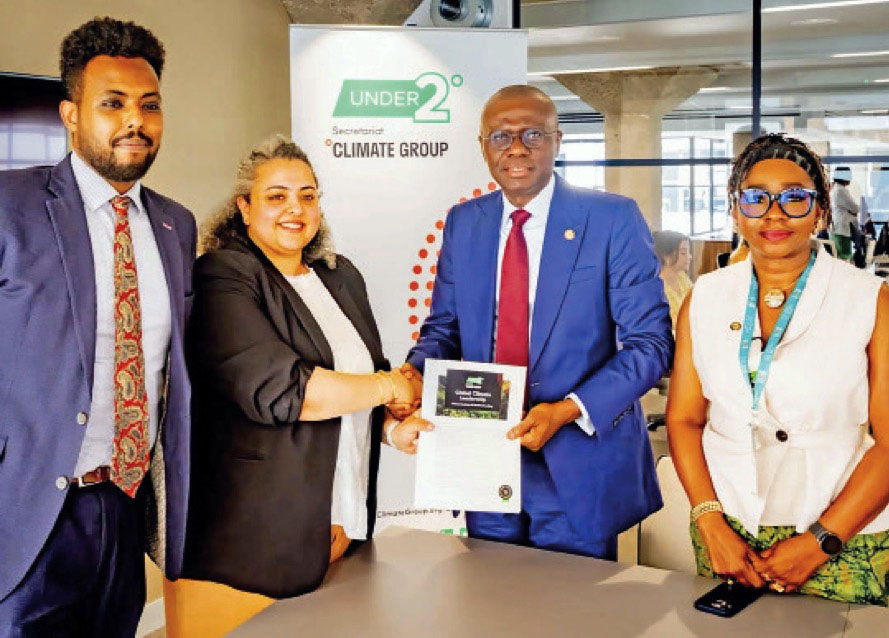
The COP31 initiative builds on Lagos’ earlier international climate-finance engagements, including its participation in London Climate Action Week in June 2026.
During the London engagements, the state sought to strengthen its position in the global climate investment landscape through high-level discussions involving subnational governments, financial institutions, development finance organisations, climate funds and private-sector operators.
A central feature was an executive roundtable organised by the OCCE under the theme, “Financing State-Determined Contributions: Connecting Climate Capital to Africa’s Most Investment-Ready Cities.”
The session focused on practical pathways for mobilising capital to implement Lagos’ climate priorities, with investment opportunities identified across clean energy, low-carbon mobility, the circular economy, carbon markets, climate resilience and nature-based solutions.
The participation of Lagos State Commissioner for Budget and Economic Planning, Mr Ope George, and the Permanent Secretary in the ministry, Mrs Olayinka Ojo, underscored the administration’s effort to integrate climate action with fiscal and economic planning.
The state’s engagement also extended to discussions on sustainable finance in emerging markets.
Oshodi participated in a high-level session hosted in partnership with the United Nations Environment Programme Finance Initiative, where discussions focused on mobilising private capital, strengthening project bankability and improving local financial ecosystems.
She presented Lagos’ SDC framework as a potential model for translating climate priorities into investment opportunities capable of delivering development outcomes while attracting private capital.
The engagements formed part of a broader effort to position Lagos within international networks working to accelerate climate implementation at the subnational level.
Sanwo-Olu said the state’s participation reflected its determination to demonstrate how cities and regions could develop investable project pipelines, attract strategic partnerships and deliver outcomes that improve livelihoods.
“Our participation at London Climate Action Week reflects our commitment to positioning Lagos as a global model for climate innovation and investment,” he said.
Oshodi similarly argued that climate leadership should be measured by implementation rather than commitments alone, stressing the need for financing, partnerships and scalable delivery mechanisms.
The London engagements provided an international platform for presenting the state’s investment priorities. The forthcoming COP31 event is expected to build on those discussions by placing the wider project pipeline before a new gathering of investors and development partners.
Beyond investor outreach, Lagos has also begun developing mechanisms intended to improve its readiness to mobilise climate finance.
The state organised a Climate Finance Preparedness Clinic that brought together more than 140 financial institutions, according to the OCCE.
The exercise was intended to strengthen engagement between the government and potential financiers while improving understanding of the requirements for preparing and financing climate-related projects.
Another component is the Climate Defence and Catalytic Fund, launched in July 2026 to mobilise investment and de-risk low-carbon and climate-resilient infrastructure.
The fund aims to mobilise up to $3 billion annually, according to Oshodi.
The target represents an ambition for future mobilisation rather than evidence that the amount has already been raised. Its eventual contribution to the state’s investment programme will depend on the capital available, the structures adopted and the projects it is able to support.
De-risking mechanisms can be particularly important in climate finance because projects that deliver substantial public benefits may not always offer the returns or risk profiles required by conventional commercial lenders.
Depending on their design, guarantees, concessional financing, catalytic capital and other risk-sharing arrangements can help bridge that gap, allowing public and private resources to work together.
For Lagos, the challenge will be to ensure that these mechanisms translate into additional investment, rather than merely accompany projects that would have proceeded without them.
The state has also begun distributing clean cookstoves in Makoko as an initial step towards its ambition of providing eight million units.
The initiative forms part of its clean-cooking agenda, which seeks to expand access to alternatives to more polluting cooking methods.
Its wider success will depend on affordability, sustained adoption, access to replacement components and the ability to reach households at scale.
Climate-related investments can create opportunities for construction companies, engineering firms, renewable-energy providers, transport operators, waste-management businesses, agricultural enterprises and technology companies.
They can also support new markets in recycling, resource recovery, energy efficiency and climate-resilient infrastructure.
But these benefits are not automatic. Their scale will depend on the projects selected, the quality of implementation, the participation of local businesses and workers and the extent to which investment produces lasting improvements in services and productivity.