Follow Us on Google

By our reporters
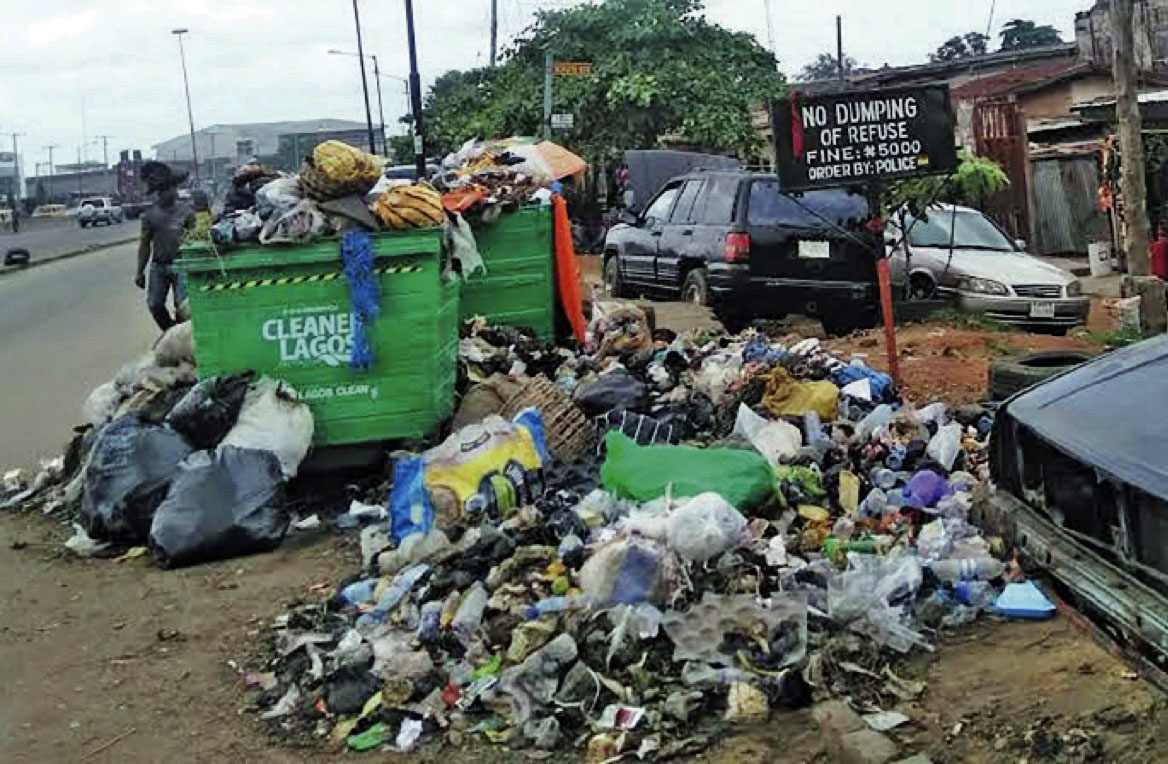
Every day, the first thing commuters and residents at Costain Roundabout see and smell is the rot from refuse dumps. Heaps of black polythene bags, torn sachet water, rotten plantain peels and food waste have taken over the area. The Lagos State Waste Management Agency (LAWMA) bins overflow into the walkways. Opposite a bank, the space has become an open dumpsite.
From Costain to Ebute-Metta, from Mile 12 to Ijegun, from Ikorodu Garage to Owode-Onirin, Nigeria’s megacity and economic capital seems to be losing a war against wastes, with bagged refuse sitting on sidewalks for several weeks.
The numbers explain the scale. With 16 million people, Lagos generates an estimated 13,000 tonnes of refuse daily according to LAWMA data. That is roughly 2.5kg per person. For context, that is more wastes per day than some entire West African countries produce.
Yet the city’s formal collection system was designed for a Lagos of 10 years ago. LAWMA licenses over 300 Private Sector Participants, PSPs, but industry sources estimate less than 60 per cent are fully operational at any time due to diesel costs, truck breakdowns, and delayed payments. When PSPs fail, the waste sits there.
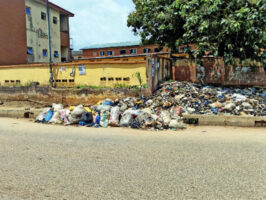
Blocked drainage is where waste becomes a disaster. Environmental experts warn that with rains still heavy in Lagos between April and October, the blocked drains across the city are a flash flood waiting to happen. Lagos sits on a coastal plain and much of it is less than 15 meters above sea level.
When plastic and silt choke canals, water has nowhere to go but into homes, roads, and markets. The 2017 flood that killed three people in Ojodu and the 2022 floods that submerged parts of Lekki and Ikeja started the same way. Drains filled with refuse.
Doctors warn the health cost is already here. Stagnant water and waste spikes cholera, malaria, and typhoid. Rats that feed on dumps bring Lassa fever. During the rainy season, hospitals in Mainland, Gbagada and Ikorodu routinely record upsurges in diarrhea and skin infections linked to poor sanitation. The World Health Organisation lists poor waste management as a direct driver of 13 of the 14 major causes of death in developing cities.
From Okokomaiko to Mile Two, refuse dumps are ubiquitous on the median of the Lagos-Badagry Expressway. The road was rebuilt with a deep drainage system by Julius Berger and a Chinese firm specifically to solve flooding on the 10-lane corridor. Today that drainage has become a dustbin for water sachets, soft drink bottles, and plastic foils. Engineers call it “design vs. behavior.” The infrastructure exists, but without enforcement and bins, it reverts to a dump.
At Alaba Rago bus stop, guinea corn and maize are growing on refuse heaps, proof, residents say, of how long the waste has sat there. At Iba First Gate on LASU-Igando Road, dumps are everywhere. At Igando Bus Stop, the piles have forced beggars off the median.
Every Thursday is Environmental Sanitation Day for markets. The law says markets must clean and desilt drains. But residents say dirt desilted from drains is simply left by the roadside in heaps, only for the next rain to wash it back in. The cycle repeats because there is no immediate evacuation plan after sanitation day.
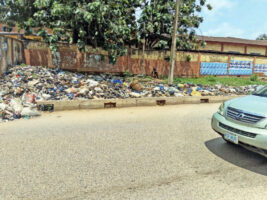
At Ijesha Bus Stop on the Apapa-Oshodi Expressway, another embarrassing mountain sits in plain view. At Ikorodu Garage, the stench hits you before you escape. Waste competes with passengers for space. LAWMA clears it at night. By morning, it is back. The smell remains irritating, choking and permanent, similar to that of the popular Olusosun dump site at Ojota.
Olusosun is central to the crisis. For years government said the 42-hectare dumpsite was shut and that waste would go to Epe and Solous. But drive past and the heavy, suffocating odour tells a different story. Closed or not, the smell still hit you hard. More importantly, closing Olusosun without opening enough transfer stations in mainland areas created a logistics vacuum. PSPs and cart pushers now have to travel two-three hours to Epe, pay higher diesel and tipping fees, and return late. The rational choice for many is to dump on the nearest median.
At Owode-Onirin market, a mountain of refuse took over the roadside. Traders sold food steps away. Buyers bargained with noses covered. But here, community action worked. The market leadership set up a task force to arrest dumpers. It proves that where monitoring exists, compliance improves.
At Mile 12, waste is dumped right in the middle of the ever-busy Ikorodu Road. At Ketu, it is the same tale. The economics are simple. Registered cart pushers charge about N500 per bag. But to dispose legally at Olusosun or Solous they pay tipping fees plus transport. Many cannot recover that cost, so they pour the waste on the median at night to avoid detection.
In Ijegun, the situation has not improved in months. Around Ijegun Roundabout, refuse has become permanent. The heap rests on the wall of Ijegun Junior Grammar School and near Ijegun Senior Comprehensive High School. Schools surrounded by waste struggle to teach hygiene while children breathe the fumes.
At Ije-Ododo, before El-Messiah bus stop, another notable dumpsite has become home to scavengers, some of whom now live in tents there. This is the informal economy of waste. For them, dumps are livelihood. For the community, they are a health hazard.
The Lagos State Environmental Sanitation Law prescribes fines for indiscriminate dumping. In practice, enforcement is weak. KAI and LAGESC are overstretched across 20 LGAs and 37 LCDAs. Transport unions, night dumpers, and cart pushers still operate with little adherence. There are not enough bins, transfer stations, or recycling plants. Lagos has fewer than 15 functional transfer stations for a city of this size. Eleven per cent of streets in commercial areas are effectively lost to dumps, according to a rough mapping of LAWMA complaints data.
There are bright spots. At Ikotun and Egbeda, the huge refuse that used to be at the BRT bus stop opposite Ikotun market has disappeared after sustained clearing and monitoring. Traders are asking government to maintain the tempo.
Lagos wants to be a 21st-century mega city.
Health experts say the solutions require coordination. They recommended a 72-hour continuous night shift trucks to clear black spots and immediate desilting of blocked drains before peak rains. They N50,000 fines for dumping, impounding of carts that dump on medians, and weekly publication of offenders’ names to create social pressure.
They urged the government to pay PSPs on time, create designated transfer points in Alimosho, Ikorodu and Badagry so cart pushers do not have to travel to Epe, and to subsidise tipping fees for registered operators. Animal-proof bins at every bus stop and market, and faster approval of waste-to-energy and recycling partnerships to reduce what goes to landfill, as well as a weekly community clean-ups and sanctions on estates that fail to pay waste bills. The experts said the solutions require money, political will, enforcement, and citizens’ cooperative effort