Follow Us on Google

From Magnus Eze, Jude Chinedu (Enugu), George Onyejiuwa (Owerri), Okey Sampson (Umuahia), Uchenna Inya (Abakaliki) and Wilson Okereke (Afikpo) and Emmanuel Uzor (Awka)
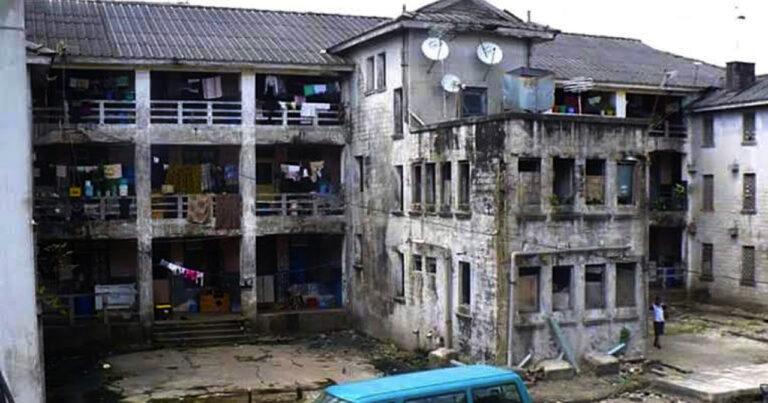
Infrastructural deficit in the Southeast is quite glaring to the point that even the blind could ‘see’ it. As a correlation, the region also suffers economic deficiencies.
The cries of marginalisation by the Igbo, which have been on for decades, including the growing agitation for an independent state of Biafra, are offshoots of the dearth of infrastructure in the region and the seeming state policy of relegating the people to the background.
Since after the civil war, which brought devastation to Igbo land, laced with other carefully accentuated anti-Igbo policies of subsequent administrations of the Nigerian Government, it has been difficult to point to any critical federal infrastructure in the zone. Major roads in the Southeast such as the Enugu-Port Harcourt Expressway, Enugu-Onitsha Highway, Onitsha-Owerri Road, Enugu-Makurdi Road, Umuahia-Ikot-Ekpene and Aba-Ikot-Ekpene-Calabar roads, have remained deplorable.
Nigeria’s electricity situation has continued to dwindle, but the case of the southeast is so terrible to the extent that manufacturing and fabrication industries in Nnewi, Enugu, Onitsha and Aba have practically packed up.
It was the foregoing pitiable condition that led the Igbo to resort to providing their electricity, roads, water and other infrastructure by themselves.
Organisations like the Ohanaeze Ndigbo Worldwide, Alaigbo Development Foundation (ADF), Nzuko Umunna and Southeast Region Economic Development Company (SEREDEC) are wont to changing the narratives.
In May, the President General of Ohanaeze Ndigbo, Chief Emmanuel Iwuanyanwu, who died recently, disclosed that the National Executive Committee of the apex Igbo organisation was revisiting the Alaigbo Stabilisation Fund.
He also said that the Sam Ohuabunwa-led Ohanaeze Ndigbo Council of Business Leaders would mobilise businessmen and women of Igbo origin across the world to join in the development of the region.
In a Zoom session, several contributors at the President General’s conversation with the Igbo at home and in the Diaspora, harped on the need to build critical infrastructure and provide security in the region.
They insisted that the Aku Ruo Ulo (Think-home) philosophy being promoted by Ohanaeze and other Igbo groups, would not be fruitful unless there was a stabilization fund for infrastructural development.
Sunday Sun learnt that the Igbo had floated Stabilisation Fund to boost infrastructural development in their region.
A steering committee was set up by the South East Governors’ Forum and Ohanaeze Ndigbo in July 2020, to chart a new course for the socio-economic development of Igbo land.
Consequently, two special purpose vehicles, Alaigbo Investment Company (AIC) and Ndigbo Development Foundation (NDF) were incorporated.
A statement by Chairman, Alaigbo Stabilisation Fund-Technical Implementation Committee, Prof Osita Ogbu and Secretary, Nnanna Ude, on February 22, 2022, had disclosed that the Committee was poised to raise an initial N5 billion. They said N3.5 billion would be for AIC and N1.5 billion for NDF.
According to the committee, the body of eminent Igbo sons and daughters in business, academia, arts, and leading Igbo organisations from different disciplines, at home and in the Diaspora, through its interventions, will address the dearth of infrastructure, especially regional, physical, and social infrastructure -rail, ports, energy, roads, technology -world class health and educational institutions.
“The two organizations are owned by Ndigbo and will be governed in the best of traditions by a broad-based Council. It would also be run professionally based on international standards. It shall pool resources from Ndigbo, international organizations and friends of Ndigbo, but shall focus investments in Alaigbo and on Ndigbo,” the Fund’s technical implementation committee had said.
While the Alaigbo stabilisation fund is still being expected, President Bola Tinubu came up with what looks like a soothing balm as he recently assented to the South East Development Commission (SEDC) Bill into law.
Ohanaeze Ndigbo Worldwide and several Igbo groups believe that if properly funded, the Commission will go a long way to mitigate the age-long marginalisation of the Southeast in the areas of infrastructure, empowerment, employment, among others.
High expectations amid pessimism
Opinion leaders across the Southeast have continued to express mixed reactions over the new South East Development Commission.
Immediate past Chairman of Abia State Traditional Rulers’ Council, Eze Joseph Nwabekee said that there was presently no known industry owned by the Federal Government in the entire Southeast. He wants that deficiency to be addressed by the Commission.
“Look at the Aba/Owerri federal highway, it has been left unattended to over the years. One may be tempted to say the abandonment of that road and others like it by the Federal Government is deliberate, something drastic should immediately be done and I think the Commission can fill the gap,” the monarch said.
Apart from infrastructural development, he also said that the Commission should look into human capital development in the region.
He urged the Federal Government to properly fund the Commission so that the aim of establishing it will not be defeated.
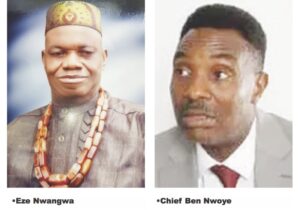
For another traditional ruler, Eze Young Nwangwa, the Commission should focus on construction of access roads in the region, which he said have been in deplorable condition over the years.
Eze Nwangwa said: “Since after the civil war, roads in the Southeast have been in very deplorable condition and it will be appropriate if the Commission should rebuild these roads.”
The monarch said that the Southeast is the only region in the country where the Federal Government’s presence is not felt in the area of establishment of industries.
He, therefore, said that he would like the commission to address this so that young school leavers from the zone could be gainfully employed and by so doing, reduce crime wave in the area.
A prominent traditional ruler from Obingwa Local Government Area, Eze Okey Ananaba, said: “People of the Southeast have been talking about marginalization, as the Commission is being set up, there should be no internal marginalization. There should be equality in representation at the Commission by the component states and equal distribution of amenities to such states.”
And for former President General of Isiama Afaraukwu, Umuahia, Ikechukwu Ndubueze, the Commission should address those issues that led to Biafra agitation.
Ndubueze said that the Southeast is the only region in the country with neither an international airport nor remarkable federal presence.
He also called on the Federal Government to adequately fund the Commission.
In Ebonyi, President-General of Onicha Igboeze Town Union, in Onicha LGA, Chief Timothy Igboke appealed that the SEDC should first of all discover regional potentials and establish cooperation between the public sector, private sector and civil society.
He noted that economic activities in the component communities of Onicha Clan are not vibrant due to the dilapidated federal roads that cut across the area.
Nwigboke advised that the Commission take time to study the priority needs of the people and work towards achieving the goals without attaching interests or allowing external influences.
The Chairman of Ugwu Odida Village in Onicha, Ernest Okorie said that the agitations for secession have limited the zone’s capacity for development and suggested that dialoguing with the people would change the narrative.
He was upbeat that with proper management, the SEDC will reduce interregional and intra-regional development differences by creating a regional development momentum.
Additionally, President General of Ozibo Ibenta Development Union (OIDU) in Ebonyi Local Government Area, Stanley Nwiboko lamented that the community has been in darkness for many years because of lack of electricity.
Nwiboko also regretted that the area has no good road network, health centre and other social amenities despite its nearness to Abakaliki, the state capital.
“Our community as you can see is very close to the town, the place is part of the capital city, but it has nothing to show that it is in capital city.
“It is only in our community that one cannot find health centre. We have lost many lives during emergencies because there is no health post to attend to the emergencies.
“It is our expectation that the SEDC law will favour us through the provision of social amenities,” he stated.
For the National President, Ogbako Ndigbo Nile, Dr Akpelu Azunna, all the Igbo want is an egalitarian society and that they should be treated equally.
He said that the commission should not be a kind of political gimmick for hoodwink and must be adequately funded.
“The Southeast region has suffered infrastructural neglect since the end of the civil war. The region has the worst road networks in the country. The commission should be able to address those issues that are responsible for the agitation. We don’t want a commission which is just a political gimmick.
“We want good road network, investments in our educational system, cottage industries that will reduce unemployment. We don’t want what is happening in the Niger Delta Development Commission (NDDC) where projects meant for the communities are taken to the North. The commission should be properly funded after all Southeast, especially Imo, Abia and Anambra states that are oil producing. Again, members of the board should include leaders of Igbo socio-cultural organisations to give direction to the commission,” Azunna suggested.
Similarly, the Chairman of Board of Trustees of Imo Youth Assembly, Dr Harold Wilson Onumu, said that the region needs road infrastructural renewal as the existing ones have decayed as a result of neglect, and that even developmental projects that were started by the Federal Government over two decades ago are yet to be completed.
Also, National Vice President, United Igbo Elders Council Worldwide, Maj. Gen. Collins Remy Ihekire (rtd) in setting agenda for the SEDC said that “infrastructure and facilities should include roads most critically in Imo State to focus on Ikeduru, Mbaitoli, most of Okigwe zone. All of Abia State, interior of Enugu State. Educational institutions especially primary and secondary schools. Establish youth development centres for skills acquisition and most importantly moral reorientation without which nothing can be achieved with the youths whose understanding of wealth is bizarre. Every effort much be backed up by good medical facilities that are well staffed.”
Nevertheless, not a few people and groups doubt the political will of the Federal Government to genuinely use the SEDC to develop the region, addressing years of neglect suffered by the people.
They argued that there was nothing special about the SEDC since most of the geo-political zones now have development commissions.
For this group, this special purpose agency might not do much if its initiators denied it the enablement to perform.
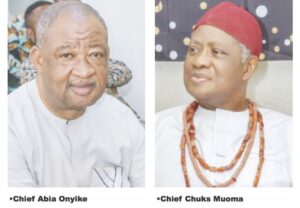
Secretary of ADF, Chief Abia Onyike, said that on paper, the Commission is a positive step in righting the wrongs of the past in the Southeast.
According to him, the infrastructural and developmental deficits suffered by Igboland since the end of the civil war can now be addressed.
However, Onyike stated that for the commission to live up to expectation, the current monolithic federation must give way to genuine federalism.
“If there is a functional regional autonomy, there may not be any need for Development Commissions which are still to be funded from a central purse, though with a better constitutional guarantee,” Onyike enthused.
He expressed fears that the SEDC might just become another political patronage for the Igbo elite.
Onyike raised pertinent questions such as: “Will the funding be reliable? What of the attitude of the Igbo political elite; where are they going to come from? Will they come from the moon? Will there be a significant change in their mentality and orientation? If the Commission operates under the present decadent federal system, it will not lead the Southeast anywhere. The Commission could well become a platform for self-enrichment and looting of the common patrimony, whereby the developmental aspirations of Ndigbo would remain in jeopardy.”
Like the ADF secretary, another Igbo leader, Chief Goddy Uwazulike said that he was not enthusiastic over the signing of the bill into law because some other similar agencies had failed to deliver on their mandates.
“My expectations are many, but they are tempered by the realisation that we have seen this before.
“The commission is one of the bodies created for almost all the zones. The Niger Delta Development Commission (NDDC) was the first to be created by the Federal Government. Quite often, the various commissions are seen as political patronage, rather than development drivers.
“My fear is that this SEDC will go the way of the 3Rs…all motion and no movement… A talk-show champion run by people who see poverty of thought as a virtue,” Uwazulike said.
For eminent lawyer and former National Legal Adviser of Ohanaeze Ndigbo, Chief Chuks Muoma (SAN), it was too early to believe that the commission would be a reality.
“It’s a bit risky commenting on the content of a package that has not been delivered and opened. Let us wait and see,” Muoma cautioned.
Former Chairman of the All Progressives Congress (APC) in Enugu State, Dr Ben Nwoye, said that though the commission was still in the incubation stage, there is no guarantee that it would take care of the developmental challenges faced by the Southeast.
“I think there is a lot of over expectation by people of what the commission will do. They need to wait. The Act has established it, but it has not been put together. What we should be talking about is putting this commission together. Making sure that it is not functioning only on the paper. There are no commissioners appointed, no administrators appointed, it is still a paper tiger.
“So, one cannot begin to expect something from a paper tiger and become realistic about it. But if tomorrow it comes to reality and we have the right people managing the commission, it is expected to now drive development home and then specifically touch those points where there is infrastructural deficit. Though I am not in agreement,” Nwoye said.
He said that the SEDC should not be seen as the magic bullet, noting that there is infrastructural deficit everywhere across the country despite similar development commissions in the different places.
“I have gone around this country and there are infrastructural deficits everywhere. So, the Southeast is not in isolation. I have been to the Northeast, Northwest, Southwest and you see deficit everywhere. South-south has had NDDC and the face of NDDC is the East West Road. Up till today, it is still a nightmare, and you still have NDDC. Not to talk about schools where children are going and walking through mud of water, sitting in a classroom without a roof and there is NDDC.
“I have been to the Northeast where we have the North East Development Commission. I am talking about where these things are in place and working. It didn’t eradicate the infrastructural deficit in the Northeast.
“Governance is a gradual process. For now, it is a paper tiger. My advice is to give them a charge to put together people who are willing to do the right thing. My hope is that a few people will not hijack it,” Nwoye noted.
He advised that credible individuals who understand the reason for the creation of the commission be recruited to ensure that it achieves its purpose.
Project Manager, Advocacy Partnership for Good Governance, Onyebuchi Igboke shared similar sentiments citing the failures of the NDDC in addressing pressing issues in the oil producing states of the delta.
“I am of the opinion that this commission, no matter how good the intention may sound and how rich the document may look, might not be able to bridge the gap of infrastructural deficit in the Southeast. The political interference as you have seen across other commissions will also play out because this is Nigeria and we have our style of doing things which is always wrong. Most times, it is not about the policy or creating of ministries or agencies that is the problem.
“The problem is always institutional. You begin to talk about the structure. Who are going to make up the members of the commission? Who is going to appoint them? Are they going to be technocrats? Are they coming from civil societies? Everything is about politics. To me, we overplay politics and undermine development.
“So, I am yet to see and be convinced that the commission will deliver its purpose. The purpose is clear and good, but my fear is who knows if it will not be like other commissions. But if I am proved wrong, I will be glad just like any other south easterner.
Notwithstanding, Igbo youths applauded President Tinubu and declared that with the SEDC, the 30-month civil war, which ended in 1970, leaving very devastating effects on their people, has actually ended.
“For us, this commission has actually ended the civil war. We are demanding that the commission should be done in a way that Igbo youths are part of it. In fact, the youth should chair the commission,” they demanded.