Follow Us on Google

‘I’ve learnt how the world is a stage’
‘Style is anything I’m comfortable in’
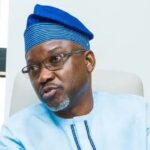
As the General Manager of Lagos State Emergency Management Agency, LASEMA, Adesina Tiamiyu’s job is a herculean one. From rescuing accident victims at scene of an automobile crash to retrieving dead bodies from collapsed buildings or bailing out stranded accident victims on waterways, Tiamiyu and members of LASEMA team are always on the ground carrying out rescue operations. 24 hours of the day, Tiamiyu is on duty.
In this interview with TUNDE THOMAS, Tiamiyu talks about his job at LASEMA, how the work is affecting his private life, his challenges and a host of others.
How has it been since your assumption of office as GM, LASEMA some months ago?
LASEMA as an emergency management agency as you know is saddled with the arduous task of confronting emergency situations in Lagos State. Before coming on board as the new General Manager, I was part of the establishment. I worked for an agency that was responsible for management of LASEMA Response Unit. So, I’m not new to the system.
I came on board with a lot of experience in emergency management. So, it has been easier for me to cope, and we thank God that the agebcy has always been on top of every situation. We also thank God that since Governor Akinwumi Ambode mounted the saddle in Lagos State, he has accorded top priority to issues relating to security and emergency. The governor has not invested much in security, but has also done a lot for emergency management services.
How do you react to allegations that at times, the organisation is slow in responding to emergencies?
This is a new LASEMA. We have a new order in place today, and our focus is to be a proactive agency that is determined 24 hours of the day to respond to any emergencies rather than wait to be informed or alerted before responding. Today, our personnel and equipments are strategically placed in different parts of the state to swiftly tackle emergency situations.
As part of the new order, we now deploy patrol vehicles and bikes on 24 hours basis to monitor situations in different parts of the state. It is these patrol vehicles and bike operators that alerts LASEMA headquarters, especially the control room, to any emergency situation. This is a departure from the old order where we waited for Lagosians to alert or call our attention to emergency situations.
Of course, Lagosians still call us on the emergency 112 numbers, but LASEMA patrol vehicles and bikes still go round to monitor situation.
We also received false calls or alarms which we refer to as hoax. Some of these calls are not actionable but we don’t reject any call because you never can say which call is serious in nature. We’ve trained our personnel on how to be nice to people on phone, otherwise if you receive some of these calls that are funny and not relevant to emergencies, you may be upset. But our personnel have been well groomed to be courteous to all in every situation.
Imagine somebody dialing you on emergency line, and you pick the call and the caller is complaining that he or she is hungry or that they have had power outage in their neighbourhood for over a month. How are those cases related to emergencies?
How would you describe Lagosians’ attitude to issues relating to accidents or emergency situations?
I will only appeal to Lagosians that whenever accidents occur, they should show some level of respect to our officials’ on rescue mission.
What you discover today in Lagos today is that in an emergency situation, people would be busy taking pictures which they want to upload on the internet. Meanwhile, the people are dying. Our agency can’t do the work alone, it needs the cooperation of Lagosians.
Had there been any incident where your personnel or your humble self had been exposed to dangers in the course of rescue mission?
Two weeks ago, along Lagos-Abeokuta Expressway, some of our rescue team or responders were almost attacked by hostile crowd while trying to remove a tanker that fell on the highway. It was the intervention of RRS police team that saved the situation. While our men were doing their work, some motorists were complaining that LASEMA team was causing traffic hold up. Few days ago, on the Third Mainland Bridge, some LASEMA workers were hit by a vehicle while they were rescuing some accident victims.
Another serious threat we even face now come from Towing Vehicle Operators who have now become very hostile to LASEMA.

The grouse of these people is that we are disturbing their business because LASEMA towing trucks tow broken down vehicles free of charge. We don’t collect money. These towing vehicle operators have become a thorn in the flesh of LASEMA.
How were your growing up years like?
I grew up in Ibadan but very early in life, precisely at the age of 10. I had to leave the comfort of my home to attend secondary school in Kwara State. I gained admission into Idofian Grammar School, but then because of my tender age, some of my father’s friends and family members expressed concern about being allowed to go far away from home, but my father insisted that I must attend school. He told his relations that traveling far away from home would enable me to learn life lessons at a tender age. He insisted that the admission was part of my learning process.
As at that time, my father, Alhaji R.I.O. Tiamiyu was a senior officer with the Oyo State Fire Service, but rose to become Director of Fire Services in Oyo State. He could afford to send me to any other highbrow secondary school in Oyo State but he insisted that having heard so much about the quality of education being offered at Idofian Grammar School, that I must go there.
Eventually I ended up completing my secondary school education in that school. I thank God that I attended the school because apart from home, the school helped to shape my life to become what I’m today. I came out of the school becoming a young lad that every member of my family was proud of.
It was later I attended University of Ibadan, and later University of Lagos.
Would you say that your father’s job as Fire Service Officer influenced your current job?
May be in a way because when I was very young. Each time I and my siblings saw our father in fire service uniform, we were always impressed.
However, what used to excite me more is whenever I see him in complete combat gear, that whenever he was fully dressed ready to lead operation whenever there was fire outbreak anywhere in Ibadan or other parts of Oyo State.
Whenever there was an emergency, that was when you would see the other side of my dad. No jokes, no wasting of time or exchange of compliments with anybody including his wife and children – you would see him barking out orders as he prepared to leave home to join his other colleagues.
At times, he would be having his meal or siesta, then they would radio him about an emergency or fire outbreak, he would leave everything including his food to answer emergency calls.
I remember that fire incident that razed Cocoa House in 1984, my father sustained injuries while working to put out the fire. His colleagues told us how he even refused to be evacuated or abandon his men. He was reported to have insisted that the task at hand must be accomplished before he would leave the place.
I believe that I imbibed that spirit from him. I work 24 hours of the day. I also receive calls because you never can say which call would prove to be a genuine.
On the average daily, we receive not less than 50,000 calls at LASEMA but we never reject any call. We have learnt how to manage our calls.
What were you doing before you joined LASEMA?
I read Yoruba at the University of Lagos for my first degree. Later, I obtained Postgraduate Diploma in Mass Communications from the same institution. But before then, I had attended University of Ibadan where I obtained a Diploma in Library Studies.
I started out as a career civil servant with the Federal Ministry of Arts and Culture. I spent 15 years working at the National Theatre. In the course of my sojourn at the National Theatre, I also became a union leader. At a point because of my activism as a unionist I was persecuted by my employers.
Later when I got bored with the routine civil service staff, I disengaged. It was after my disengagement that I decided to get involved with emergency work, and I joined an agency that was providing technical service to LASEMA. I was there before I was appointed as the General Manager of LASEMA. So, in a way I have been in the system before my appointment as the helmsman. I can say that even though I read Yoruba, but I’m operating in a familiar environment.
What lessons has life taught you?
That all is vanity. That we should be God-fearing. Life has taught me that what you don’t wish others to do to you, don’t do it to others. Also in your dealings with people, be fair to all.
With my work, I learn a lot of lessons daily. Today you see a mansion with people living there, but the next moment you heard that the building had collapsed with many people trapped, with others losing their lives.
When we get to accident sites and commence rescue operations and you see people that were alive few hours ago but now dead, you will appreciate life, and realize that truly, all is vanity.
Life has taught me that I’m on a mission in this world, and that I must strive to ensure that I play my own little role to make society comfortable for others.
What is your dressing style?
I’m a simple person. I’m comfortable in any wear, but I’m not flamboyant. I believe in being neat and smartly dressed.

How do you relax?
There is hardly anytime for relaxation now, especially with the emergency job that I’m doing. Although if time permit, I love playing soccer. I like playing football. But like I said, this job is a 24-hour job. I answer emergency calls almost every second, but it is a job I love doing because it is not only very challenging, I also regard it as service to humanity.
What are your likes or dislikes, what puts you on or turn you off?
I detest laziness. I believe that anything you set out with determination to achieve is within your reach if you aspire towards it.
Ask my staff here, they will tell you that what I detest most is laziness. A man must be prepared at all times. You must be prepared to face challenges of life, and fathom how to overcome such challenges. To me challenges brings out the best in a man.
What are your agency’s contingency plans for the ‘ember’ months especially the Yuletide period when it is generally believed that accidents and emergencies are usually on the increase?
Like I said earlier in the course of the interview, our focus now is to prevent accidents. We don’t want accidents to happen before we swing into action to rescue victims and retrieve dead bodies. Our emphasis now is to take proactive measures.
To achieve this objective, we are deploying patrol vehicles, and bikes along the highways for surveillance and monitoring – within the next two or three weeks, our men will be visible on Lagos highways, with the plans we have put in place, there is no cause for alarm for the ember months. However, Lagosians should also be safety and security conscious.
LASEMA officials are more visible during cases of collapsed buildings or boat mishaps that claim lives, what is your agency doing to stem the tide?
We have relevant agencies saddled with monitoring buildings that are distressed even though that is not our primary duty. But when Lagosians or concerned residents draw our attention to buildings that pose threat to the neighbourhood, we deploy our officials to such places.When they come back with their reports, if it is necessary to bring down such buildings in order to save lives, we have the capacity to do so.
The same thing goes for commercial boat operators. We have an agency that is saddled with waterways operations. But what we often do is to carry out enlightenment campaign among the operators reminding them on the need to comply with safety standards so as to avoid accident that will lead to loss of lives.
Has your job as Chief Emergency Officer in Lagos State impinged on your private life ?
When you are passionate about your job, nothing else matters to you. When I took over, I knew that the new position would come with some deprivations.
Now, I don’t have a private life again. My numbers are everywhere and I receive calls almost every minute. I can’t socialize again. How can I attend parties when there are emergencies to attend to? How can I socialize when Lagosians are agonising. This job is a 24-hour job. Every staff of LASEMA have no private life. We are all prepared for emergency. My phones are never switched off, and I must answer every call.
My children hardly see me at home again. There was a time I was away on rescue operation for 3 days. But all these are challengesthat comes with the job and my joy is that the work I do I consider it as service to humanity. Thank God, I have an understanding family. Even my wife has also become a responder, a rescue operation worker. As an emergency responder, I don’t sleep with my two eyes closed. But it is a job I love doing, serving humanity.