Follow Us on Google
By Philip Nwosu
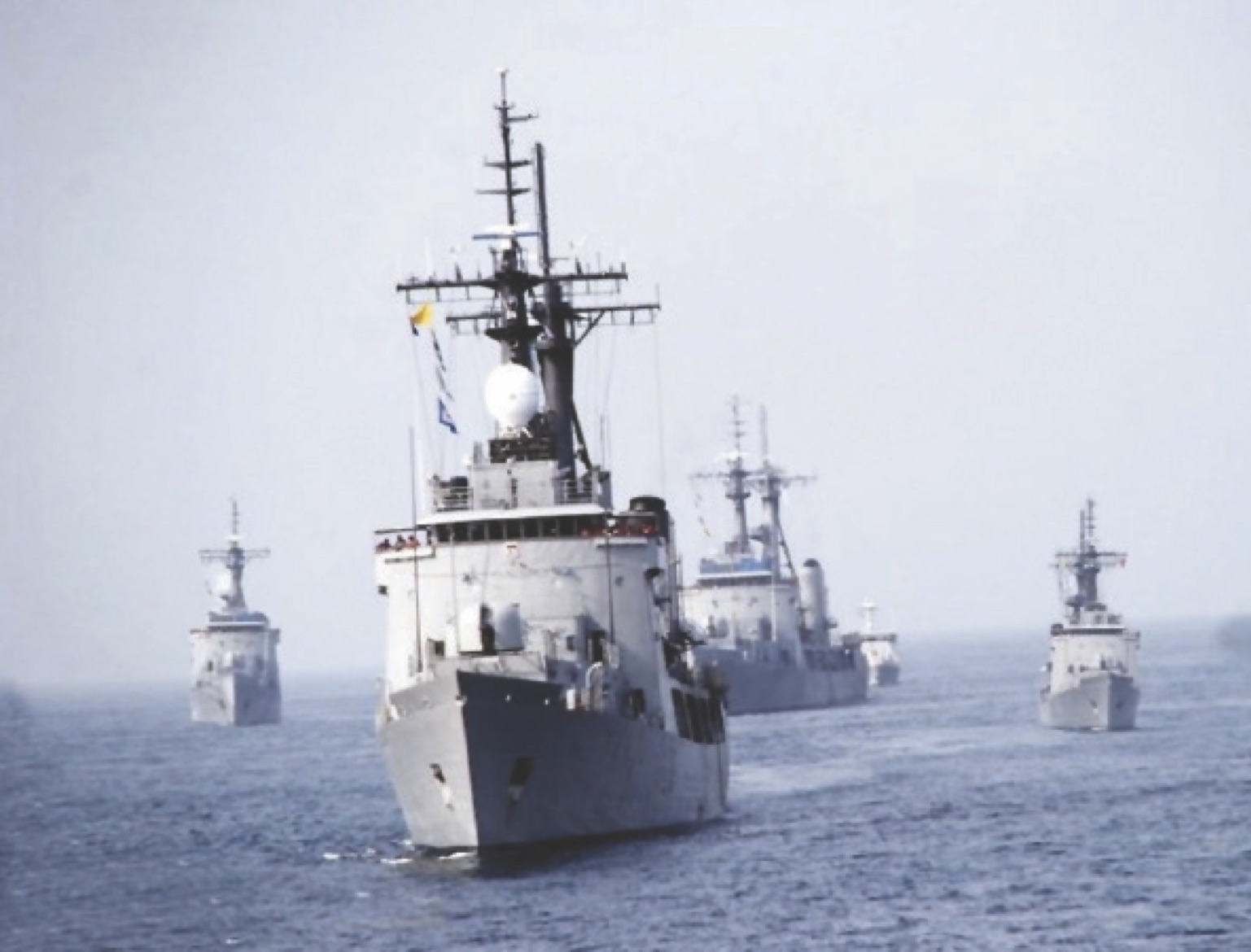
The Chief of Naval Staff, Vice Admiral Idi Abbas, recently pulled 16 Nigerian Navy warships to sea for the 2025 Chief of Naval Staff Annual Sea Inspection, code-named Exercise Eru Obodo. The exercise, which commenced along Nigeria’s maritime corridors, represents one of the largest naval deployments executed this year under the Nigerian Navy’s routine operational calendar.
Flagged off by Vice Admiral Idi Abbas onboard the lead vessel, NNS KADA, the vessel also has onboard all Flag Officers Commanding(FOCs) of the various naval commands as well as key principal staff officers from Naval Headquarters, demonstrating the strategic importance attached to the operation. Eru Obodo—a phrase literally translated as “Town Sweep”—symbolised the Navy’s intensified effort to secure Nigeria’s waters from emerging and persistent maritime threats.
The deployment comes at a time Nigeria continues to tackle challenges linked to piracy, crude oil theft, illegal bunkering, smuggling, and the infiltration of unregulated craft across maritime borders. For years, the Gulf of Guinea has attracted international security attention as a global hotspot for piracy, although Nigeria has recorded major improvements in recent years due to sustained naval patrols and inter-agency cooperation.
Vice Admiral Abbas noted that Exercise Eru Obodo is designed to consolidate these gains by projecting credible naval presence across key maritime approaches, improving command efficiency, and testing platforms, logistics systems and crew combat readiness. According to senior officers participating in the exercise, the deployment further demonstrates the Navy’s commitment to ensuring that Nigeria’s maritime domain remains safe for commerce, offshore production, and legitimate socio-economic activity.
The exercise features 16 capital ships, patrol craft, logistics vessels and auxiliary platforms. Although the Navy did not immediately list specific units deployed, NNS KADA—a strategic sealift ship inducted into service in 2022—leads the flotilla as the command and control platform for the inspection. NNS KADA, acquired specifically to enhance Nigeria’s maritime power projection capability, has played significant roles in international missions and logistics operations across African waters.
Also expected to participate are naval helicopters, maritime patrol aircraft, Special Boat Service (SBS) detachments and elements of the Nigerian Navy Ship Repair and Maintenance units tasked with ensuring technical readiness of platforms during sea passages. The participation of all Flag Officers Commanding signals that every naval command—from Western and Central Naval Commands down to the Naval Doctrine and Training establishments—has operational tasks and evaluation objectives tied to the exercise.
In recent years, the Nigerian Navy has placed special emphasis on joint operations with regional and national agencies responsible for maritime safety and governance. Exercises such as Eru Obodo are therefore structured not only as naval combat drills but also as cooperative engagements for law enforcement and domain awareness.
As part of this year’s programme, personnel from the Nigerian Maritime Administration and Safety Agency (NIMASA), Nigeria Customs Service, Nigerian Ports Authority and other maritime enforcement departments are expected to integrate with naval units in specified phases of the operation. Officials say the collaboration would improve information sharing and enhance maritime law enforcement—critical in dealing with smuggling routes, smuggled petroleum products, and arms movement across the Gulf of Guinea.
Beyond visible ship movements, the sea inspection is designed to evaluate the operational condition of Nigeria’s naval platforms, sensors, and communication systems. Vice Admiral Abbas insists that every capital ship must undergo periodic inspection and sea-worthiness certification under realistic operational scenarios.
During Eru Obodo, participating vessels are expected to conduct maneuvers including tactical stationing, maritime interdiction procedures, gunnery practice, replenishment operations, search and rescue simulations, and emergency response drills. Crew members will also be assessed in areas such as damage control, watch-keeping performance, intelligence handling and interoperability with other units.
According to naval observers, this level of inspection allows the Navy to identify defensive gaps, maintain high levels of naval professionalism and boost readiness for real-time maritime threats. The inspection also forms part of broader preparations for Nigeria’s participation in multinational operations and joint exercises across the African maritime space.
Oil theft remains a major national security issue costing Nigeria billions in lost revenue every year. Many of the illegal operations occur in littoral zones, creeks and offshore locations where criminal groups exploit difficult terrain and sometimes operate with sophisticated equipment.
Exercises like Eru Obodo help to reinforce the Navy’s capacity to confront crude theft networks, detect suspicious vessels, and pursue unregistered offshore movements. Naval personnel acknowledge that criminal groups at sea are constantly changing their tactics, forcing the Navy to adapt continuously and deploy more effective surveillance and interdiction procedures.
The Navy has repeatedly stated that securing Nigeria’s maritime environment is inseparable from national economic development, as over 70 percent of national revenue depends on offshore oil and gas infrastructure located along Nigeria’s maritime belt.
The Gulf of Guinea remains a crucial maritime highway for Africa’s oil shipping and commercial trade. Nigeria’s leadership within the region means that every improvement in domestic maritime security contributes directly to collective regional stability.
Over the past four years, international reports have recorded significant reductions in piracy incidents linked to Nigeria, largely credited to increased naval patrols, better coordination and sustained investment in maritime domain awareness. Analysts believe that Exercise Eru Obodo will build further tactical assurance for the international shipping community and reinforce confidence among maritime insurers operating in West African waters.
Since assuming office as Chief of Naval Staff, Vice Admiral Abbas has driven an ambitious programme that includes improved fleet maintenance, enhanced personnel welfare and training, and renewed attention to logistics and naval infrastructure. Under his watch, the Navy has continued to expand its operational footprint while renewing cooperation with regional navies and international partners.
Exercise Eru Obodo therefore aligns with the CNS strategic directive to ensure the Navy remains combat-ready, professional and capable of projecting national maritime interests across the Gulf of Guinea. Senior naval sources confirm that additional phases of sea exercises will follow throughout the year, targeting different areas of maritime security and operational performance.
As the vessels continue patrol and inspection sequences at sea, the Nigerian Navy says the exercise will extend over several days, covering strategic points from Lagos to the nation’s maritime approaches. Naval headquarters is expected to release further updates on major milestones achieved during the exercise as evaluation continues.
Officials emphasise that Eru Obodo is not simply a ceremonial manoeuvre but a clear operational message that the Nigerian Navy remains vigilant and fully prepared to defend Nigeria’s maritime domain. The deployment of 16 ships—combined with senior leadership presence—projects a confident, assertive and professional Nigerian Navy determined to secure the nation’s maritime future.