Follow Us on Google
•Cost of missing open defecation deadline
By Doris Obinna
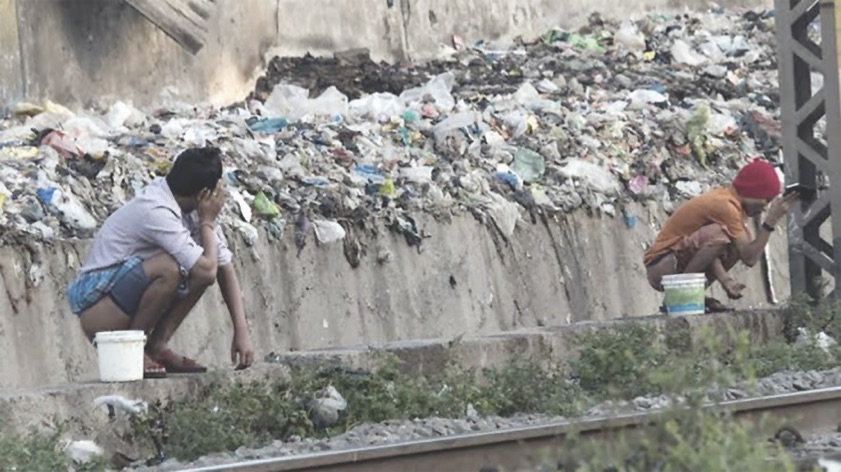
In fields, bushes and rivers across Nigeria, nearly 47 million people still relieve themselves in the open, a daily reality that places the country among the highest globally for open defecation. Driven by poverty, weak infrastructure, cultural practices and poor hygiene education, the practice continues to fuel deadly outbreaks of diarrhoea, cholera and typhoid, killing more than 100,000 children under the age of five every year.
This practice causes the spread of diseases such as cholera, diarrhoea and typhoid, killing more than 100,000 children under five annually.
Roughly 47 million Nigerians, largely in rural areas, lack access to proper sanitation while the key drivers include poverty, lack of education, cultural beliefs and lack of functional sanitation facilities.
According to the findings from the 2021 WASH National Routine Mapping (WASHNORM) survey report, the 47 million people in Nigeria practice open defecation. Accordingly, in 2018, Nigeria was declared a state of emergency in the Water, Sanitation, and Hygiene (WASH) sector, demonstrating political will at the highest level of government, and launched a national campaign tagged ‘Clean Nigeria: Use the Toilet’ to jump-start the country’s journey towards becoming open defecation-free (ODF) by 2025.
The human toll is devastating. Diarrhoea diseases linked to poor sanitation and unsafe water are responsible for widespread child mortality and severe stunting, undermining Nigeria’s future generation.
Despite commitments to eliminate open defecation by 2025, Nigeria has missed the deadline, prompting warnings from the United Nations Children’s Fund (UNICEF) that millions remain exposed to preventable diseases.
Nigeria now hopes to become open defecation-free by 2030, but experts say the window for action is narrowing fast.
According to UNICEF, open defecation has devastating consequences for public health. Faecal contamination of the environment and poor hygiene practices remain a leading cause of child mortality, morbidity, under-nutrition and stunting, and can potentially have negative effects on cognitive development. Poor sanitation can also be a barrier to education and economic opportunity, with women and girls often particularly vulnerable to the consequences of poor sanitation services.
Speaking, UNICEF’s WASH Specialist, Monday Johnson, said the dangers of open defecation goes far beyond discomfort or environmental degradation.
“Once faeces are in the environment, there is a likelihood that a whole lot of diseases are transmitted to human beings. Children are more susceptible because their immune systems are not fully developed.”
For infants and young children, basic hygiene can be a matter of life and death. Johnson stressed the importance of safe food preparation, proper hygiene during breastfeeding and access to clean water. “Whatever goes into the child’s weak immune system can affect the child’s health,” he said, noting that rural communities bear the heaviest burden, where sanitation facilities are scarce or non-existent and open defecation remains socially accepted.
Commitments and strategies
According to UNICEF, the Executive Order 009, signed in 2019, declared a state of emergency in the WASH sector, setting the target for an ODF nation by 2025.
“Clean Nigeria, Use the Toilet campaign: A nationwide, sustained campaign focusing on sanitation behaviour change, awareness and the construction of safe toilets in communities, schools and public spaces. The plan requires about N100 billion annually to construct approximately 20 million toilets, utilising both public and private sector funding.
“States like Lagos integrated the 2025 target into their local strategies, including community-based interventions and the construction of public toilets. And by 2024, over 150 local government areas were declared ODF and approximately 23 million people gained access to improved sanitation since the campaign began. The initiative however, aimed to improve public health, reduce diarrheal diseases, and align with Sustainable Development Goal 6 (SDG 6) for clean water and sanitation.”
Other News
Missed target, implication
Nigeria’s efforts to end open defecation have produced uneven results. While some progress has been recorded, it remains far from the national target.
Johnson continued: “Across Nigeria, achievement varies depending on how serious the government is. Those that set aside funds and support what UNICEF is doing have gone far.
“So far, only two states have been officially declared open defecation-free, and just 140 of Nigeria’s 774 local government areas have achieved ODF status. Katsina state is the most recent addition to the list, while others lag far behind. Oyo state illustrates both progress and challenge. In Ona Ara Local Government Area, nine of 11 wards have been certified ODF, with the remaining wards located in densely populated urban zones where sanitation planning is more complex.
“Nigeria’s failure to meet the 2025 deadline, Johnson admitted, reflects slow adoption and limited government ownership. There is no state fully funded by the government alone without development partners in moving towards ODF, and that is very critical.”
At the heart of the crisis is chronic underfunding. Sanitation, Johnson noted, is rarely prioritised in government budgets. “Sanitation is a very hard sell. You can point to a borehole built with N10 million. But if you spend that same money on hygiene behaviour change, the results take time. You don’t see them immediately.”
The UNICEF specialist also added that weak institutional structures worsen the problem. According to him, many local governments lack dedicated sanitation or WASH departments, with responsibilities scattered across health, works or community development units. This fragmentation, Johnson said, makes it difficult to secure consistent funding or long-term planning.
He disclosed that population growth and rapid rural-urban migration are adding further strain. “Without forward-looking, citywide sanitation plans, existing facilities are quickly overwhelmed. If you don’t plan ahead, when more people come in, it will impact the existing facility, and we will go back to where we started,” Johnson warned.
Integrating WASH into development plan
UNICEF insists the path forward begins with ownership by government and communities alike. Johnson urged states to integrate WASH targets into their short-, medium- and long-term development plans and back them with dedicated budgets.
“If WASH is prioritised and planned for, that is the beginning of ownership. But government action alone is not enough. Communities must also take responsibility for maintaining facilities. Johnson cited cases where multi-million-naira projects failed because of minor faults communities refused to fix themselves.
“It might be N10,000.00 that breaks a N20 million facility. People need to own what the government provides.”
Capacity building and climate resilience UNICEF disclosed are also essential. “As climate change affects water availability and infrastructure, Nigeria must adopt climate-smart sanitation strategies to protect gains already made.
Nigeria’s missed 2025 deadline is a warning, not a conclusion. Progress, Johnson maintained, is possible but only with sustained funding, stronger institutions, community ownership and political will.
“Unless Nigeria takes ownership, plans ahead and funds WASH properly,” he said, “the goal of ending open defecation will remain out of reach.”