Follow Us on Google
“The one who adapts his policy to the times prospers, and likewise that the one whose policy clashes with the demands of the times does not.”
— Niccolo Machiavelli
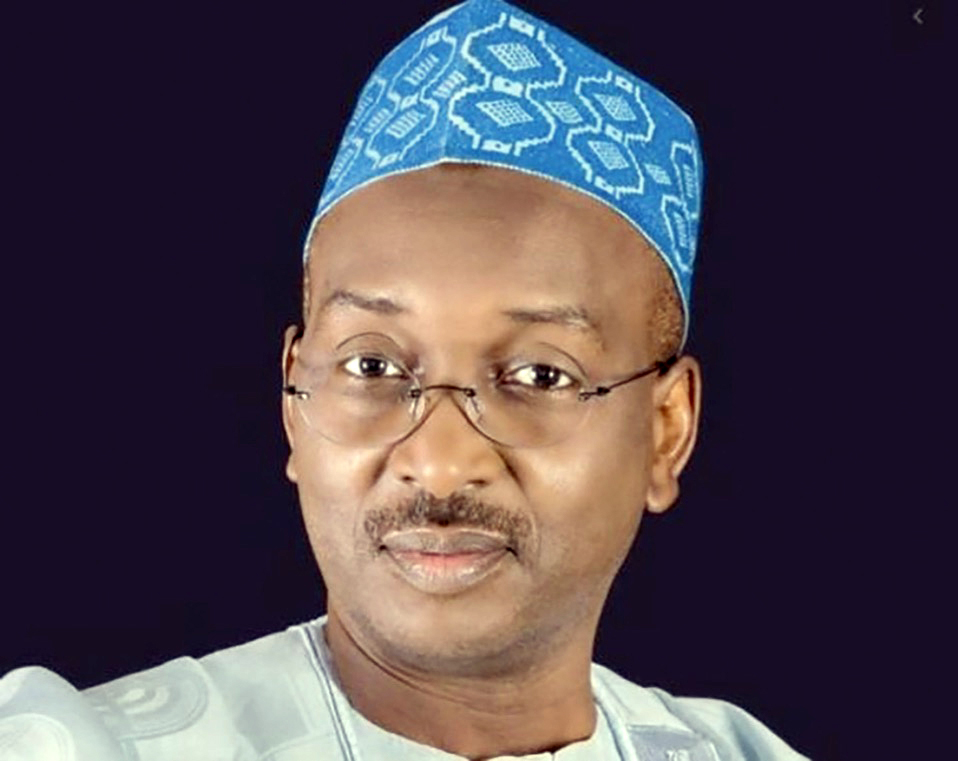
By Omoniyi Salaudeen
There is currently no clear pathway for anti-incumbent forces to coalesce into a common front ahead of the 2027 election.
With three and a half years to prepare, expectations were that the opposition would focus on building a single platform for governance. However, while calls for a change in the status quo have intensified, efforts toward platform consolidation remain fragmented. Instead, the process has taken on the character of a rollercoaster, marked by dramatic highs, sudden drops and unpredictable twists.
The Abuja summit initiated by Salihu Lukman under the auspices of G100 was meant to change that narrative. Convened on August 31, 2026 at the Shehu Musa Yar’Adua Centre, the gathering brought together six major opposition parties — ADC, PDP, SDP, APM, NDC and PRP — with the stated goal of forging “a framework for opposition cooperation and coordination.”
For a moment, it raised hopes that the anti-Tinubu forces could present a united front. But in the end, the resolution created more confusion than answers. Key figures like Atiku Abubakar and Peter Obi stayed away, and the communiqué offered broad declarations without concrete mechanisms for candidate selection, power-sharing, or policy alignment. What was billed as a reset has instead diverted attention away from policy alternatives to mere rhetoric. And with time ticking toward 2027, the question remains: can this opposition move from agitation to organisation?
What the summit has done is highlight the volatility and structural paralysis gripping the anti-incumbent coalition ahead of the 2027 general election. The resolution reveals an immutable political reality: a mutual step-down between former Vice President Atiku Abubakar and former Anambra State Governor Peter Obi looks increasingly impossible.
Its proposed “Single-Term Transition Charter,” meant to forge a unified front, runs into systemic, demographic, and personal forces that render any voluntary concession dead on arrival.
To begin with, Nigeria’s unwritten rule of presidential rotation presents a major structural barrier. Atiku operates on the conviction that power rotation is secondary to electoral viability. Northern political strategists argue that President Bola Ahmed Tinubu, a Southerner, can only be ousted by a candidate capable of sweeping the massive voter blocs of the North-West and North-East. From Atiku’s perspective, stepping down for a Southern candidate like Peter Obi would alienate core Northern electorate and hand the ruling All Progressives Congress (APC) an easy victory.
Other News
Conversely, Peter Obi’s candidacy is anchored on historical equity and generational turnover. Having served as Atiku’s running mate in 2019 under the PDP, Obi and his supporters view another Northern presidency, especially following Muhammadu Buhari’s eight-year tenure, as politically unviable and fundamentally unjust to the South, specifically the South-East. For Obi to step down for Atiku would destroy the core ethical premise of his political movement.
In the circumstances, the organisational machinery backing both figures makes a compromise structurally unworkable. Atiku represents traditional, delegate-driven, party-structure politics. His political machinery relies on deep patronage networks, state-level party executives, and institutional party power.
On the other hand, Obi’s political capital relies on an organic, anti-establishment movement driven by youth, urban voters, and a desire to dismantle the existing political class, of which Atiku is a quintessential representative. If Obi were to concede to Atiku, he would alienate his core “Obidient” base who view Atiku and Tinubu as two sides of the same political establishment. His movement would fragment rather than transfer to Atiku.
Yet, Atiku’s institutional political base would refuse to submit to what they view as an unstructured, non-traditional political movement lacking a deep legislative and gubernatorial footprint across the 36 states.
Beyond that, the current scenario presents legacy and age paradox. Both leaders face irreconcilable timeline pressures that eliminate any incentive to yield. Atiku sees this election as his final quest. Born in 1946, 2027 represents his last realistic attempt at the presidency after six previous bids. At this stage of his career, there is no future cycle for him to “wait his turn.” Sacrificing his final bid for a younger candidate offers no long-term political dividend for his camp.
On the other hand, the Obidient Movement is betting on Obi’s electoral momentum. Having shattered Nigeria’s traditional two-party duopoly in 2023 by securing over 6.1 million votes on a third-party platform, Obi enters the 2027 cycle with massive political momentum. Stepping down to play second fiddle again would effectively extinguish his political trajectory at the height of his influence.
In all, the summit merely highlighted the classical game theory dilemma facing opposition actors. Because neither actor can guarantee that the other’s voter base will transfer cleanly upon an endorsement, the rational choice for both, from a self-preservation standpoint, is to run independently.
The hard truth from Abuja is this: chasing personalities will not win 2027. For too long, the opposition conversation has revolved around who to stop, rather than what to offer. To most analysts, making President Bola Tinubu the central issue is a tactical error. It reduces a national election to a referendum on one man, and cedes agenda-setting to the incumbent. Voters are already tired of protest politics. What they want to hear is what comes next.
This is where Salihu Lukman and his G100 must pivot, urgently. Instead of convening more summits to broker deals between political egos, the G100 should become the clearing house for ideas. The next three months must be spent building a credible, well calculated and coherent alternative policy framework that Nigerians can test against the APC’s record.
The opposition needs to answer real questions: What is the alternative to fuel subsidy removal and how will it be funded? What is the plan to tame inflation, fix the power sector, and create jobs for the 40 million young Nigerians entering the labour market? What is the governance model for security, education, and health that differs in substance, not just in slogan, from what obtains today?
Lukman’s credibility comes from his history as a policy thinker, not just a political broker. The G100 has the intellectual capacity to assemble economists, security experts, and technocrats across party lines to draft a “National Policy Covenant.” That document should be the opposition’s manifesto-in-waiting, published, debated in town halls, and owned by all six parties before any talk of a joint ticket.
Nigerians do not owe the opposition their votes because they dislike Tinubu. They will vote for the opposition when they see a government-in-waiting. Until the G100 and its allies stop making Tinubu the issue and start making policy the issue, the rollercoaster will continue. And on that ride, the only certain outcome is another term for the incumbent. The time for rhetoric is over. The time for alternatives is now.