Follow Us on Google

From Fred Itua, Abuja
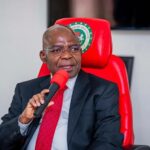
Plateau State Governor Caleb Mutfwang on Friday delivered a blistering indictment of Nigeria’s educated elite, declaring that the country’s deepest governance failures, including grand corruption, the capture of public institutions and the abuse of office, are overwhelmingly the work of trained, intelligent minds rather than the uneducated.
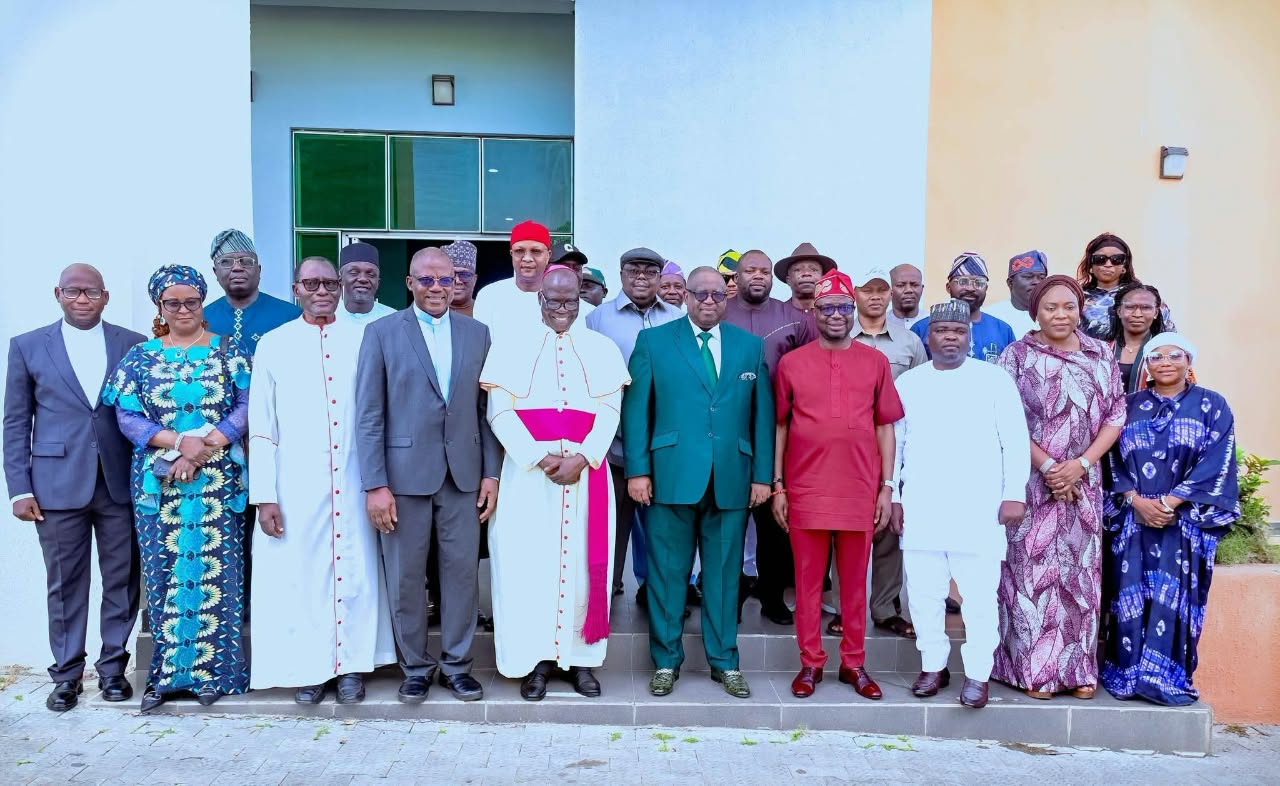
Speaking at the 15th Convocation Ceremony of Veritas University, Abuja, while delivering the lecture titled “Building the Nigeria We Want: The Role of the Educated Mind,” Mutfwang warned that academic intelligence without integrity has become one of the greatest threats to national development.
He told the graduating students that Nigeria’s persistent challenges cannot be blamed on a shortage of qualified people. On the contrary, he said, many of the practices destroying the country’s institutions are carried out by individuals with considerable education, professional expertise and technical knowledge.
“Indeed, I make an uncomfortable observation: the afflictions I diagnosed earlier, prebendalism, the privatisation of public office, grand corruption, the capture of institutions, are almost never the work of illiterate minds. They are overwhelmingly executed by educated minds,” Mutfwang said.
“The contract, the doctored account, the laundered fund, the ingenious evasion of law. All these are the signatures of trained minds. This is the paradox we must confront. The educated mind is at once our greatest hope, and when corrupted, it becomes our most sophisticated danger.”
Mutfwang challenged the graduates to understand that university degrees carry obligations beyond personal advancement. Education, he insisted, must be demonstrated through integrity, sound judgment and genuine service to society.
The country’s problem, he argued, is not a lack of intelligent people but the failure to deploy knowledge and ability in the interest of the common good.
He cited financial fraud, the manipulation of public contracts, doctored accounts and the laundering of public funds as clear examples of how professional expertise can be turned into instruments of destruction. He also pointed to internet fraudsters, describing the “Yahoo boy” as “a work of intelligence, but intelligence wrongly applied.”
Nigeria, the governor maintained, has never lacked brilliant citizens. Nigerians continue to excel across professions and continents. What has been missing, he lamented, is the consistent translation of intellectual ability into integrity and public service.
“Knowledge tells you what you can do, but conscience tells you what you should do. An educated mind without a formed conscience is not an asset to any nation. It is a very efficient danger,” he said.
Mutfwang identified integrity, responsibility and competence as the essential qualities graduates must embody if Nigeria is to overcome its development challenges.
On responsibility, he stressed the need to accept the consequences of one’s actions rather than hide behind good intentions, quoting the principle that citizens “must possess the willingness to own the consequences of our actions, and not merely the purity of our intentions.”
He also challenged graduates to develop practical skills capable of delivering measurable results. “Our nation is not short of people who mean well. It is short of people who can do well, who marry the will to the skill,” he said.
Beyond individual conduct, Mutfwang called for a collective commitment to building a country anchored on accountable leadership, functional institutions, the rule of law and the protection of citizens’ rights. The Nigeria citizens desire, he said, is one where hospitals heal, courts deliver justice, schools teach, and public office truly serves the public rather than private interests.
“It is a nation where merit is rewarded and mediocrity is not enthroned, where security is felt in the farm, in the market, at home, where prosperity is shared rather than captured, and where leaders understand office as stewardship and not as a spoil,” he declared.
A firm believer in Nigeria’s unity, the governor rejected the view that the 1914 amalgamation was necessarily a mistake. While acknowledging the country’s extraordinary diversity of histories, languages and identities, he insisted that God has a purpose for bringing Nigerians together and that the responsibility now lies with citizens to decide what to make of the country.
Corruption, ethnic polarisation, oil dependence and weak institutions have undermined development, he conceded, but these challenges can still be turned into opportunities for renewal.
“The Nigeria we want is buildable. What is required is not a miracle. It’s not a prayer meeting, but a generation of educated minds willing to do the building,” he said.
Mutfwang warned against the growing tendency of competent and principled citizens to withdraw from public life out of frustration. Abandoning the public square to those least fit to occupy it, he said, only deepens institutional decay.
“One reason our public square so often disappoints is that too many good people have vacated it, abandoning it to those least fit to occupy it. Government and public service are not dirty words. They are the arenas in which the future of a nation is decided. If the best remain outside, the worst will not.”
He urged graduates to participate in nation-building regardless of their professions, stressing that national development is not the exclusive duty of politicians. It is built daily in classrooms, clinics, courtrooms, offices, workshops and markets by people who simply do the right thing and do it well.
On the mass migration of young Nigerians, Mutfwang acknowledged the pressures driving the trend but appealed to those who leave not to disconnect completely.
“Stay and build, I urge you. And if you must go, remain connected by contribution,” he said, calling on them to support Nigeria through investment, knowledge transfer, mentorship and a stubborn refusal to write the country off.
He reminded the graduands that their education places them in debt to society. Certificates, he said, should not be regarded as evidence of superiority but as a responsibility to contribute to the advancement of their communities.
Every educated Nigerian, he argued, carries a leadership obligation to influence society positively through personal conduct and professional integrity.
“The Nigeria we want will not descend upon this generation as an inheritance. It must be built deliberately and patiently, institution by institution, hand by hand. It will either be built or lost through the daily choices of educated minds like those seated before me today,” he concluded.
In his remarks, the Vice-Chancellor of Veritas University, Rev. Fr. Hyacinth Ichoku, said government must take greater responsibility for creating an enabling environment that encourages young Nigerians to remain and contribute.
He identified insecurity, poverty, inadequate infrastructure and unreliable electricity as major factors pushing youth abroad.
“If the environment is hostile like we have it currently in many places, nobody would like to stay,” Ichoku said.
He described young Nigerians as the country’s greatest development resource and admitted that the older generation has not done enough to provide the conditions for them to thrive.