Follow Us on Google
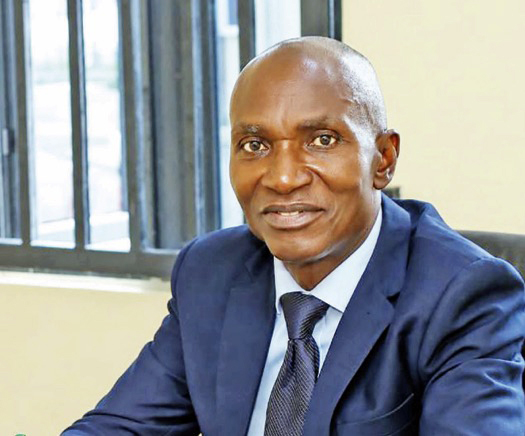
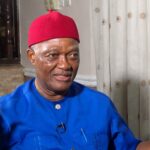
Rev. Edoror Ehiametalor, who holds a doctorate, serves as the District Superintendent of the Lagos West District of Assemblies of God Nigeria, where he provides spiritual oversight and administrative leadership to a large network of pastors, churches, and ministries. His ministry emphasizes revival, discipleship, integrity, transformational leadership, and community development. Through preaching, leadership training, and strategic initiatives, he continues to inspire individuals and institutions to pursue excellence, uphold godly values, and contribute meaningfully to national development. In this interview, he spoke on topical issues affecting Nigeria’s socio-economic and political spaces.
A delegation of Catholic bishops recently met President Bola Tinubu just as he had met with alleged fake bishops before the 2023 election. What are your thoughts on what appears to be a quest for the support of the church?
The support of the Christian community, or any faith community, should never be based on political symbolism or ceremonial engagements alone. It should be earned through visible commitment to justice, the protection of lives, the rule of law, and the welfare of all Nigerians. While meeting with Christian leaders can promote dialogue, such meetings must be matched by concrete actions that address the nation’s security challenges and safeguard every citizen, irrespective of faith or ethnicity. Many Christians are deeply concerned about the persistent killings and insecurity affecting various parts of the country. In my view, until there is demonstrable progress in protecting lives, bringing perpetrators to justice, and restoring public confidence in the government’s capacity to secure the nation, it would be difficult to say that such support has been earned. Nigerians rightly expect leadership to be judged primarily by its actions and results rather than by symbolic gestures. In my view, this government has not earned the support of the Christian community.
What is your take on banning preaching on public vehicles by the government?
I do not agree with a blanket ban on preaching in public vehicles. Nigeria’s Constitution guarantees freedom of thought, conscience, religion, and expression. Peaceful evangelism is part of the exercise of those rights. While I appreciate the government’s responsibility to maintain public order and protect commuters from disturbance or harassment, the solution should be reasonable regulation rather than prohibition. If there are concerns about noise, disruption, or the conduct of individuals, those issues can be addressed through clear guidelines that apply fairly to everyone. A complete ban risks infringing on fundamental freedoms and may set an unhealthy precedent for restricting legitimate religious expression. In a democratic and pluralistic society like Nigeria, the government should seek to balance the rights of individuals to share their faith with the rights of others to travel in peace and comfort. I believe dialogue and sensible regulation, not outright prohibition, provide the better path forward.
Buhari left 87 million Nigerians poorer, Tinubu has increased it to 140 Nigerians in extreme poverty, and he is still seeking to borrow money. Is he really in touch with reality?
The growing economic hardship being experienced by millions of Nigerians is undeniable, and it raises serious questions about whether those in government fully appreciate the daily realities faced by ordinary citizens. Nigerians naturally expect to see tangible improvements in their standard of living and greater accountability for public spending. One of the greatest dangers of leadership is becoming insulated from the people as in Tinubu’s administration. Every leader needs advisers who will speak the truth, even when it is uncomfortable. The Bible reminds us that King Ahab surrounded himself with prophets who told him only what he wanted to hear, while Micaiah alone spoke the truth. My concern is that those around the President merely echo what he wants to hear instead of providing an honest assessment of the nation’s condition, consequently, sound decision-making suffers. Recently, Aso Villa media aides pounced on the revered Cardinal Onaiyekan John for daring to say the truth to power as Ahab’s prophets would do. At this critical time, Nigeria needs courageous counsel, responsive leadership, and policies that genuinely reduce poverty, restore hope, and improve the lives of ordinary citizens.
Some people claim that God is punishing Nigerians by allowing wicked leaders to rule, like in the case of Israel. Are Nigerians suffering from their numerous sins or their political ignorance and electoral foolishness?
I do not believe it is appropriate to conclude that God is punishing Nigerians by giving them bad leaders. While the Bible records occasions when God judged nations, we should be careful not to claim divine motives for present-day political events without clear biblical warrant. In my view, our current predicament is more a consequence of political ignorance, weak civic engagement, and poor electoral choices than divine judgment. Leadership is ultimately shaped by the decisions people make and the systems they tolerate. When citizens fail to demand competence, integrity, accountability, and credible elections, they often end up with leaders who do not reflect those values. Scripture teaches that people reap what they sow, and this principle also applies to national life. Therefore, rather than blaming God for our challenges, Nigerians should embrace political education, participate responsibly in the electoral process, hold leaders accountable, and insist on good governance. As we pray for our nation, we must also act wisely and responsibly, because faith and responsible citizenship go hand in hand.
Other News
In 2014, some clergymen painted a colourful picture of former President Muhammadu Buhari as a God sent saviour to Nigerians’ problems. After 11 years of the All Progressives Congress governance, how do you feel?
I have consistently maintained the position that some political pastors and many “revered men of God” have become part of Nigeria’s leadership problem. Many of these men led protests against Jonathan while deceiving the Christian community. The Church must never allow its prophetic voice to be compromised by personal gain, political patronage, or what the Bible describes as “filthy lucre.” When ministers endorse politicians as though they have received infallible divine approval, they assume a grave responsibility before God and the people. The role of the Church is not to serve as a campaign platform for politicians but to speak truth to power, uphold righteousness, defend justice, and hold every government accountable, regardless of political affiliation. If any minister supported a political candidate primarily for personal benefit rather than conviction and the national interest that is a betrayal of the sacred trust reposed in spiritual leadership. I believe the lesson for both the Church and the nation is that we should be more discerning. Christians should evaluate political leaders based on character, competence, integrity, and performance rather than on prophetic slogans or endorsements. The Church must remain the conscience of the nation, not an extension of any political party or government.
Do you support Nigeria remaining as one country? Would you say you are a proud Nigerian?
Yes, I strongly support the unity of Nigeria. Despite our numerous challenges, I believe our diversity is strength, and our future is brighter together than apart. Rather than disintegration, what Nigeria needs is justice, equity, visionary leadership, and a renewed commitment to nation-building. I am proud to be a Nigerian. My patriotism is not based on the performance of any particular government but on my hope for the destiny of this nation. As a Christian, I believe that no leadership is above God’s righteous judgment. This judgment will come upon the corrupt leaders and their families. Scripture teaches that every leader is accountable to God, and history has shown that injustice, corruption, and oppression do not endure forever. I, therefore, remain hopeful that God will ultimately vindicate the oppressed, bring every leader to account, and raise men and women who will govern with integrity, justice, and the fear of God. Until then, every patriotic Nigerian has a responsibility to pray, speak the truth, and work for the emergence of a better nation.
Recently, the Chief of Army Staff said the South East deserves more than military action to restore peace. There have been instances of soldiers ‘romancing’ with terrorists, who some notable leaders in the North describe as sons and brothers. What is your take on this?
When we consider the widespread impact of banditry, terrorism, and other violent crimes in parts of Northern Nigeria, many Nigerians naturally ask whether security efforts are being proportionately directed to the areas facing the gravest threats. That is a legitimate question in a democracy and one which the government should answer with transparency and measurable results. At the same time, no region should be neglected, and no community should be left vulnerable. Security operations should be intelligence-driven, professional, and impartial. Nigerians want to see a strategy that confronts every form of criminality decisively, regardless of where it occurs or who is responsible. Ultimately, the measure of success is not rhetoric but the protection of lives, the restoration of peace, and the confidence of citizens in the nation’s security institutions. If the force of military deployment to the South East is also done in the North, I believe that there will be a better result.
Please talk about the forthcoming Grace & Glory conference.
The Grace & Glory Conference 2026 is a divine platform for spiritual restoration, revival, and the equipping of the saints for greater kingdom impact. This is the third edition of the conference, and we have witnessed remarkable testimonies in the previous editions. Lives have been transformed, destinies restored, the sick healed, families strengthened, and many believers have experienced fresh encounters with God. This year’s conference is themed “EL-SHADDAI (The Almighty God),” a reminder that our God is all-sufficient, all-powerful, and able to do exceedingly above all that we ask or think. At a time when many people are overwhelmed by economic hardship, insecurity, and uncertainty, we believe God is calling His people to look beyond human limitations and place their confidence in His unlimited power.
To make the conference accessible to more people, it will be held across four strategic zones in Lagos: Akowonjo, Isolo, Ikotun, and Ejigbo. We expect an unprecedented outpouring of God’s power through anointed worship, sound biblical teaching, fervent prayers, miracles, healing, deliverance, and prophetic impartation. I warmly invite everyone, irrespective of denomination, to attend with great expectation. I am convinced that everyone who comes with an open heart will encounter EL-SHADDAI, the Almighty God, and will not return the same way they came.