Follow Us on Google

…NACA, CR-SACA, Global Fund move to enforce anti-discrimination law
From Aniekan Aniekan, Calabar
Cross River State enacted its HIV Anti-Discrimination Law in 2010 but, 16 years later, people living with HIV still struggle to get justice when they are discriminated against.
Stakeholders say the law has no clear enforcement procedures and no accessible reporting system; a gap that has left victims without protection and perpetrators without punishment.
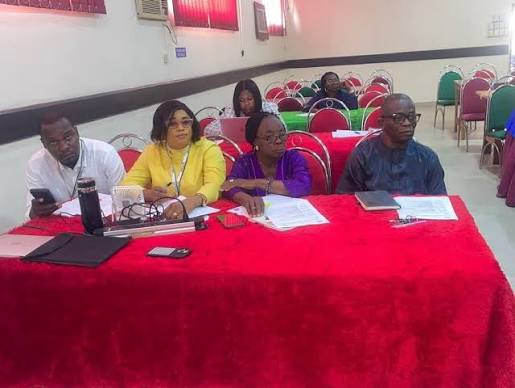
The issue took centre stage at a two-day State-Level Oversight, Monitoring and Stakeholder Review Meeting in Calabar, convened by the National Agency for the Control of AIDS (NACA), in collaboration with the Cross River State Agency for the Control of AIDS (CR-SACA), with support from the Global Fund to Fight AIDS, Tuberculosis and Malaria.
The meeting drew representatives of government institutions, legal and human rights organisations, civil society groups, development partners and networks of people living with HIV to assess the law, identify implementation gaps and agree on practical measures to strengthen compliance and access to justice.
Delivering the welcome address on behalf of Dr. Temitope Ilori, director-general, NACA, Mr. Nasir Sanusi said achieving Nigeria’s HIV targets requires more than investment in prevention, testing, treatment and care.
“Effective legal protection is essential to eliminating discrimination and ensuring equitable access to healthcare,” Ilori said.
She noted that, despite progress in HIV response, institutional practices, social exclusion and weak protection of fundamental rights continue to undermine confidence in health services and discourage people from seeking care.
Other News
Ilori warned that fear of unauthorised disclosure of HIV status, denial of healthcare, employment discrimination and social exclusion could deter people from testing and treatment, thereby weakening efforts to achieve sustained viral suppression.
She called for a review of complaint, reporting, referral and redress mechanisms to determine whether victims can safely report violations, get legal assistance and secure timely remedies without fear of retaliation.
She also called for stronger institutional coordination and clearly defined accountability structures, and acknowledged the Global Fund’s continued support for interventions addressing structural and human rights barriers to HIV services in Nigeria.
On his part, DG, CR-SACA, Dr. Charles Iwara, described the review as timely and critical to sustaining progress in HIV service delivery.
“More than four decades into the global HIV response, stigma, discrimination and human rights abuses remain persistent challenges despite existing legal frameworks,” Iwara said.
He expressed concern over the absence of clearly defined enforcement procedures and accessible mechanisms for reporting violations and seeking legal remedies, saying the review would help establish effective pathways for victims to seek redress and for perpetrators to be held accountable.
Iwara also drew attention to the need for greater inclusion of key populations, noting that certain vulnerable groups were not adequately considered in earlier legal provisions.
Through the review, NACA and CR-SACA, with support from the Global Fund, are seeking to ensure that the HIV Anti-Discrimination Law does not just exist on paper, but works in practice to protect dignity, privacy and equal access to healthcare for all.