Follow Us on Google

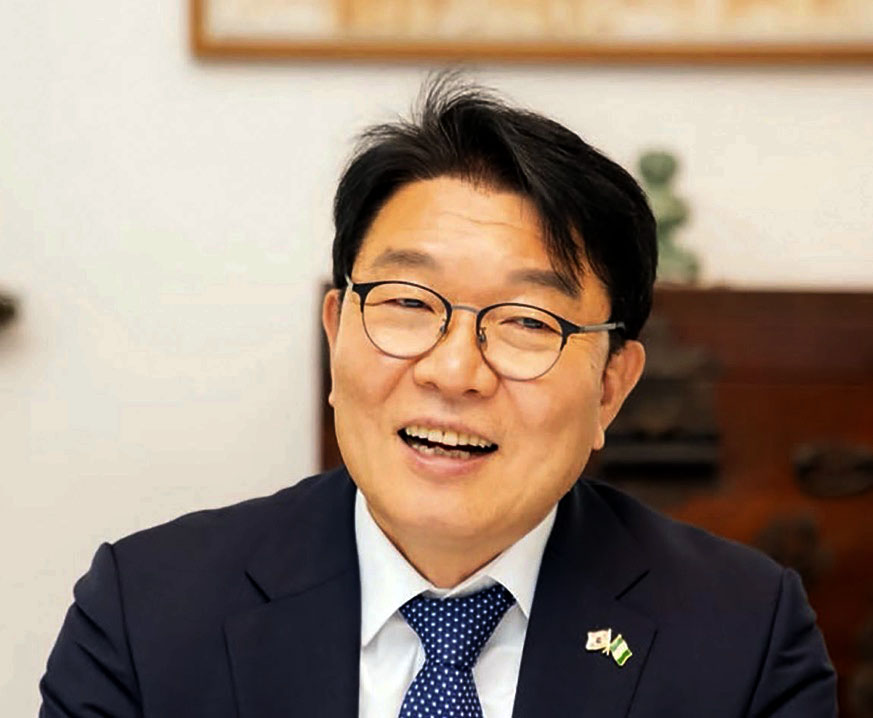
• Says Korea has engaged over 300,000 people through cultural programmes in Nigeria
From Aidoghie Paulinus, Abuja
The Republic of Korea Ambassador to Nigeria, Jeong Yo-an, has said his focus during his tour of duty in Nigeria is to ensure that trade relations between both countries move from oil and gas to manufacturing, agriculture and digital technology.
Among other issues, the Republic of Korea envoy spoke on the need to explore further, people-to-people ties in the area of culture such as music; athletics in the field of sports, movie creation, and development cooperation.
What is your focus during your tour of duty in Nigeria?
Thank you for the question. I have some priorities, and I’ll start with economic agenda first. I want our trade to grow beyond oil and gas — into manufacturing, agriculture and digital technology.
The 7th session of our Joint Commission, which Nigeria has offered to host in Abuja, is the right place to set that agenda.
I will also keep raising our double taxation agreement, signed in 2006 and still awaiting ratification.
K-beauty is a new market I want to grow: Our KOTRA office in Lagos connects Korean manufacturers with Nigerian importers. At Beauty West Africa to be held on November 13, Nigerian buyers can meet Korean companies at the Korean pavilion.
Culture is where our peoples meet most naturally: This year, more than 400 young people joined our K-pop Festival in Lagos. The Poongryu Festival brought Korean traditional music and dance to Lagos. About 350 athletes competed in the 14th Korean Ambassador’s Cup Taekwondo Championship. Nigerian creators have made two Korean–Nigerian dramas. And last month in Seoul, as an example, a Nigerian singer performed songs from a Korea–Nigeria collaboration. I want to take this further in two directions. Beyond Abuja — to more cities and more universities. And beyond fandom — to co-productions, music collaboration, and exchanges of young creators, together with scholarships and development cooperation.
South Korea is a global leader in semiconductors, artificial intelligence, robotics and digital infrastructure. Is the Korean government considering a structured technology-transfer partnership with Nigeria to strengthen local research, develop digital skills among young Nigerians and support domestic production?
I believe technology cooperation starts with people. That is why the Korean government has continued to support education for Nigerian students and young people.
Through its Smart Education project, KOICA helped build a foundation for digital education in Nigeria.
In 2025, Korea also opened the Nigeria-Korea Information Access Centre (IAC) in Abuja to help young Nigerians develop digital skills.
In addition, through the Global Korea Scholarship (GKS) and training programmes for government officials, we give talented Nigerians the opportunity to study and do research in Korea. And the Abuja Centre for Entrepreneurship (ACE), which I mentioned earlier, will also help young Nigerians turn their ideas and skills into new businesses and local production. I hope these programmes will become a strong foundation for technology cooperation between our two countries. Nigeria has a young and talented population. By combining this with Korea’s technology and experience, I believe we can create partnerships that benefit both countries.
How is South Korea actualising its commitment to expanding Official Development Assistance (ODA) to $10 billion by 2030 and providing $14 billion in export financing to support South Korean companies operating in Africa?
The Korean government is monitoring the implementation status through regular high-level consultative bodies such as Korea-Africa Foreign Ministers’ Meeting and Korea-Africa Economic Cooperation Ministerial Conference to expand ODA to Africa and increase export financing for Korean companies entering the African market. Moving forward, Korea will continue to further solidify win-win partnerships with African partners, including Nigeria. The Korean government is also planning to host the 2nd Korea-Africa Summit in 2029. Through this summit, Korea plans to continue its cooperation and support for the development of Africa. In this regard, our Embassy provides support across various sectors – including economy, agriculture, education and e-government – to foster Nigeria’s development. The key initiatives include establishing digital governance infrastructure, supporting smart education, operating the Startup Digital Innovation Academy, and creating youth jobs in the agri-food sector.
South Korea has built a strong reputation for innovation, technology and skills development. What new initiatives or opportunities is the Republic of Korea exploring to expand scholarships, student exchanges and skills-development programmes for young Nigerians, particularly in technology, entrepreneurship and other emerging fields? Also,
KOICA’s recent projects like the $12M South Korea-funded Abuja Entrepreneurship Centre, shows that South Korea is committed to translating its commitment to tangible outputs for Nigeria’s economic development. Are there also discussions on how these projects can remain collaboratively sustainable?
Thank you for these questions. They are closely connected, so allow me to answer them together. During my remarks, I already explained to you about KOICA’s master’s degree scholarships and fellowship programmes, in fields such as ICT, public administration and health, as well as the Global Korea Scholarship (GKS) programme that offers Nigerian students the chance to study at Korean universities. We are also bringing quality learning closer to young Nigerians. Our smart education project supports teacher training and digital learning. Our e-government cooperation is helping build digital public services and digital talent. And with FAO, our Green Jobs for Youth project is creating opportunities in agriculture and the green economy. Going forward, KOICA will work more with private companies, start-ups and innovators, in areas such as artificial intelligence, digital content and technology-based entrepreneurship, where Korea has strong experience and Nigerian youth have remarkable talent. The Abuja Centre for Entrepreneurship is a good example of how we want to work. But you raise the right question: a building alone does not create entrepreneurs. Sustainability has been part of the design from the very beginning, in three ways: First, Nigerian ownership. The Centre is being developed together with our Nigerian partners, who will lead its operation. Decisions are made jointly, and the Nigerian side is committing its own resources and staff. A project that belongs to Nigeria will be sustained by Nigeria. Second, people before infrastructure. We are investing heavily in training. Through our Training of Trainers programme, Nigerian experts are being equipped to coach and mentor entrepreneurs themselves. This means the knowledge stays in Nigeria, and keeps multiplying. Third, connection to the wider ecosystem. The Centre is meant to be a hub that links entrepreneurs with financing, markets, the private sector and other development partners, so that it can attract support and generate value beyond KOICA’s contribution. Korea learned this from its own development: institutions succeed when they are nationally owned and run by their own experts. We are glad to share that experience, but the future of these projects will be written by Nigerians. Korea’s commitment to Nigeria is long-term. We will continue to work side by side with the Nigerian government, private sector and, above all, young people, so that our cooperation leaves results that last.
We have seen over the years what Korea has achieved in the area of advertising its culture and getting Nigerians to embrace it. Are you satisfied with the achievements or we should expect other moves to take it to a greater level? Can you speak about the plans ahead?
I believe that the interest Nigerians have shown in Korean culture has contributed to our meaningful progress, but there is still much more to be done. Since its establishment, the Korean Cultural Centre (KCCN) has engaged more than 300,000 people through its cultural programmes.- It continues to organise a wide range of cultural activities across Nigeria. In particular, this year’s Korean Film Festival attracted approximately 1,000 audience members and provided an opportunity to discover shared values through cinema. Looking ahead, the focus will be on further strengthening our engagement with local communities and young creators. One priority is to pursue joint cultural initiatives, such as short film competitions and other collaborative projects, to strengthen cooperation with emerging creators. Through these efforts, greater opportunities will be provided for young Nigerians, while cultivating a sustainable cultural partnership between our two countries. In addition, efforts will be made to expand our cultural activities beyond Abuja to other Nigerian cities, enabling more Nigerians to experience and enjoy Korean culture in their daily lives. Ultimately, the goal is not simply to introduce Korean culture to Nigerians, but to build a lasting cultural partnership in which both countries learn from and inspire each other.
Nigeria and the Republic of Korea have maintained diplomatic relations for decades. What new initiatives is the Embassy considering to strengthen media and public diplomacy between both countries, particularly by facilitating media exchanges and journalist familiarisation visits to South Korea? Such visits have previously provided opportunities for journalists to experience Korea firsthand and report more comprehensively on its culture, development and bilateral relations. Is there a plan to revive or expand this initiative?
The Government of the Republic of Korea has consistently promoted media exchanges and public diplomacy to strengthen mutual understanding between Korea and Nigeria. The government and relevant institutions have consistently organised journalist programmes, including World Journalists Conference (WJC). Should the opportunity arise, I will do my utmost to recommend Nigerian journalists, including those present here today, for these programmes. As part of media initiatives to strengthen mutual understanding, since 2023, the Korean Cultural Centre Nigeria (KCCN) has collaborated with AIT to broadcast Korean dramas and animations. The programme was temporarily suspended this year and is expected to resume next year. The Embassy and KCCN have also facilitated media coverage of major cultural events, including the Korean Film Festival. I will continue to facilitate visits to Korea for Nigerian journalists in cooperation with relevant Korean institutions. In addition, efforts will be made to further expand media exchanges and strengthen partnerships with Nigerian media organisations through cultural events and public diplomacy initiatives.
What is the current direction of Korea in terms of people-to-people relations with Nigeria? What programmes do you currently have for the Nigerian youths in particular?
Korea aims to strengthen people-to-people ties with Nigeria, particularly through educational and cultural exchanges. We will continue to expand opportunities for young Nigerians to study in Korea and engage with Korean society. One of the key initiatives in this regard is the Global Korea Scholarship (GKS), a scholarship programme offered by the Korean Government. It is open to Nigerian students who wish to pursue undergraduate or graduate studies in Korea. Through these efforts, we seek to build a lasting foundation for friendship and cooperation between Korea and Nigeria.
The Ambassador’s Cup Taekwondo Championship was held last month. Could you provide further insights into Taekwondo? Furthermore, how do you plan to utilize Taekwondo to promote youth education in the future?
Taekwondo is not simply a form of combat involving the use of hands and feet, but rather a process of self-discipline that teaches humility and encourages perseverance through dedication and hard work. It is also a compass for life, fostering good character through the values of courtesy and respect learned through countless falls and rises on the mat. One of the reasons Taekwondo has gained worldwide recognition is its accessibility, as it can be practiced by anyone regardless of their background or circumstances. Building on this inclusive nature, I would like to expand programmes that increasingly reach young people from socially disadvantaged backgrounds. The Korean Cultural Centre Nigeria operates Taekwondo classes not only for the general youth population, but also at schools serving socially disadvantaged groups, including Model Girls Junior Secondary School and the School for Children with Special Needs. Although these programmes have been temporarily suspended during the second term of this year due to internal circumstances, efforts will be made to resume them next year. Furthermore, we plan to expand these programmes to provide more young people from socially disadvantaged backgrounds with opportunities to participate. Through these initiatives, we hope to contribute to the development of better individuals, stronger families, and warmer, more inclusive communities across Nigeria.