Follow Us on Google

From Fred Ezeh, Abuja
The challenge of producing quality academic textbooks and scholarly publications locally has remained one of the major constraints confronting Nigeria’s tertiary education system.
For years, researchers and university lecturers have had to contend with limited publishing infrastructure, inadequate access to modern printing facilities and the high cost of taking academic works through the publishing process.

Beyond the difficulties of producing textbooks, the situation has also affected the visibility of indigenous research, with valuable scholarly contributions often struggling to find their way into professionally published materials accessible to students, researchers and the wider academic community.
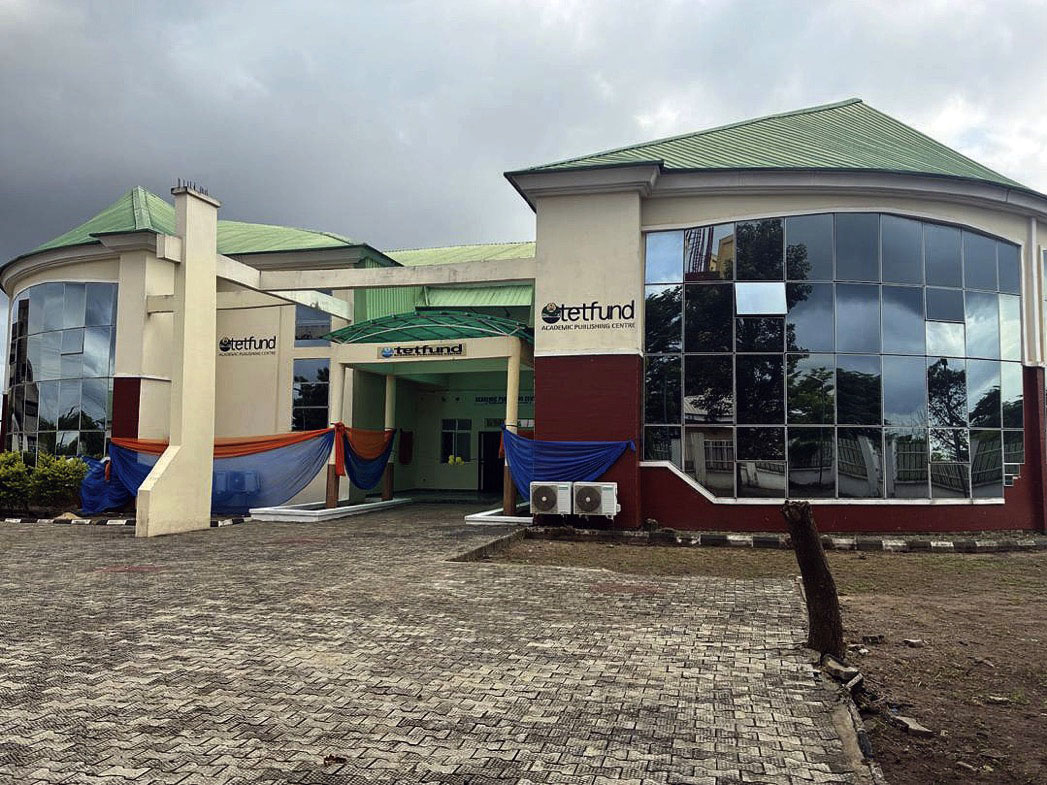
It is against this background that the inauguration of the Academic Publishing Centre (APC) at Nnamdi Azikiwe University (UNIZIK), Awka, Anambra State, by the Tertiary Education Trust Fund (TETFund), has assumed significance.

The facility, launched on Friday, November 6, 2026, by the chairman of TETFund’s board of trustees, Aminu Bello Masari, is expected to provide a major boost to academic publishing, textbook production and research development across tertiary institutions in the South-East.
The centre, regarded as more than an infrastructure project, represents an attempt to address a longstanding gap in Nigeria’s academic ecosystem by providing a common platform where universities and other tertiary institutions can transform research findings, lecture materials and scholarly contributions into professionally produced publications.
For institutions in the South-East, the expectation is that the facility will reduce the difficulties associated with academic publishing, encourage indigenous authorship and create opportunities for research outputs from the region to reach wider audiences.
CLOSING ACADEMIC
PUBLISHING GAPS
The establishment of the centre is part of TETFund’s broader intervention under its Higher Education Book Development Project, an initiative designed to expand access to quality academic publications and strengthen indigenous publishing capacity in Nigerian tertiary institutions.
Over the years, the absence of adequate publishing facilities has made the production of academic textbooks a difficult undertaking for many university lecturers and researchers. While Nigerian institutions continue to generate research findings and intellectual contributions, translating such works into accessible and professionally produced books has remained a challenge.
The situation has also increased dependence on external publishing services, with associated financial and logistical implications for authors and institutions.
Recognising the need to address the challenge, TETFund initiated the Higher Education Book Development Project as part of efforts to improve the availability of locally produced academic materials and strengthen the country’s publishing industry.
Represented by the South-East member of the board of trustees, Esther Ukachukwu, Masari explained that the project was conceived to improve the quality of teaching, learning and research through strategic investments in academic publishing.
He disclosed that the board of trustees made a submission to the Federal Government in 2009 for N2 billion to commence the project, which was subsequently approved. “The initiative received further financial support in 2019, when an additional N2.95 billion was provided to strengthen its implementation,” he explained.
According to him, the Technical Advisory Group Committee was also reinvigorated and inaugurated in August 2019 to provide the necessary technical direction and ensure effective delivery of the project.
The intervention eventually gave rise to the plan to establish and equip model Academic Publishing Centres in selected institutions across Nigeria’s six geopolitical zones and the Federal Capital Territory.
The centres are expected to provide publishing services not only to their host institutions but also to public tertiary institutions within their respective regions.
UNIZIK ASSUMES REGIONAL
PUBLISHING RESPONSIBILITY
With the inauguration of the South-East facility at UNIZIK, the university has assumed an important responsibility in the implementation of TETFund’s academic publishing initiative.
The centre is strategically positioned to serve universities and other public tertiary institutions across the region, thus providing access to modern printing machines, professional publishing services and other equipment required for the production of academic textbooks and scholarly materials.
This regional approach is particularly important because it provide institutions that may not have the financial capacity to establish independent publishing facilities with an opportunity to benefit from shared infrastructure.
Rather than leaving individual universities to struggle with the enormous cost of acquiring and maintaining sophisticated printing equipment, the centre offers a common platform through which institutions can access the necessary facilities.
For lecturers and researchers, the development could also provide an incentive to document their research findings and produce textbooks relevant to the Nigerian educational environment.
The availability of modern publishing infrastructure is expected to make the process of producing academic materials more accessible, while improving the quality and professional standards of publications emerging from the region.
It could also encourage greater collaboration among universities, particularly in the development of textbooks and other instructional materials that address common academic and professional needs.
Masari, who described education as a strategic sector deserving priority attention, said TETFund would continue to introduce interventions aimed at promoting innovation, improving learning outcomes and strengthening research development.
He said: “TETFund will continue to deliver responsive intervention programmes and will be at the forefront in promoting creative and innovative approaches to educational learning and championing new literacy enhancing areas.”
THE CHALLENGE OF MAINTENANCE, SUSTAINABILITY
While the commissioning represents an important milestone, the real test of the intervention will be its ability to deliver the expected benefits to the academic community.
Across Nigeria, public infrastructure projects have often been affected by poor maintenance, inadequate utilisation and operational difficulties after inauguration, and Academic Publishing Centres are not immune to such challenges, particularly given the technical requirements and financial commitments associated with running modern printing facilities.
Recognising this concern, the TETFund chairman charged UNIZIK and other beneficiary institutions in the South-East to ensure that the facility was properly managed, effectively utilised and sustained.
He emphasised that the responsibility for making the centre successful did not rest solely with the Federal Government or TETFund, but also with the host institution and other beneficiaries across the zone.
“It is the expectation of the Fund and that of the Federal Government that the beneficiaries will reciprocate this gesture by ensuring that the APC located in Nnamdi Azikiwe University, Awka, Anambra State, is put into operation, properly managed and sustained by the host and beneficiary institutions within the zone,” he said.
The warning, however, highlights the importance of establishing an effective management structure, maintaining the equipment and ensuring that the centre operates as a shared regional resource rather than an isolated university project.
The cooperation of other institutions will equally be necessary to ensure that the facility receives sufficient patronage and remains financially and operationally viable.
Masari also solicited the cooperation of stakeholders for the successful take-off of the centre, assuring that TETFund would remain committed to transparency and accountability in the discharge of its responsibilities.
UNIZIK COMMITS TO EFFECTIVE USAGE
For the management of UNIZIK, the commissioning represents both an institutional achievement and an opportunity to contribute more directly to the development of higher education in the South-East.
The Vice-Chancellor of the university and Chairman of the Academic Publishing Centre Board, Prof. Bond Anyaehie, described the event as a significant milestone, expressing the institution’s determination to ensure that the centre becomes operational and fulfils its intended purpose.
Anyaehie acknowledged the importance of the facility and pledged that the university would work towards ensuring its effective management.
He also indicated that the institution would seek contributions and inputs from other universities in the region to develop an operational framework that would accommodate their interests and guarantee the centre’s sustainability.
“So, on my honour, I pledge to make use of it, and try to operate the board and also getting input from other universities to see how we can run it, and do all we can do to protect it,” he said.
The Vice-Chancellor’s commitment is significant, particularly because the centre is expected to serve institutions beyond UNIZIK.
As a result, its success will therefore depend on the ability of the university’s management and the centre’s board to establish a transparent and inclusive arrangement that encourages participation by other beneficiary institutions.
Anyaehie also expressed appreciation to TETFund for locating the project at the university, while appealing for more interventions to support UNIZIK and other tertiary institutions in the region.
The commissioning ceremony featured an inspection of the centre’s facilities, including modern printing machines and other state-of-the-art equipment installed to support academic publishing. Dedicated personnel were also seen on duty, indicating preparations for the commencement of operations.
RENEWED HOPE FOR INDIGENOUS RESEARCH AND SCHOLARSHIP
Beyond the immediate benefits to UNIZIK and other institutions in the South-East, the Academic Publishing Centre indicates a broader implications for Nigeria’s quest to strengthen indigenous research and improve the quality of tertiary education.
TETFund noted that a functional academic publishing system is an important component of a country’s knowledge economy. Similarly, universities are not expected merely to teach students and conduct research; they must also possess the capacity to document, preserve and disseminate the knowledge they generate.
There was high optimism among the academia that the UNIZIK centre could help bridge this gap by providing researchers with improved access to publishing facilities and creating a more supportive environment for the production of locally relevant textbooks and scholarly materials.
It is also expected to reduce dependence on external publishing services, improve the visibility of research outputs from the region and provide a common platform for academic institutions to collaborate in producing educational materials.
For students, increased availability of quality indigenous textbooks could provide access to learning resources developed within the Nigerian educational and socio-economic context.
For lecturers and researchers, the centre offers an opportunity to translate years of academic work into publications that can support teaching, inform policy and contribute to the advancement of knowledge.
However, the anticipated benefits will only materialise if the facility moves beyond its commissioning ceremony to become a fully functional and accessible publishing hub.
This will require sustained institutional commitment, competent personnel, regular maintenance of equipment, effective administration and a clear framework for accessing its services.
Ultimately, the success of the project will not be measured by the sophistication of its printing machines or the ceremony that marked its commissioning, but by the number of quality academic publications it produces, the institutions it serves and its contribution to improving research and scholarship.
For TETFund, the South-East centre represents another investment in the development of Nigeria’s tertiary education system. For UNIZIK and other beneficiary institutions, it presents an opportunity to strengthen indigenous publishing capacity and give greater visibility to the intellectual contributions of Nigerian scholars.