Follow Us on Google
By Chinwendu Obienyi
The financial system is more than just an institution that facilitates payments and extends credit to customers.
It encompasses all functions that direct financial resources to ultimate user and it is the central nervous system of a market economy that contains a number of separate, yet inter-dependent, components all of which are essential for effective and efficient functioning of an economy.
These components include financial intermediaries such as banks and insurance companies that act as agents for assuming liabilities and acquiring claims. The second component is the markets in which financial assets are exchanged, while the third is the infrastructural component, which is necessary for the effective interaction of intermediaries and markets.
These three components are inextricably intertwined. Conceptually, economic reforms are undertaken to ensure that every part of the economy functions efficiently in order to ensure the achievement of macroeconomic goals of price stability, full employment, high economic growth and internal and external balances.
Banking reforms in Nigeria
The major banking reforms which began in 2004 with the consolidation programme were necessitated by the need to strengthen the nation’s banking industry.
The policy thrust at inception, was to grow the banks and position them to play pivotal roles in driving development across the sectors of the economy.
Consequently, banks were consolidated through mergers and acquisitions, raising the capital base from N2 billion to a minimum of N25 billion, which shrunk the number of banks from 89 to 25 in 2005, and later to 24.
Beyond the need to recapitalise, the regulatory reforms also focused on Risk -based and rule-based regulatory framework; Zero tolerance in regulatory framework in data/information rendition/reporting and infractions; Strict enforcement of corporate governance principles in banking and Expeditious process for rendition of returns by banks and other financial institutions through e-FASS.
Others reforms include; Revision and updating of relevant laws for effective corporate governance and ensuring greater transparency and accountability in the implementation of banking laws and regulations, as well as the introduction of a flexible interest rate based framework that made the monetary policy rate the operating target.
This in turn enabled the apex bank to be proactive in countering inflationary pressures.
The corridor regime helped to check wide fluctuations in the interbank rates and also engendered orderly development of the money market segment and payments system reforms, among others.
The bank has over the years identified key priority sectors and developed tailored interventions to support and promote their growth. Some of the key interventions in the real sector include: N200 Billion Refinancing/Restructuring of SME/Manufacturing Fund; N300 billion for long term funding of Power and Aviation; Commercial Agricultural Credit Scheme (CACS); The Small and Medium Enterprises Credit Guarantee Scheme (SMECGS); In addition, the Nigerian Incentive-Based Risk Sharing System for Agricultural Lending (NIRSAL) was established.
The programme is a demand-driven credit facility that would build the capacity of banks to engage and deliver loans to agriculture by providing technical assistance and reducing counterparty risks facing banks. It also seeks to pool the current resources under the CBN agricultural financing schemes into different components of the programme.
Furthermore, the bank has so far been collaborating with the Securities and Exchange Commission (SEC) and the Nigerian Exchange Limited (NGX), to reduce the cost of transactions, particularly bond issues, so as to diversify funding sources away from banks as well as attract more foreign portfolio investors (FPIs) into the sector.
To further engender public confidence in the banking system and enhance customer protection, the CBN established the Consumer and Financial Protection Division to provide a platform through which consumers can seek redress. In the first three months of its operation, the Division received over 600 consumer complaints, which was a manifestation of the absence of an effective consumer complaints resolution mechanism in the banks.
These raft of reforms came when the global economy was hit by an unprecedented financial and economic crisis in 2007-2009 that resulted in a global recession. This crisis led to the collapse of many world-renowned financial institutions and even caused an entire nation to be rendered bankrupt. In Nigeria, the economy faltered and was hit by the second round effect of the crisis as the stock market collapsed by 70 per cent in 2008-2009 and many Nigerian banks sustained huge losses, particularly as a result of their exposure to the capital market and downstream oil and gas sector.
Therefore, the CBN had to rescue 8 of the banks through capital and liquidity injections, as well as removal of their top executives and consequent prosecution of those who committed some infractions. These actions became necessary to restore confidence and sanity in the banking system. These actions are somewhat similar owing to the current reforms undertaken by the Federal Government as well as the Central Bank of Nigeria (CBN) recently.
Newest reforms under new administration
The new administration under the leadership of President Bola Tinubu have lived up to its promise of unifying the country’s exchange rate as well as ensure investors and foreign businesses repatriate their hard earned dividends and profits home. With these comments, the CBN wasted no time as it abolished multiple FX windows, collapsing all the official FX segments into the Investors & Exporters Window (IEW).
Accordingly, the bank re-introduced the “willing buyer, willing seller” model at the IEW, with the operations guided by the extant circular on the establishment of the window, dated 21 April 2017.
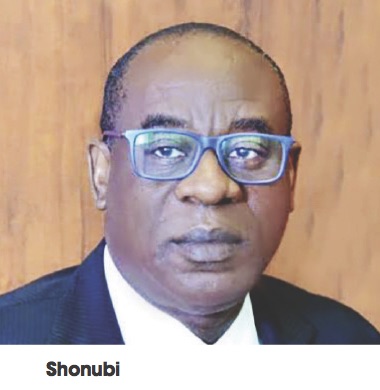
Among other immediate reforms, the CBN leadership under its Acting Governor, Folashodun Shonubi, also announced the cessation of the RT200 Rebate and Naira4Dollar Remittance Schemes, with effect from June 30 2023.
Both initiatives, introduced by the suspended CBN Governor, Godwin Emefiele, were launched to boost non-oil exports and diaspora remittances to encourage foreign exchange inflows into the economy.
These initiatives had been highly commended and welcomed by analysts with early positive results since they were launched. The apex bank had explained that the policy changes introduced in the country’s foreign exchange market were meant to promote transparency, liquidity and price discovery in the FX market in order to improve supply, discourage speculation, enhance customer confidence as well as ensure overall stability in the FX market.
The CBN also announced that going forward, domiciliary account holders are permitted to utilise cash deposits not exceeding $10,000 per day or its equivalent via telegraphic transfer.
The CBN Director, Corporate Communications, Department, Dr. Isa Abdulmumin, in a statement issued after an extraordinary Bankers’ Committee meeting also said all visible and invisible transactions including medicals, school fees, BTA/PTA, airline and other remittances are eligible for the Investors’ and Exporters’ (I&E) window.
As a result, he said Deposit Money Banks (DMBs) shall ensure expeditious processing of all eligible invisible transactions on behalf of their customers using the applicable rate at the I&E window.
The central bank director pointed out that the meeting had discussed the policy implementation and implications for the banking public. These raft of changes saw the exchange rate which had tightly hovered at around N460/$1 since the beginning of the year, is currently at N776.90/$1.
Similarly, total foreign transactions on the nation’s bourse increased significantly by 338.72 per cent from N8.47 billion (about $18.31 million) to N37.16 billion (about $79.88 million) between April 2023 and May 2023.
Furthermore, investors who have endured long periods of bearish sentiments on the floor of Nigerian Exchange Limited (NGX) had cause to smile as their wealth rose to N5.3 trillion in the first six months (H1) of 2023.
Experts’ views
According to economic and financial experts, the reforms currently introduced by the CBN has led to rise of fortunes of investors and boosted their confidence.
They specifically hailed the floating of the foreign exchange believing that issues concerning the supply side would be addressed in due course. Speaking in separate interviews with Daily Sun, the experts said the development is expected to have a dramatic impact of the fiscal structure of the country.
Analysts at Coronation Research believes that foreign exchange liberalisation brings benefits to the Nigerian equity investors and will encourage foreign investors to bring money into the country again.
“The long term declines in both foreign direct investments (FDIs) and foreign portfolio investments (FPIs) are set to be reversed in our view. Within the equities market, we favour the bank sector.
Banks not only tend to hold net long positions in US dollars but are also beneficiaries of liberalised FX trading and the increased liquidity that implies”, they said.
The Chief Executive Officer, Financial Derivatives Company Limited, Bismarck Rewane, said the changes made is more of a process due to the foundational and structural problems in the Nigerian economy.
According to him, the Tinubu-led administration is trying to confront the structural problems frontally.
Rewane said, “There is a demand structure and then a supply structure. Because the supply was short and the price was manipulated downward, there was a gap and so what you have done is to move the price up so that excess demand will shrink and that automatically translates into an optimisation of supply. But again, that does not increase the supply of FX and so when people begin to take the seriousness of a policy, then they will bring in money gradually. We are seeing the right things, doing some of the right things and eventually we will get to a point where our words, deeds, thoughts will all be aligned.
However, you must note that the invisible flow that comes into Nigeria comes in goods and all sorts of things, that should not be the way as it is inefficient and a burden on the people. People may tolerate some things when they can no longer do that, it then flips back and then signs of unrest begin to manifest. The solution is make the right policy announcements, make personal changes, work with the right team and then eke out institutional reforms which will outlast various administrations, that is how history is made”.
For his part, the Managing Director, APT Securities, Mallam Kurfi Garba, the objective of introducing convergence has been achieved.
He pointed out that investors were only awaiting the outcomes of a number of key policy directives on monetary and fiscal policy.
He also noted that rates would eventually stabilise and lead to greater FDIs.
“I think the move to unify the FX rate was a no-brainer. The markets have reacted positively and it is a sign of good things to come. We have seen that the country’s stock market has rallied to a 18-year high and the valuation of banking stocks is set to improve as well.
Also, the initial spike in rate is to be expected due to a backlog of demand and Hajj demand as well. Rates will eventually stabilise and lead to greater FDIs.”
The 59th President, Institute of Chartered Accountants of Nigeria, Dr Innocent Okwuosa, believes that the unification of the Nigeria’s foreign exchange rate is still at its early stages of implementation but has nonetheless been greeted with positive reactions from the investment and professional communities. Okwuosa while adding that that this action will generally lead to short-term pains that will yield long-term gains, recommended that there should be effective, consistent implementation of the policy, review the prohibited list of goods to ensure demand is not segmented and benchmark the Nigerian foreign exchange market with emerging international foreign exchange markets such as Malaysia, Mexico, South Africa, Brazil and Colombia including learning lessons to achieve macroeconomic stability and integration into global value chains.