Follow Us on Google

The plan by the Federal Government to reintroduce toll gates across major highways in the country has been of great concern to many Nigerians. According to the Minister of Works and Housing, Babatunde Fashola, the Federal Executive Council (FEC) approved the return of toll gates on only 5,005 kilometres of dual carriageways or 14.3 per cent of the 35,000 kilometres of federal roads in the country. He said the tolling would begin after the roads had been fixed.
This is not the first time the government would moot the idea of building toll gates. In October 2019, it concluded designs for the return of the toll plazas on federal roads. The government said then that though the toll plazas were dismantled in the past, there was no law abolishing them. It said officials were looking at how the back-end would run because they wanted to eliminate cash at the plazas while ensuring that the electronic devices to be used would not impede rapid movement.
When toll gates existed, they caused a lot of inconveniences for travellers. For instance, there were gridlocks which increased travel time for road users. This was partly because motorists queued to pay cash at the collection points.
The cash generated amounted to about N63 million daily. During the administration of President Olusegun Obasanjo, the government felt the revenue generated was not significant. Even at that, the money was not properly accounted for. Nor was it used to maintain the dilapidated roads then. In 2003, the toll gates were demolished. According to Obasanjo, they had outlived their usefulness to Nigerians.
Good enough, Fashola has given assurance that when the toll returns, the revenue generated will be used to maintain roads, construct new ones and pay the investors who invest in building or completing a road and take concession on it. In other words, it will serve as an alternative source of income for the government in these days of depleting oil resources. The tolling could also create employment opportunities. Earlier this year, Fashola said the Federal Government was targeting to execute 12 federal highway projects that could generate over 50,000 direct jobs and over 200,000 indirect jobs across the country.
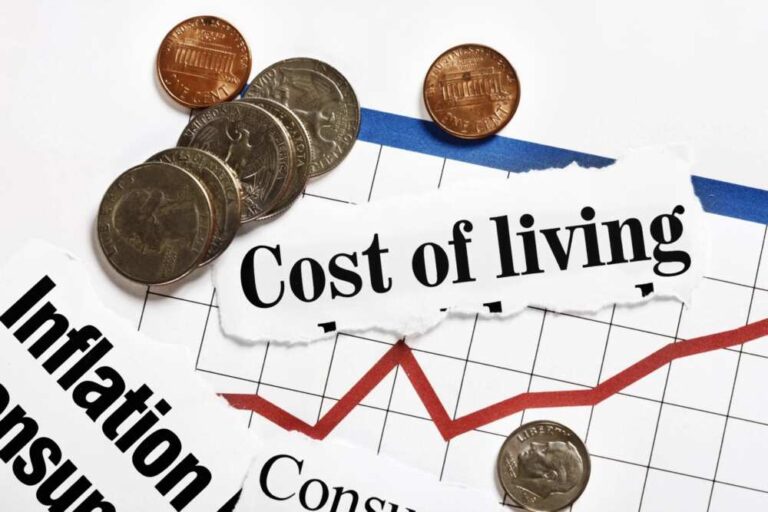
However, while bringing back the toll gates, the Federal Government should bear in mind that Nigerians are overtaxed at present. Many of them pay personal income tax, road tax, withholding tax, consumption tax, fuel tax, market taxes and levies, Value Added Tax (VAT) and many others. This is even as the purchasing power of many Nigerians has drastically reduced. Many citizens go to bed sometimes without food. Poverty is endemic as workers in many states are owed arrears of salaries. Many of these states have not been able to pay the N30,000 minimum wage they agreed with the Nigerian workers. For those who are lucky to receive salaries, inflation has made a mess of their little income. Prices of almost every commodity in the market today have skyrocketed.
Returning the toll gates may worsen the current precarious situation. Transport fare will definitely rise because transporters will build the cost of the toll on the fare. This will translate into higher prices for goods and services.
Already, motorists contend with multiple toll collecting checkpoints mounted by the police and some other security agencies on the road. Over 60 of these checkpoints exist between Sagamu in Ogun State and Benin, the capital of Edo State. These security agents force motorists to drop money at these checkpoints. When toll gates are added, transporters will have no option but to pass on the burden to the passengers.
Besides, these multiple checkpoints increase the travel time motorists spend on the road. With the introduction of toll gates, the travel time will further increase. If the saying that time is money is anything to go by, the government should consider reducing the checkpoints on the roads or introducing digital ways that will ensure free flow of traffic at the toll plazas.
It is imperative to note that governance is not all about revenue generation. It is more about the welfare of the people. Hence, we feel that the tolls are a bit on the high side considering what many Nigerians are passing through currently. Car owners are expected to pay N200; SUVs and jeeps, N300; private buses, N300; commercial buses, N150 while luxury buses and trucks will pay N500. Exempted from this tolling are bicycles, pedal cycles, tricycles, motorcycles, diplomatic vehicles as well as military and paramilitary vehicles.
Fashola said they obtained the prices from an extensive survey they did across the six geopolitical zones and that the operators recommended some of the prices themselves. This notwithstanding, roads built with tax payers’ money should not be overtaxed. We appreciate the fact that government is searching for alternative sources of income especially with the uncertainties in the international oil market. But this must not be done to the detriment of the people. Taxation is good, but it must have a human face. While the tolling should be made to reflect global best practices, mechanisms must be put in place to eliminate corruption and ensure transparency and accountability.