Follow Us on Google
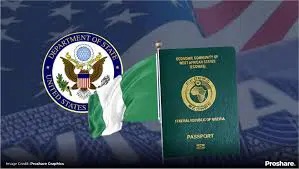
The current row over visa validity period between Nigeria and the United States (US) on one hand, Nigeria and United Arab Emirates (UAE) on another, is an issue that requires diplomatic solution for the shared interests of the concerned countries. The US Department of State had recently issued an update to its reciprocal non-immigrant visa policy, affecting several countries, including Nigeria. According to the new visa policy, most non-immigrant and non-diplomatic visas issued to citizens of Nigeria will be single-entry visas with a three-month validity period. This is a departure from the previous arrangement where successful applicants were in some cases issued multiple entry visas of up to five years.
The US added that non-immigrant visas issued prior to July 8, 2025, will however retain their status and validity. It further stated that visa reciprocity is a continuous process and subject to review and change at any time, such as increasing or decreasing permitted entries and duration of validity. However, Nigeria has maintained that it has not stopped issuing five-year multiple-entry visas to Americans. Nigeria’s Acting Ambassador to the United States, Samson Itegboje, debunked the claim that Nigeria had reduced visa issuance to single-entry visas for three months for Americans.
Itegboje said Nigeria had rather directed the full implementation of a new Nigeria/US Bilateral Consular Policy Agreement, with a visa reciprocity policy for United States citizens, with effect from March 1, 2023. The agreement included the reciprocity of five-year tourist visa validity for American citizens and extension of visa validity to three years for diplomats and government officials.
Although the US embassy in Nigeria initially said its decision was based on reciprocity, it later said the decision was part of a decision to review its visa processes globally. In its latest communication on the matter, the US Government stated that its decision was based on two principal factors: the current rate of visa overstays by Nigerian nationals and the need for reliable access to their records.
The American government further explained that the visa policy adjustment is part of its global visa reciprocity process, which is routinely reviewed and subject to change, including the number of permitted entries and validity durations. President Bola Ahmed Tinubu has therefore, directed all federal agencies to ensure full compliance with Nigeria’s international obligations and to strengthen inter-governmental cooperation in authenticating the identities of individuals seeking consular services abroad.
The dust generated by the American new visa regulation is yet to go down when reports came that the UAE has introduced more stringent entry restrictions for Nigerians, including a ban on transit visa applications and new limitations on tourist visas. According to reports, the UAE authorities now restrict Nigerians between the ages of 18 and 45 from obtaining tourist visas unless they are accompanied. It added that an applicant who is 45 years or above must provide a Single Nigerian personal bank statement for a period of last six months, with each month’s end balance reflecting a minimum ending balance of $10,000 or its naira equivalent. The disturbing development follows just a year after both countries resolved a two-year visa ban placed on Nigerians.
However, the Minister of Arts, Culture, Tourism and Creative Economy, Hannatu Musa-Musawa, has debunked the report, insisting that the Nigerian government has not received any official communication from the UAE regarding a reported change in visa policy affecting Nigerian citizens. The Minister assured that visa issuance for Nigerians by the UAE has not been disrupted.
It is laudable that the Nigerian government is not folding its arms on the visa issues from the US and UAE. Both countries are strategic partners in Nigeria’s cultural, economic and diplomatic engagements. There is no doubt that visa validity is at the discretion of the issuing country. Any disruption in visa regime between Nigeria and any of the countries, will affect their nationals adversely. Let the federal government engage the US and UAE on the visa issue. While the principle of reciprocity should prevail on the matter, at the same time we call for prompt resolution of the visa row between Nigeria, the US and the UAE.
Beyond the current visa issue, there is need for recalibration of Nigeria’s foreign policy to accommodate the interest of its citizens at home and abroad. This is the time for Nigeria to look inwards and ensure that its citizens remain the centre piece of its foreign policy engagements. No country treats a citizen better than his home state. Making Nigeria work will discourage mass exodus of its citizens to other countries. This calls for economic and political transformation of the country. We urge Nigerians to respect and adhere to the terms of their visas, and ensure travel documents are authentic and accurate.