Follow Us on Google
From Juliana Taiwo-Obalonye, Abuja
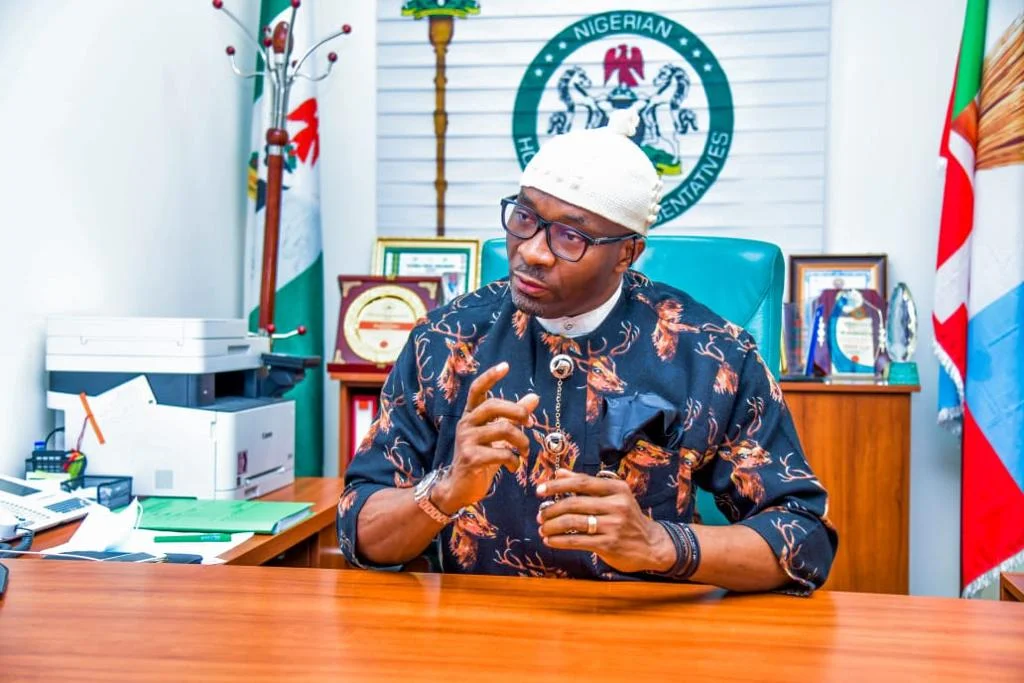
Ahead of the public hearing on the Reserved Seats Bill scheduled for September 22, 2025, Deputy Speaker of the House of Representatives, Benjamin Kalu, has emphatically stated that the bill is not an act of tokenism but a firm commitment to increasing women’s political representation and closing gender gaps in governance.
Speaking through his Chief of Staff, Sam Hart, at a Special Dialogue on the Reserved Seats Bill tagged the SheThePeople platform, hosted by the Emerge Women Development Initiative in partnership with the Entrepreneurship Centre for Women Development (ECWD) in Abuja, Kalu highlighted the importance of constitutional reforms to promote gender equality.
At the event themed “Deepening the Conversation, Accelerating Women’s Representation in Governance,” Kalu said: “This bill is not just a piece of legislation, neither is it an act of tokenism, it is proof of our collective commitment to change the narrative and disrupt the status quo that has long sidelined women from decision-making tables.”
Kalu who is also the chairman of the Constitution Review Committee, stressed the necessity of reviewing electoral laws, party politics, and societal norms that impede women’s participation in governance. “We recognize the important role that women play in shaping the future of our nation. Your dedication, passion, and commitment to public service are inspirations to us all,” he said. He urged stakeholders to view women not as tokens but as equal partners in governance.
According to him, “The theme compels us to reflect on the journey we have embarked upon, a journey marked by courage, resilience and determination to ensure that women’s voices are not only heard but amplified in the halls of power.”
On the bill itself, Kalu emphasized, “The Reserved Seats Bill, otherwise known as HB 1349, which I sponsored as Deputy Speaker and which is co-sponsored by some other members of the House of Representatives, is a legislative effort that seeks to carve out a dedicated space for women in our governance structures.”
He further explained the importance of constitutional review in this process: “As chairman of the Constitution Review Committee, I believe it is essential to examine the provisions of our Constitution and ensure that they promote gender equality and women’s empowerment.”
Kalu stressed that the bill is more than just legislation or tokenism: “This bill is not just a piece of legislation, neither is it an act of tokenism. It is proof of our collective commitment to change the narrative and to disrupt the status quo that has long sidelined women from decision-making tables.”
Reflecting on the women’s role in nation-building, he called on all participants to recognize their vital contributions: “We recognize the important role that women play in shaping the future of our nation. Your dedication, passion and commitment to public service are inspirations to us all.”
Kalu highlighted the practical implications of increasing women’s political participation: “Women’s political representation is crucial for the development of our nation. When women are represented in decision-making bodies, they bring unique perspectives and experiences that enrich our debates and inform policies.”
He rounded off with a call to collective action: “As we review our Constitution, we have considered the barriers that prevent women from fully participating in politics. We must examine the electoral laws, party politics, and societal norms that hinder women’s representation. We therefore must work towards creating a more inclusive and equitable political environment that encourages women to participate, and not just participate, but also to thrive.”
Kalu concluded with encouragement and optimism: “The struggle for women’s representation is not merely a fight for gender balance but a pursuit of a more inclusive and equitable society. To accelerate progress, we must engage in candid conversations, confront biases and dismantle systemic barriers that hinder women’s full participation. I promise you that this time around, there is a lot of work being done.
There is a lot of approach and background work, and we are collectively optimistic that this is going to work. Let us continue to deepen the conversation, accelerate representation and create a legacy of equality and empowerment for generations to come.”
Minister of Women Affairs, Imaan Sulaiman-Ibrahim, represented by APC Deputy National Women Leader Zainab Ibrahim, highlighted the bill’s broader significance for Nigeria’s democracy. “The bill will deepen democracy, enrich governance with inclusivity, and ensure that decision-making reflects the full diversity of our nation,” she remarked. She added that the bill would enhance Nigeria’s global standing as a leader in gender equality across Africa and beyond.
Other News
The minister brought attention to the continuing challenges women face in political representation: “Yet, while the foundations of hope are being laid, the realities of women’s political representation remind us of the urgent work that remains. In the 10th National Assembly, out of 109 seats in the Senate, only 4 are held by women, and in the 360 seats of the House of Representatives, only 17 are held by women; a total of 21 women out of 469 lawmakers, barely 4.2%. Across our 36 State Houses of Assembly, out of 991 seats, only 45 are occupied by women, just 4.5%. These numbers are not mere statistics; they are the measure of a democracy still struggling to reflect the faces and voices of nearly half its population.”
Minister of State for Labour and Employment, Nkeiruka Onyejeocha, called on women to maintain pressure for the bill’s passage. “Start talking to the party people. Let there be a law that if you do not meet a certain quota, you are not going to run for elections—not just elective positions, but also appointments,” she said. Onyejeocha further stressed, “When national chairmen are selected, there should be at least 35 percent women in party executives to ensure fair representation and facilitate women’s ability to contest elections.”
Convener of SheThePeople platform, Mary Ikoku, stressed that women are not asking for favours but demanding constitutional rights. “These reserved seats will ensure inclusive representation and reflect the diversity of Nigerian society,” she said firmly.
Activist Aisha Yesufu urged the 10th National Assembly to make history by passing the bill. “The ninth Assembly has come and gone, and history records that it was its members who vehemently rejected the bill. For the tenth Assembly, I say: sign the bill on reserved seats for women if you want to be remembered,” she declared passionately during the panel discussions.
The dialogue also featured discussions on strategies for advocacy and lobbying for the passage of the Reserved Seats Bill, and sustaining momentum towards its enactment.
In a panel discussion focusing on the gaps in advocacy for the Reserved Seats Bill, both a prominent Nigerian activist, Aisha Yesufu, and Special Adviser to the Deputy Speaker on Legislative Matters, Chidozie Aja, shed light on where the lacuna lies and offered extensive insights into the challenges and solutions.
Aja explained, “Many legislators still do not understand the very essence of this bill. There is a common misconception that women want to take their seats away, but that is not the case. This misunderstanding necessitates a stronger and more strategic advocacy effort.” He shared a personal reflection on the influence women have and the approach needed to sway lawmakers: “I told my wife one day that I was the head of the family, and she replied, ‘I am the neck.’ The head cannot stand without the neck. On the day of voting, a male legislator’s last interaction before reaching the assembly is often with a woman—be it his wife, daughter, or mother. Therefore, it is critical that we organize ourselves to use this connection effectively to support the bill.”
Aja further challenged the stereotype that women are confrontational by saying, “This narrative has changed. Women are no longer that confrontational as some think. We need to press our messages more effectively and engage lawmakers properly. Women are superior beings, and anyone suggesting they should take the back seat is mistaken.”
Echoing the urgency of the moment, Yesufu critique of past advocacy efforts and urged a shift in approach: “At the end of the day, women have tried everything. We have knelt, been silent, begged. What else can we do? When someone says ‘women are too confrontational,’ what does that even mean? It’s a tired excuse.” Yesufu condemned the narrative blaming women for the lack of progress, asserting, “The problem is telling you, you are the problem—it’s not going to work.”
Yesufu called on lawmakers to understand the broader implications of excluding women from decision-making. “If you want to be remembered as a lawmaker who made a difference during the 10th Assembly, pass this bill. Don’t do it for me, or for your daughter or sister. Do it for yourself,” she urged. “Women’s representation isn’t about favor; it’s about good governance. When women are sidelined, Nigeria is hobbling like one walking on one leg instead of two.”
She warned that without the bill, lawmakers risk being forgotten: “The 9th Assembly is already history. Most of its members are not remembered because they failed at critical moments. This is the chance for the 10th Assembly to be known for courage and legacy.”
Yesufu’s closing call was clear and resolute: “Pass the Reserved Seats Bill to bring more women into leadership. This will bring the turnaround Nigeria desperately needs. When women stand for good governance, Nigerians will rise, and Nigeria will excel on the global stage.”
The event underscored a collective push among government officials, activists, and civil society to accelerate women’s political inclusion and create a legacy of equality for future generations.