Follow Us on Google
By Juliana Taiwo-Obalonye, Abuja
They left Abuja with ambition and the kind of confidence only a presidential appointment can give. They traded ministerial office for the hope of state power, convinced that national visibility and what they interpreted as President Bola Tinubu’s blessing would be enough to carry them through the crucible of APC primaries. Instead, several returned to their political camps bruised and bewildered: the fed up look of a minister who loses a primary has become one of the quiet lessons of 2026.
On March 18, 2026, President Bola Tinubu directed ministers and political appointees seeking elective offices ahead of the 2027 general elections to resign from their positions before participating in party primaries, in line with the Electoral Act. The directive forced a brutal calculation on every ambitious cabinet member: give up the safety of federal office and gamble on grassroots popularity, or stay put and forfeit the race altogether. For most who chose to gamble, the outcome was unforgiving.

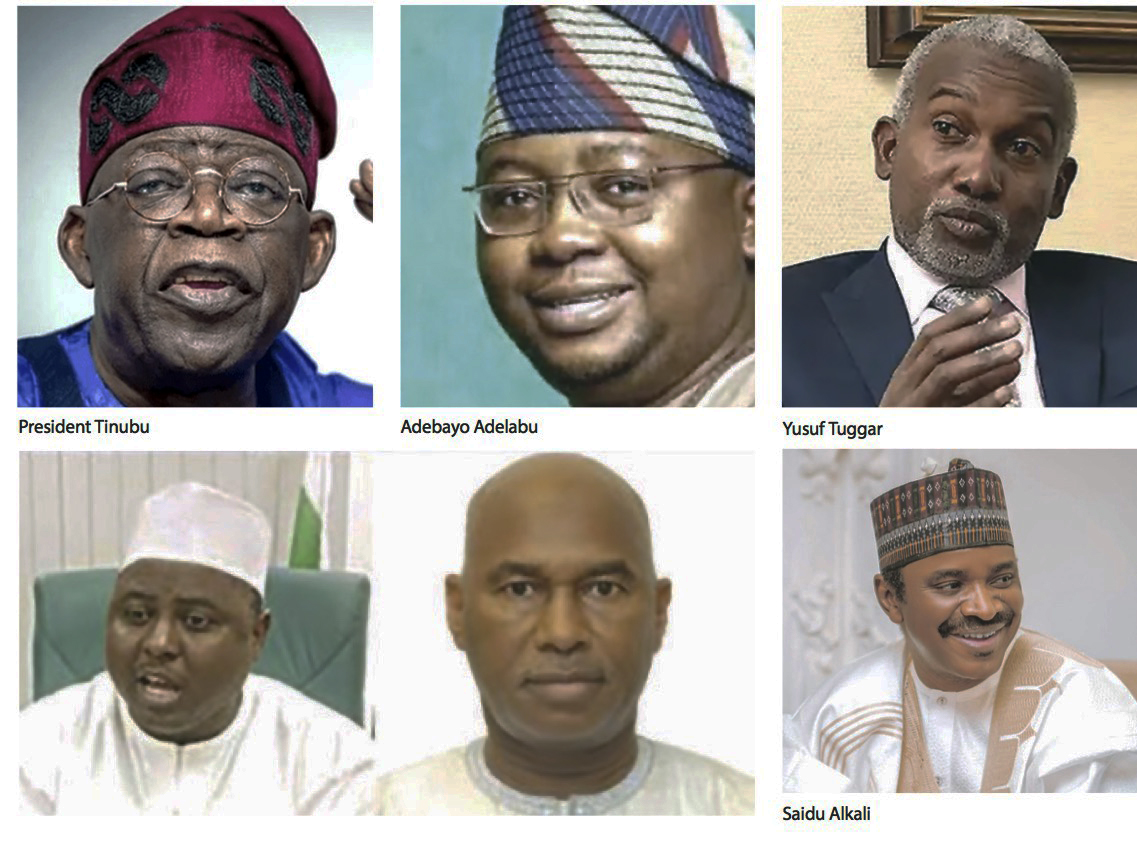
Adebayo Adelabu’s defeat in Oyo was not a narrow miss; it was a rout. Senator Sarafadeen Alli produced a tidal wave of local support, securing 578,143 votes in the APC governorship primary, while Adelabu garnered only 19,193 votes. The margin was not merely embarrassing; it was politically annihilating. Alli’s triumph was the culmination of long laid groundwork and a testament to his enduring political capital.
A former Secretary to the State Government and Chief of Staff to ex Governor Rashidi Ladoja, Alli had spent years building a grassroots network through his ROCOF/JDS movement, with party leaders noting that there was no ward in Oyo State where the organisation did not have a presence.
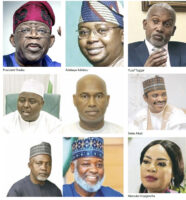
Adelabu rejected the result outright, alleging irregularities and manipulation of the delegate process. Speaking with journalists after voting at Ward 9 in Ibadan South East Local Government Area, he claimed the process in his ward was peaceful and transparent, adding that over 430 of approximately 437 registered members voted in his favour. He warned, however, that reports from several other parts of the state pointed to gross misconduct, including elections conducted hours before the appointed time with figures written as desired.
Adelabu had earlier dismissed reports that President Tinubu was backing Alli, insisting that anyone who claimed the president had endorsed a rival was lying. He said Tinubu had personally encouraged him to pursue his governorship ambition, reportedly telling him: “Bayo, it is time. It’s a time honoured ambition. You might not be stopped.” The scale of his eventual defeat rendered that encouragement deeply ironic.
The loss also invited public mockery: social media and political commentators turned it into a running joke, equating the scale of his defeat to the “estimated billing” controversies that dogged parts of his tenure as Power Minister, an ironic comparison that fused political ridicule with critiques of his policy legacy.
In Gombe, former Minister of Transportation Saidu Alkali failed to secure the APC governorship ticket after boycotting the primary process over alleged irregularities, citing lack of fairness, inclusivity and credibility. In his absence, Jamilu Gwamna, backed by incumbent Governor Inuwa Yahaya, emerged winner with 247,161 votes.
Other News
Alkali polled only 11,612 votes, finishing behind even former Minister of Communications and Digital Economy, Prof Isa Pantami, who scored 12,120 votes. Alkali expressed disappointment, questioned the integrity of the process, and hinted at plans to engage party elders to seek clarity and redress.
In Bauchi, former Minister of Foreign Affairs Yusuf Maitama Tuggar, who had submitted his resignation letter on March 30, 2026, barely a day before the deadline, lost the APC governorship ticket to former Governor Mohammed Abubakar, who polled 57,517 votes against Tuggar’s 26,001.
Tuggar acknowledged the outcome with measured disappointment, thanking supporters for their efforts and saying he would return to public service in other capacities if that was where he was needed. He stopped short of challenging the result publicly and framed his loss as part of the democratic process. Yet the numbers told their own story: a former diplomat and federal minister, stripped of office and beaten convincingly by a former governor with deeper local roots.
Of the five ministers who resigned to contest, only Nkeiruka Onyejeocha, former Minister of State for Labour and Employment, and Yusuf Sununu, former Minister of State for Humanitarian Affairs, secured their tickets. Onyejeocha clinched the APC ticket for Isuikwuato/Umunneochi Federal Constituency in Abia after emerging as an unopposed candidate.
The broader pattern, however, is unmistakable: ministerial appointment is not a substitute for grassroots architecture. At the heart of these losses lies a misreading of signals. Some aspirants mistook presidential proximity for presidential propulsion. A handshake in the corridor, a photograph, a private meeting, these became, in some minds, tantamount to an explicit green light.
President Tinubu, by contrast, has been politically cautious: selective with public endorsements and calculating in how far to intervene in state battlegrounds. Where he opted to act clearly, candidates fared better. Where he remained neutral, local gatekeepers, governors, delegates, party machines, filled the vacuum and picked their own favourites.
The Oyo result illustrates this sharply. Ibarapa zone APC leaders had endorsed Alli as far back as April 2026, describing him as the most suitable candidate to lead the party to victory. Political analysts noted that Adelabu lost because of delegate mathematics and party structure, not because of votes at the ward level. Alli had the structure; Adelabu had the profile. In Nigerian politics, structure consistently defeats profile.
The consequences are immediate and sharp. Resignation strips these politicians of federal shelter and, with defeat, leaves them exposed to narratives of miscalculation. A public loss after leaving the cabinet is not merely a setback; it saps leverage within party circles and gives rivals ammunition. Reappointment to the cabinet is politically fraught after stepping down to contest, an awkward reversal that would risk legal, ethical, and party backlash.
Their paths forward narrow into a few familiar scripts. Some will return to the trenches: rebuilding ward level ties, investing in local projects, and seeking reconciliation with state powerbrokers. Others may pivot to policy, diplomacy, or the private sector, spaces where technocratic competence can still be leveraged without the need for a delegate’s vote. For a few, defection remains a tempting escape hatch, though such a move carries its own long term credibility costs.
For President Tinubu and the APC, these episodes are salutary. They underscore the limits of top down deployment and reveal the stubborn strength of local political ecosystems. They also expose a management dilemma: permit aspirants to read faint signals as endorsements and you encourage risky resignations; intervene too often and you alienate governors and other power centres. The primaries thus become a mirror showing where presidential clout ends and ground politics begin.
Adelabu’s loss in Oyo is a cautionary emblem: ministerial pedigree and family name mattered less than an opponent who understood the municipal game. Tuggar’s defeat in Bauchi proves that diplomatic flair cannot substitute for ward level loyalty. Alkali’s humiliation in Gombe demonstrates that boycotting a primary you are losing does not rescue a failing campaign. These are not merely personal defeats; they are a reminder that Nigerian politics remains, at its core, local.
If there is a final irony, it is structural: the law meant to cleanse party primaries forced talented administrators into a high stakes gamble, and the scoreboard shows the gamble misfired for several. Their futures now depend on humility, hard work, and the patient craftsmanship of local politics. Those who recognise that and rebuild quietly may return stronger. Those who insist the presidency was their missing engine risk drifting to the margins.