Follow Us on Google
From Aidoghie Paulinus, Abuja
The Chinese government has said that two recent events have shown that the international community still lacks basic facts regarding the Taiwan question.
The government also said the international community lacked awareness of the deceptive propaganda of the Taiwan authorities and the nature and harms of “Taiwan independence”.
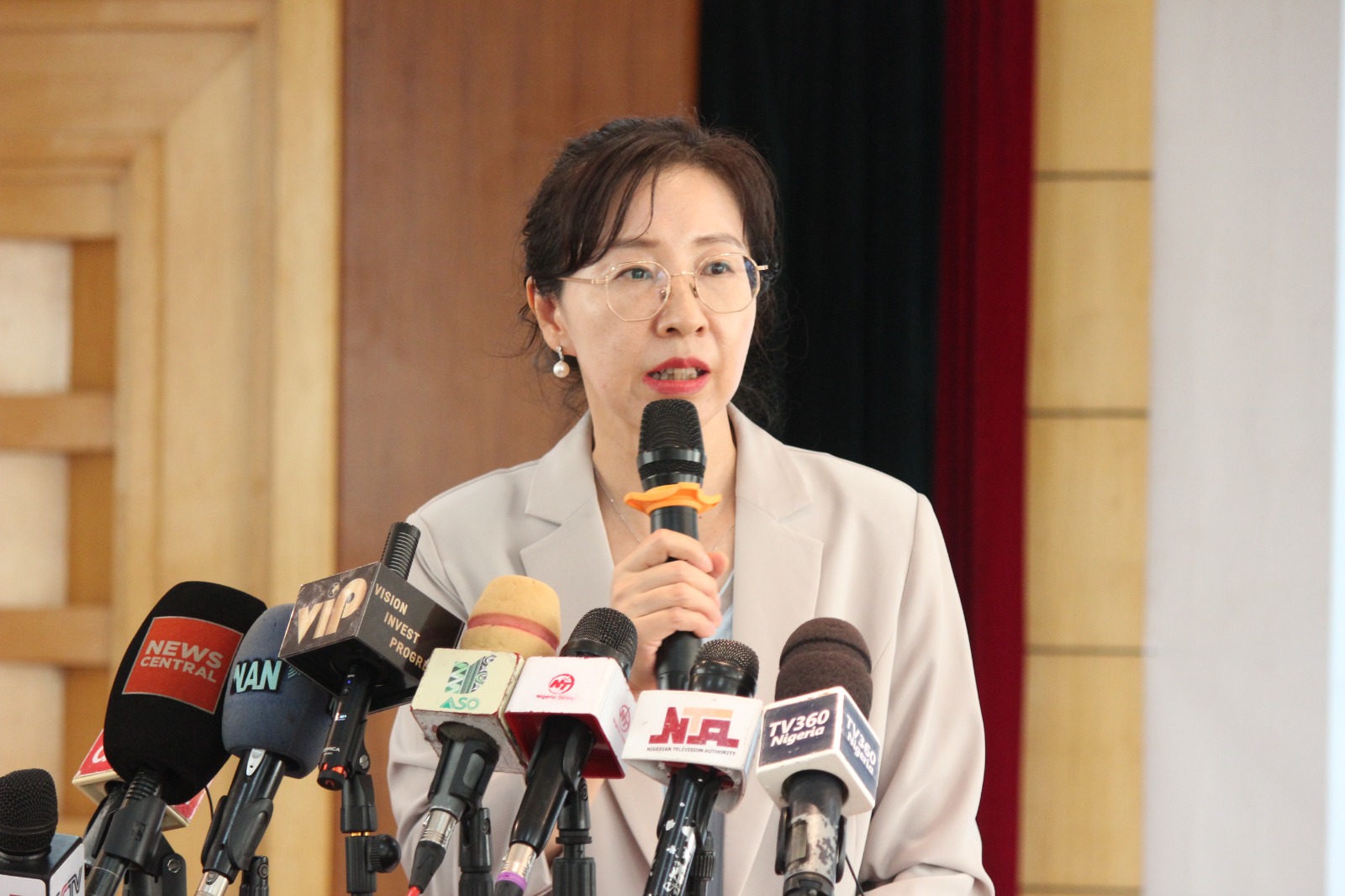
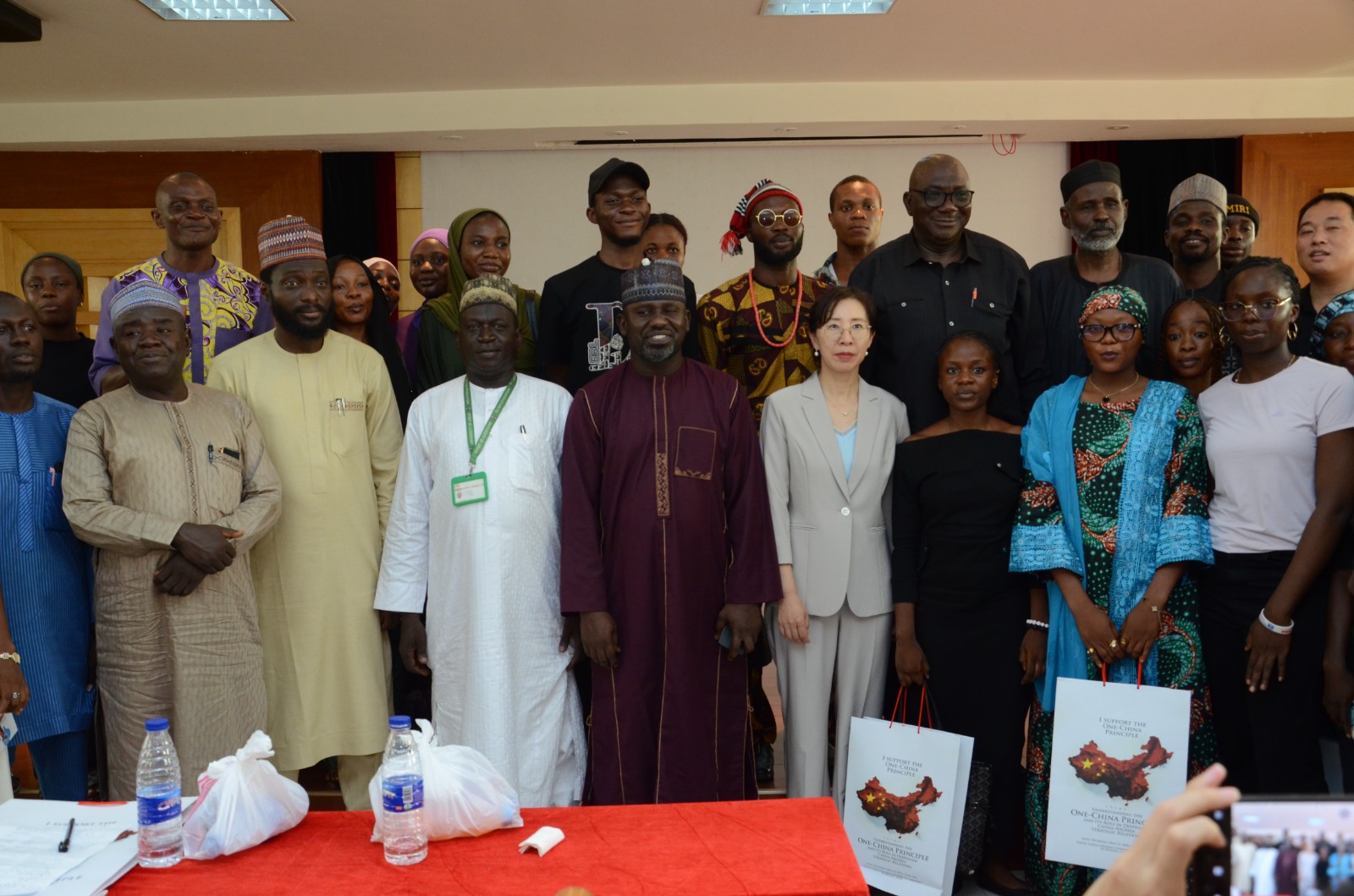
The counsellor at the Embassy of the People’s Republic of China in Nigeria, Dong Hairong, stated this during a media salon on Understanding the One-China Principle and its Role in Deepening China–Nigeria Strategic Relations organised by the Centre for China Studies and the Centre for Contemporary China-Africa Research in Abuja.
Dong said recently two absurd incidents took place. The first was the leader of China’s Taiwan region, Lai Ching-te, who made a sneaky transitory visit to Eswatini in a covert manner.
She also said that in a bid to expand the so-called “international space” for separatist activities, Lai and his entourage knelt down on one knee to present gifts to the Queen Mother of Eswatini.
Dong further said the outrageous act sparked strong public outrage in Taiwan, drawing widespread public backlash and relentless criticism from local residents.
The second event, she stated, was the recent visit of a small group of Nigerian journalists to Taiwan and a meeting the group had with officials from Taiwan’s external affairs department.
She added that during the meeting, the Taiwan side even clamoured to push for the relocation of its trade office in Nigeria back to Abuja.
Dong said: “These two incidents show that the international community still lacks a clear understanding of the basic facts regarding the Taiwan question, as well as a full awareness of the deceptive propaganda of the Taiwan authorities and the nature and harms of Taiwan independence.”
Clarifying the Taiwan question, Dong said Taiwan has been an inalienable part of China’s territory since ancient times.
“Taiwan has belonged to China since time immemorial, with clear historical context and solid legal basis. A wealth of historical records and documents chronicle the early development of Taiwan by the Chinese people. As early as the 12th century, the Chinese government set up administrative institutions in Taiwan and exercised jurisdiction over the region. In 1895, Japan seized Taiwan through war. In 1943, toward the end of World War II, China, the United States and Britain issued the Cairo Declaration, stipulating that Taiwan stolen by Japan should be returned to China. In 1945, China, the United States, Britain and the Soviet Union released the Potsdam Proclamation, which affirmed that the provisions of the Cairo Declaration must be implemented,” Dong also said.
Other News
She further said in August of the same year, Japan accepted the Potsdam Proclamation, and signed the Instrument of Surrender the following month, undertaking to faithfully fulfill all provisions of the Potsdam Proclamation.
“Taiwan thus returned to the territory of China. This series of internationally legally binding documents confirms both legally and factually China’s recovery of Taiwan.
“Shortly afterwards, due to the continuation of China’s civil war and interference by external forces, the two sides across the Taiwan Strait fell into a state of long-term political confrontation. Although the two sides have not yet achieved full reunification, the fact that both the mainland and Taiwan belong to one China and Taiwan is an inalienable part of China’s territory has never changed. Taiwan has never been a country, was never one in the past, and will never be one in the future,” Dong stated.
On the sovereignty of Taiwan, Dong said it belonged to the People’s Republic of China.
According to Dong, “Shortly after the end of the World Anti-Fascist War and China’s War of Resistance against Japanese Aggression in 1945, the Kuomintang clique headed by Chiang Kai-shek launched a civil war. Under the leadership of the Communist Party of China, the Chinese people won the civil war, ultimately overthrowing the government of the Republic of China led by Chiang Kai-shek. Some military and political personnel of the Kuomintang clique retreated to Taiwan. Amid interference by external forces, the two sides across the Taiwan Strait fell into a long-standing state of political confrontation.
“On October 1, 1949, the Central People’s Government of the People’s Republic of China was proclaimed, replacing the government of the Republic of China as the sole legitimate government representing the whole of China. This represented a change of regime while China remained unchanged as a subject of international law. China’s sovereignty and inherent territorial boundaries have never been altered. The People’s Republic of China naturally fully enjoys and exercises China’s sovereignty, including sovereignty over Taiwan.”
In his remarks, the director of the Centre for China Studies, Charles Onunaiju, said as a result of their own history, both Chinese people living across the strait of the mainland and the island have been exposed to different social systems and the one country, two systems is designed to acknowledge the reality of the differing exposures, while reinforcing the shared roots of their common homeland.
Onunaiju also said the One China Principle has been built around the unassailable pillars of history and existential reality.
“In my understanding, Beijing does not beg for anyone to recognize or acknowledge ‘One China Principle’. It is reality rooted in the core fabric of China’s sovereignty and territorial integrity and any attempt to violate it would incur such an unmistakable cost that is actually unreasonable to try. Foreign minister Wang Yi, has actually made the point that such attempt would be the equivalent of “lifting a stone only to drop it on one’s own feet”.
“However, as a responsible major country, Beijing takes seriously to continuously clarify the serious issues around her core and non-negotiable national interest, the One China Principle,” Onunaiju said.
In his contribution, the director of the Abuja School of Social and Political Thoughts and the dean of the Law Faculty, Ave Maria University, Piyanko, Nasarawa State, Sam Amadi, said the question was how should Africa, and particularly Nigeria, deal with the Taiwan issue.
“My prescription would be that African countries have a history with keeping territories intact. The premise of the AAU is that territories should remain as they are. So it aligns with the Chinese, with the People’s Republic of China’s position, which is there’s one China,” Amadi said.