Follow Us on Google
By Chinyere Anyanwu
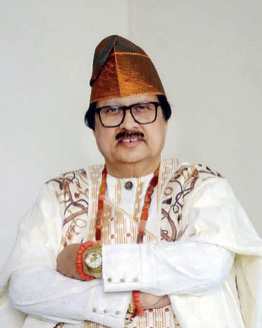
Nigeria-based Indian businessman, community leader and socialite, Sanjay Jain, has projected that Nigeria and India could emerge as major global powers between 2050 and 2100, with stronger cooperation between both countries expected to drive growth in agriculture, 5G technology and energy transition.
Jain, who is the Chairman, Institute of Chartered Accountants of India (ICAI), Nigeria chapter, said India and Nigeria had built a strong strategic partnership in the 21st century, evolving from their shared history of non-alignment into deeper economic, technological and defence cooperation.
Jain, who spoke recently in Lagos on the 21st Century India-Nigeria relationship, described the relationship as strong, resilient and mutually beneficial, maintaining that the cooperation between both countries has expanded significantly in agriculture, trade, investment, healthcare, education, culture and technology.
He said: “In the 21st Century, Indian investment and technical cooperation in Nigeria’s agricultural sector have grown significantly, focusing on food security, reducing post-harvest losses by up to 50 per cent, and transferring Green Revolution technologies through bilateral trade and major private-sector footprints.
“The key areas of focus in Indian investment include post-harvest loss reduction, introduction of better storage, cold-chain systems, and processing infrastructure to prevent the stupefying annual loss of 30 per cent to 50 per cent of perishable farm produce.”
Jain listed other areas of focus to include agri-tech and drip irrigation, through transferring India’s expertise in drip irrigation, nano-fertilisers, high-yield seeds (including millet), and drone-based digital farming.
He said, “In terms of livestock and dairy development, there is also a focus on partnering on animal healthcare, artificial insemination, and breed improvement programmes – such as regional initiatives in Jigawa State.
“For infrastructure and value chain finance, the Indian government is aligning with institutional partners like Infrastructure Corporation of Nigeria (InfraCorp) and local banks to fund agricultural warehousing, food processing chains and packaging.”
He commended the role of the Indian community in Nigeria and Nigerians living and studying in India for fostering closer people-to-people ties, emphasising that cultural exchanges and business collaborations have helped strengthen understanding between the two nations.
He expressed optimism that the relationship would continue to flourish, particularly under the emerging opportunities in renewable energy, digital technology, agriculture, manufacturing and skills development.
“India and Nigeria have maintained diplomatic relations since before Nigeria’s independence, with both countries cooperating actively with each other on multilateral planks,” he noted. “Recent engagements by both governments have reaffirmed commitments to expanding the cooperation in agriculture, trade, defence, technology, education and sustainable development.”
Categorising his perceived areas of major partnerships, Jain, who is the President of the Institute of Chartered Accountants of India, Nigeria Chapter, said: “India is consistently one of Nigeria’s largest trading partners. It is a major importer of Nigerian crude oil, with bilateral trade reaching approximately $10 billion, covering a significant percentage of India’s domestic oil demand. In terms of investments, we have over 135 Indian companies operating in Nigeria with over $27 billion in investments, contributing significantly to Nigeria’s economic diversification, manufacturing, and job creation,” he stated.
He revealed that in the 21st Century, relations shifted from a political focus to economic collaboration, targeting sectors like pharmaceuticals, agriculture and infrastructure.
“We equally maintain strategic and defence partnerships at various levels, with India and Nigeria having sustained a formal strategic partnership since 2007. Our defence cooperation has seen India playing a crucial role in training Nigerian military personnel and providing technical expertise in combating piracy, cybercrime, and terrorism.
“India’s contribution to technology advancement, health, education and culture in Nigeria has been robust. In ICT advancement, we support Nigeria’s digital transformation, particularly in telecommunications, space research and renewable energy, while in pharmaceuticals, India is a key supplier of affordable pharmaceuticals in Nigeria. In agriculture, India is at the forefront of ensuring that Nigeria’s agriculture becomes fully mechanised.
“In education, there are growing initiatives to replicate Indian technical expertise, such as discussions around establishing an Indian Institute of Technology (IIT) in Nigeria to foster innovation-driven solutions. And as of 2024, approximately 50,000 Nigerians live and work in India, which is our contribution to cultural and diaspora ties. In film cooperation, there is increasing cultural exchange, particularly between India’s Bollywood and Nigeria’s Nollywood.”
He noted that the 2024-2025 period witnessed a renewed high-level engagement between both countries, including Indian Prime Minister Narendra Modi’s visit to Nigeria in 2024. He added that the visit was the first in 17 years.
“This is because the visit was where he was honoured with Nigeria’s second-highest national honour, the Grand Commander of the Order of the Niger (GCON).”
He disclosed that India spearheaded the inclusion of the African Union, which includes Nigeria, into the G20, solidifying their shared influence in the Global South.
On the future outlook of the relationship, Jain said it would be strong, resilient and mutually beneficial.
He stated that bilateral trade has continued to expand, while Indian companies have maintained substantial investments in Nigeria across sectors including pharmaceuticals, manufacturing, agriculture, telecommunications, infrastructure and energy. “The collaboration, however, has deepened in healthcare, education, information technology, capacity building and cultural exchange, contributing to stronger diplomatic relations,” he recounted.