Follow Us on Google
The Chinese Ambassador to Nigeria, Yu Dunhai, has said that China and Nigeria are major players in the global film industry.
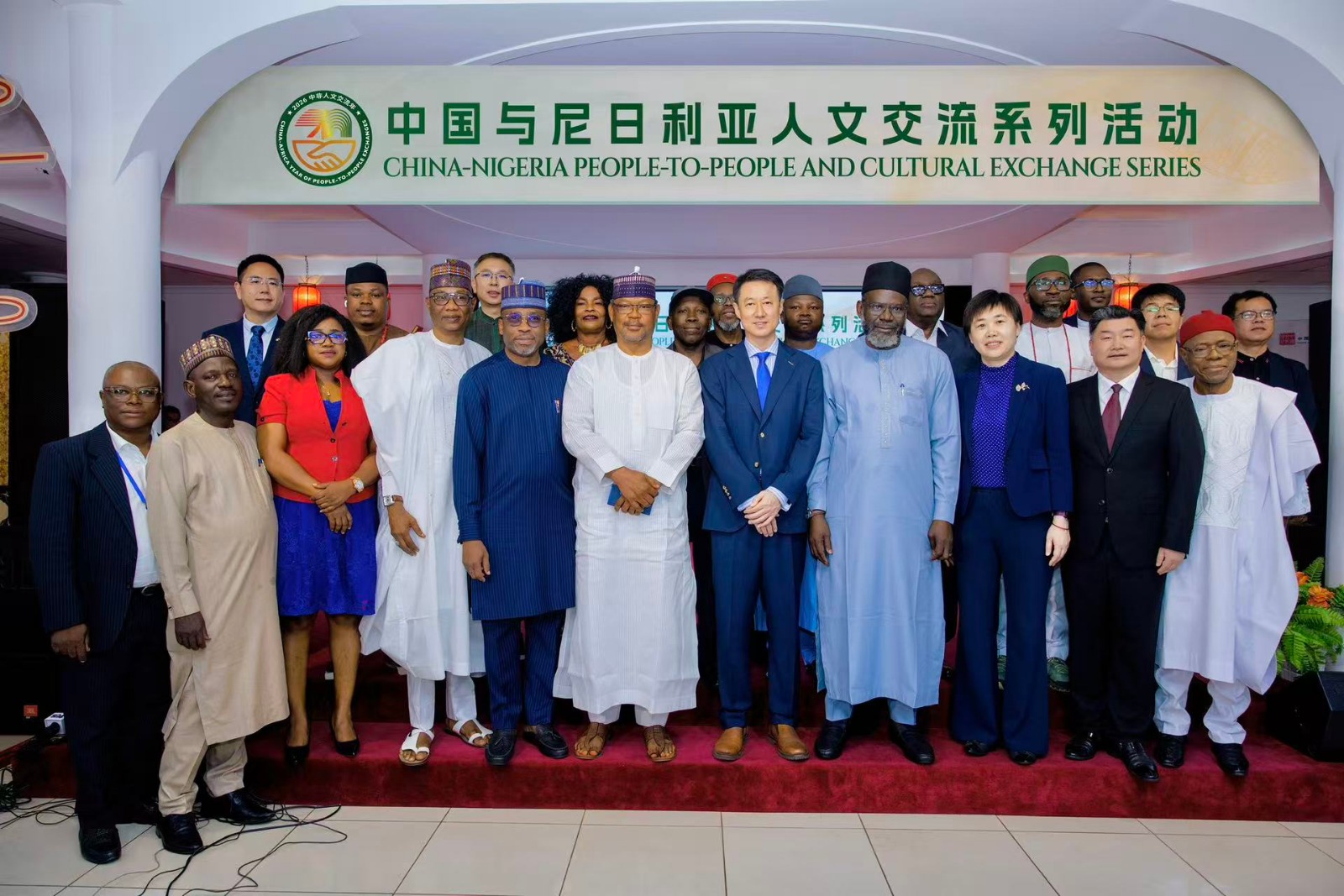
The envoy stated this while speaking on the occasion of the China-Nigeria Film and Literature Symposium and the Signing Ceremony of the CMC-NTA Cooperation Agreement in Abuja.
Yu also said that China has more than 93,000 cinema screens, the largest number in the world, and produces over 700 films annually.
He further said that, as significant achievements of human civilisation, literature and film, through their unique narrative styles and audiovisual languages, vividly document the course of human history, social transformations, the full spectrum of human emotions, and reflections on the future.
He stated that both China and Nigeria were ancient civilisations, noting that renowned Nigerian writers such as Wole Soyinka, Chinua Achebe and Chimamanda Ngozi Adichie have vividly portrayed the Nigerian people’s pursuit of the “African Dream” through their exquisite writing.
The Chinese envoy further said celebrated Chinese authors like Mo Yan, Yu Hua and Mai Jia (莫言、余华、麦家) have explored the roots of traditional culture, observed society with keen insight, and explored the philosophy of life through their writing.
Yu added that works such as A History of Nigerian Literature and Chinese editions of classics by Wole Soyinka and Chinua Achebe have had a widespread impact in China, while English translations of many Chinese web novels have won the hearts of many young readers in Nigeria.
“When it comes to film, China and Nigeria are both major players in the global film industry. China has more than 93,000 cinema screens, the largest number in the world, and produces over 700 films annually. It also ranks first globally in box-office revenue for a single country or region. Nigeria’s Nollywood is the world’s second largest film industry, producing more than 2,000 films annually. Chinese films like My People, “My Country (我和我的祖国), Shenzhou 13 (窗外是蓝星, and The Dumpling Queen (水饺皇后, have been screened in Nigeria to great acclaim, while Nigerian films such as Lionheart (狮心), Mai Mataba (王位之战), and October 1 (10月1日)have offered Chinese audiences a window into Nigerian culture and national spirit,” Yu said.
The ambassador further said the mutual appreciation of literature and film between the peoples of China and Nigeria is rooted in the close friendship and cultural ties between the two peoples.
Chinese President Xi Jinping, according to Yu, has proposed the Global Civilization Initiative, advocating respect for the diversity of civilisations and the shared values of humanity in the areas of peace, development, equity, justice, democracy and freedom.
“Nigerian President Bola Ahmed Tinubu also emphasized that cultural exchange transcends national borders, serving as a vital link that “builds bridges of understanding, friendship, and a shared human destiny.” During the 2024 Beijing Summit of Forum on China-Africa Cooperation (FOCAC), the two Presidents held a successful meeting, elevating bilateral relations to a Comprehensive Strategic Partnership and agreeing to deepen mutual learning between our civilizations and strengthen people-to-people ties. This gives new momentum to cultural and people-to-people exchanges between our two countries,” he also said.
Other News
Noting that this year marked the 55th anniversary of diplomatic relations between China and Nigeria, the China-Africa Year of People-to-People Exchanges, and the 105th anniversary of the founding of the Communist Party of China (CPC), Yu assured that China will continue to work with Nigeria to build a community with a shared future for mankind.
“Together, we will enrich the garden of world civilizations through openness and inclusiveness, deepen mutual understanding through exchanges and mutual learning, and strengthen public support for China and Africa in pursuit of modernization together.
“Today’s event marks an important step in advancing the Global Civilization Initiative and building a community with a shared future.
“President Xi Jinping has pointed out that “the people are the creators of history and the true heroes.” The people-centered philosophy has also been the key to the CPC’s enduring vitality for more than a century. Great literature and art also begin with the people and belong to the people. I hope that writers and artists from both countries will continue to draw inspiration from real life, learn from each other, and create more outstanding works that resonate with audiences, helping our peoples better appreciate each other’s rich cultures and vibrant societies,” Yu further said.
In his remarks, the Permanent Secretary, Ministry of Arts, Culture, Tourism and Creative Economy, Ibrahim Abdulkarim Ozi, said the important occasion was another testament to the enduring friendship and mutually beneficial partnership between Nigeria and China.
Ozi also said the occasion reflected the shared commitments to strengthening cultural diplomacy, promoting creative industry collaboration, and fostering greater people-to-people understanding through the arts, films, tourism and cultural exchanges.
“On behalf of the Honourable Minister and the entire Federal Ministry of Arts, Culture, Tourism and Creative Economy, I warmly congratulate the Communist Party of China (CPC) on the remarkable occasion of its 105th anniversary of leading the affairs of the People’s Republic of China. Over the past century, and particularly under the leadership of the CPC, China has achieved extraordinary progress in education, socio-economic transformation, scientific and technological innovation, poverty reduction, and world-class infrastructure development. These achievements have not only transformed China but have also made significant contributions to global development and international cooperation,” Ozi said.
Also speaking, the Director-General of the Nigerian Television Authority (NTA), Salihu Abdulhamid Dembos, said the event represented much more than the formal signing of a document.
“It marks the beginning of a promising new chapter in the enduring relationship between Nigeria and China a partnership founded on friendship, mutual respect, shared aspirations and a firm belief in the power of culture to unite peoples and nations,” Dembos said.
He noted that film, television and literature were among the most powerful instruments for telling the story of a people, adding that they preserve history, promote identity, transmit values and enable societies to understand one another beyond geographical and linguistic boundaries.
“Through compelling stories, we discover that, despite our different backgrounds, our hopes, struggles and dreams are often remarkably similar,” Dembos also said.