Follow Us on Google
•Smallholder farmers reveal horrible ordeals
By Fred Itua, Okwe Obi and Femi Folaranmi
For many decades, Nigeria’s agricultural sector has been bedevilled by low budgetary allocation, climate change and post-harvest losses, among others factors. Unfortunately, successive administrations have done little to address these concerns.
Stakeholders had imagined that, in this time and age, where sophisticated technologies and technical know-how abound, the problems would have been a thing of the past. Expectedly, the country would have had enough food produce, which would lead to massive export.
So far, that has not been the case, no thanks to the lingering squabble between herders and farmers in many parts of the country. This snag has taken a political dimension. It has resulted in the death of so many productive farmers and herders.
While farmers jealously guard their farmlands from being overrun and crops destroyed by pastoralists, herders, on the other hand, prance and perambulate through green vegetation so as to feed their flocks.
Similarly, culture, which ought to advance the cause of women’s empowerment through agriculture, has been the bane of their emancipation as they are prevented from owning land to farm.
In addition, those in positions of authority give contracts to their cronies, known as portfolio farmers, to supply and distribute tractors and bags of fertilisers. These portfolio farmers go against the mandate of the contracts, as they hike the cost of fertilisers and supply a few substandard tractors to real farmers.
Memorandums of understanding signed between the Nigerian government and China, Turkey and Sweden for the supply of seedlings are just for the optics, as there is no corresponding output to that effect.
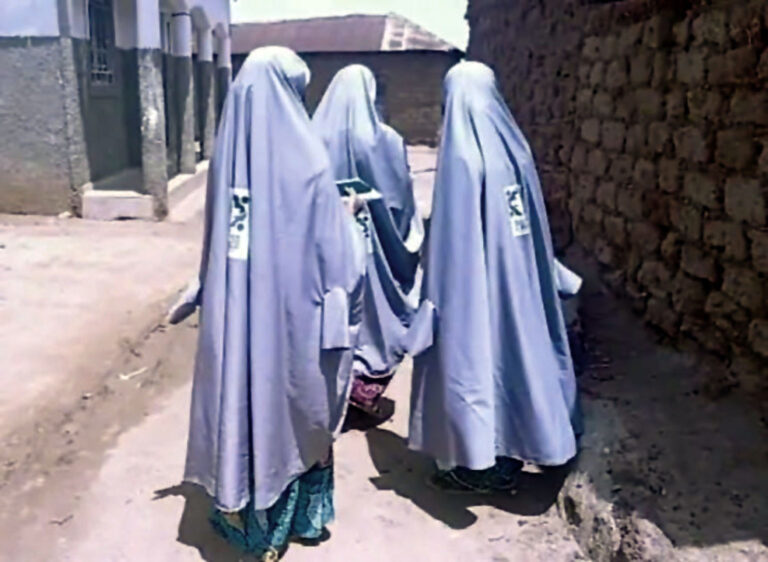
Comfort Sunday, an indigene of Nasarawa State, who is the coordinator of Small-Scale Women Farmers Organisation in Nigeria (SWOFON) in the Federal Capital Territory (FCT), Abuja, explained that some of them rent a parcel of land for N20,000 to N50,000 per annum to farm.
The mother of two grown-up children, who lives in Jiwa, a community around Gwa-Gwa in the FCT, also noted that landowners exorbitantly increase price of land upon realising that the farmers are getting bumper harvests.
Sunday added that farmers do not allow their crops like yam, beans and soya beans to fully mature. She said they harvest on time so as to prevent Fulani herders from harvesting them.
The 54-year-old woman said: “For we, women, culture is our problem. In some communities, women are not allowed to own land. The people will only give you land to farm (on lease).
“And if they notice that you are productive and excelling, they will collect it back. That is why we are advocating for the rights of women to own land so that we can freely cultivate crops, because it is not easy. Without land, you cannot even talk about agriculture or beat your chest about doing anything meaningful. Second problem is bandits.
“These bandits usually rape some women because of the area. If the farm is far from the house, they take advantage of it to harass us.
“We have complained and lamented on the issue of herdsmen. We do not know what to do anymore.
“There is a boy whom I registered in a school here in Abuja. He ran away from Niger State because of insecurity. He was farming. The parents decided to send him to Abuja. If not, what would have made him to leave Niger State for Abuja?
“Another problem is mechanised farming. It is a luxury. Most of us cannot afford to hire a tractor. Sometimes, we hire labourers. And they are pricing very high. It is one of the reasons prices of foodstuff are high.
“If we do not do so, we will not be able to feed our families. These machines are sometimes supplied to farmers, knowing that we do not know how to ride tractors.
“We end up hiring drivers or operators to help us. During the rainy season, we try to plant rice but, due to the high cost of labour, land and chemicals, we relax the plan.
“If we had the machinery, it would have been easy for us. Loan is a problem for us to pay back. Recently, termites ate up my crops.
“If I had collected a loan, it would have been a problem for me to repay. We do not have access to loans or grants.
“For over three years that we wrote to the government, we have not heard anything. It said our request came late. I have two children. But my sisters’ children are with me.”
She said it was insensitive for government to present its budget without getting the inputs of farmers on areas of concern.
“Government should call us and plan budget with us. If I am there, I will tell you what I want. I feed my children with the proceeds from farming. Because of the fear of herdsmen, we harvest on time. I rent the land for N10,000.”
Abigail Bako, an indigene of Kaduna State, corroborated Sunday’s assertion on the atrocities of herders. A mother of five, she also identified lack of fertilisers and tractors as the bane slowing agricultural outputs.
The 50-year-old said: “I have five children. Number one problem we are facing is scarcity of fertilizer. Another one is farmland; Fulani herders are terrorising and threatening to kill us.
“Also, we do not have money to go into large-scale farming. Every year, the land rent increases.
“This year you could pay N20,000, next year, they increase it or collect money from another person whose offer is higher than yours.
“They will not even tell you. They will allow you towards the beginning of farming before they start intimidating you.
“We plant guinea corn, soya beans, rice and yam. We try to manage the land to accommodate different crops.”
Equally, Laraba Danladi, who is from Adamawa South, a secondary school certificate holder, warned that the prices of foodstuffs would continue to go up because of the lack of loans, farmlands and chemicals. The 50-year-old widow said, sometimes, they do not take their crops to the market to sell. She said they call buyers, except they are in need of money.
“I went to secondary school. I have three children. But I am a farmer in Abuja. I am a widow.
“To till is a problem for women and we do not have money for hire labourers or tractors. We struggle to do it by ourselves. We have some chemicals that we use to preserve our crops.
“We call buyers to come to our houses and buy. We harvest even when it is not yet time because of the fear of herders.
“(Loans) should not be for only politicians or relatives of politicians, we should also be considered. Farming is our life and we should be given the opportunity to contribute to the economy of the state.”
Before the devastating consequences of the 2022 flooding, farming was already gasping for breath among smallholder women farmers in Bayelsa State.
From Yenagoa, the state capital, to the hinterland, the story of neglect, lack of farming tools, indifference from government and poor harvest reverberates across the state.
The Ijaw are naturally fishermen and farmers, but, surprisingly, women are in the majority as smallholder farmers in the state.
Aside from tilling the land, they are also saddled with the burden to caring for the home front. These, with the various challenges bedevilling farming in the state, subject smallholder women farmers to unbearable toil.
The story of smallholder women farmers in Ikarama community, Zarama/Okordia Clan, in Yenagoa Local Government Area, represents the pathetic situation across the state.
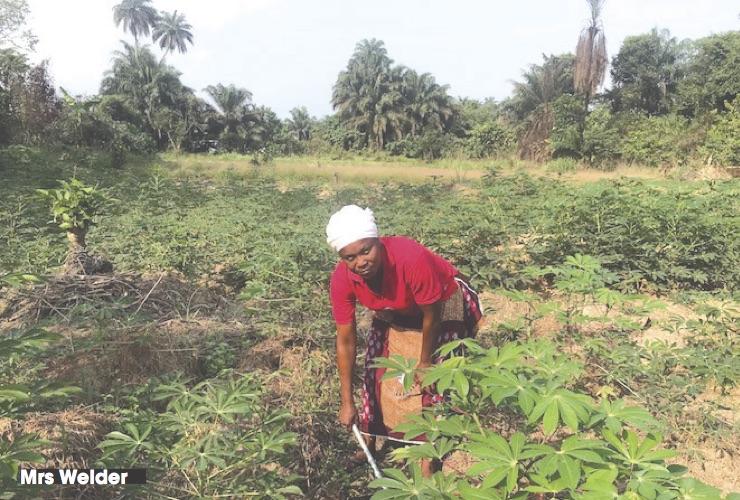
Mrs. Ayebakuro Welder, in an interview with our correspondent, said farming has degenerated in the community from bad to worse.
Attributing the poor fortunes of farming to several factors, including oil spill, lack of seedlings and cassava stems, she expressed disappointment that the government has paid lip service to the plight of smallholder farmers in the state.
She said: “The farming condition has grown from bad to worse. One, we don’t have fertiliser. Even if it comes, we don’t see it. Because of oil spills, our crops do not do well. This is what we face here. Our harvest is very poor, unlike what we had before.
“These days, we struggle to till the ground. When the time for harvest comes, the produce is poor. Cassava tubers are very small and some die. The cassava stems are also not available. The result is that we are suffering.”
The women have not benefited from any support in terms of grants, farming tools or seedlings from the government. They are not involved in any policy that seeks to improve the agriculture sector in the state.
Mrs. Welder said: “We don’t have access to seedlings or grants. We have never benefitted anything from the government in the area of agriculture.
“No official of the ministry of agriculture or budget office has visited this community to talk to us about the budget. We have also not been given farming tools.
“In 2012, the Cluster Development Board (CBD) created by Shell for the Okordia/Zarama clan provided cassava stems that were shared, but after that there has never been anything given to us again either from Shell or the government.”
According to her, the major problem is that the crops are not doing well due to oil spill, which has destroyed the land, coupled with insects eating the leaves of cassava. She noted that these teething problems have made it more difficult for her to cope with household chores.
“Since crops are not doing well and we don’t have money to buy improved seedlings, our major challenge is getting fertilisers and stems. If we can also get chemicals to tackle the insects eating the cassava leaves, then grants to boost our farming, we shall be okay. Government has not deemed it fit to support us, making it hard for us to make ends meet.”
Mrs. Maltida Mission, 48, who has been a smallholder farmer for seven years, lamented that she has never seen a budget or made input to the budget process in the state. She expressed sadness that the state government was unconcerned about the plight of smallholder farmers, noting that the combination of factors, coupled with the perennial flooding, has made it difficult for her to cater for her family and train her children.
“I have been farming for seven years now. It is from farming I provide for my family by also selling to have money. The government has not been helpful. Money is allocated for the agriculture sector yearly for improved seedlings, farm tools, cassava stems, yet it does not get to us.
“The yearly flooding has been a major challenge for us. Each year, we lose but that of 2022 was terrible. We lost major investment, yet there has not been any help from the government after they brought palliatives.
“We are farming but, because of the flood, we are having problems. We don’t have cassava stems. There is no food. Before, to farm and care for the house was not stressful but now there is a problem, with no support from the government. It is only during flood time that they bring palliatives; there has not been anything after that.”
Madam Kelechi Azikiwe, whose farming activities were badly affected due to lack of funds and support, also identified disinterest in agriculture by the government, unfair access to credit facilities through politicians and flooding as her greatest challenges.
“We are here in Ikarama and we don’t know what is happening because nobody briefs us. Officials of the Ministry of Agriculture have not been here to ask us questions on how our farming is doing and how to support us.
“We heard on radio that the governor was giving out empowerment to women and youths doing trading but those into farming are not carried along.
“We have not benefited anything from the government. We are suffering here and there is no help. Shell that used to give us small help before has stopped. Another problem is flooding, which has continued to disturb us.”
Gladys Odobune, who disclosed that she has been in farming for eight years, stated that lack of a united front from the smallholder farmers had denied them presenting their case to government: The absence of an active forum of smallholder farmers has affected us forming a united front.
“We cannot agitate to get what is due to us. We don’t have support from the Ministry of Agriculture; the government does not give us grants, farming tools or any other support.
“I believe this is because we don’t have a recognised forum that can speak for us and end our suffering.
“Poor farm yields are not helping us. Coping with the family has become difficult. The farming can no longer sustain the family. The situation can only be better if we are encouraged through grants.
“Sometimes, the government should send a delegation to the community and know our concerns and what we need. We should not be abandoned.”
Gold Moses, narrating her experience as a smallholder farmer, said the neglect they suffer has become unbearable. According to her, it has also had effects on the food sufficiency in the state, as hunger is now prevalent.
She said though she had limited education, her cassava and yam farm had been successful, until the 2020 floods affected her yields. She urged government to show more interest towards those in farming, especially in communities.
“We are suffering. I am into cassava and yam farming. Flooding has resulted in poor harvest; now it is difficult to have a good harvest. Coping with family is difficult for me. Flood dealt with me. I am still hoping to make things right.
“If I get grants, I can boost my farming. Government should look at our side and carry us along in whatever they do. Grants and empowerment should not be for only politicians or relatives of politicians, we should also be considered. Farming is our life and we should be given the opportunity to contribute to the economy,” she said.