Follow Us on Google
•N40bn to buy SUVs for Senators, Reps is insensitivity to Nigerians
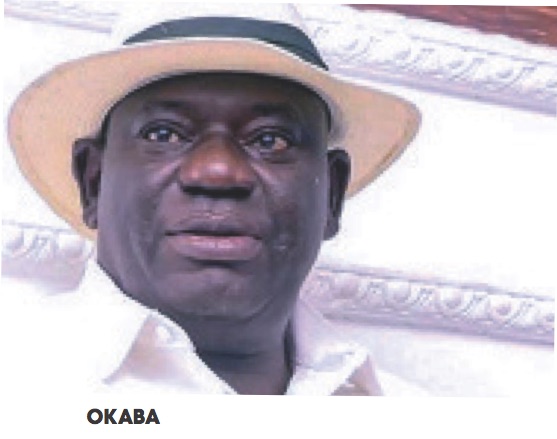
The National President of the Ijaw National Congress (INC), Prof Benjamin Okaba, has told the former Zamfara State Governor, Sani Yerima and some Northern groups that the former militants in the Niger Delta are not in the same class with Boko Haram fighters and the bandits.
In an interview with VINCENT KALU, the former provost, Delta State University (DELSU), Oleh Campus, stressed that the Ijaw self determination agenda was still on course.
What is your take on the reforms being carried out by President Bola Tinubu?
It shows that President Bola Tinubu prepared seriously for the office and he anticipated some of the challenges which needed to be addressed properly. Basically, the reforms are clear indications of an individual that is ready to address issues and place Nigerians and the country in the right direction of change.
What is your position on the removal of fuel subsidy?
The removal of fuel subsidy is long overdue. Previous governments before him were unable to do that even when they got the clear realisation that fuel subsidy was a scam, but the audacity to confront that problem was an issue. The principle behind its removal was that the quantum of money purportedly applied to subsidising importation of fuel to a large extent goes into the pocket of few individuals. It doesn’t do this country any good; it has raised the bar of corruption, and also crippled development because monies that could have genuinely gone into infrastructure, industrialisation and addressing the socio-economic challenges of Nigeria were being channelled into wrong hands.
However, the removal of the subsidy is okay, but it was like placing the cart before the horse. There were certain preconditions, including the palliatives, and doing policy assessments of the likely outcome of fuel subsidy removal, which without any serious examination, included the fact that the moment fuel subsidy is removed, the first thing is that the price of petrol will increase and when that happened, there will be multiply effects on foodstuff and cost of living, etc.
The government, first of all, should come out with measures to cushion the effects of the removal. Secondly, the announcement of the fuel subsidy removal and the implementation itself has taken about seven weeks and we have received report that the daily consumption of fuel by Nigerians has dropped. It means therefore, going by other ancillary calculations, that so much money has been saved. The next question is that, if such monies have been saved, what do we do with it and again why should Nigeria apply for another loan; why not use the accruable from the subsidy removal for whatever project instead of taking a fresh loan. That is one question that is begging for an answer.
Another policy, which is the loan for students, is not what we need in this country. If giving loans to students will amount to increase in school fees, it is wrong. They should come out with a policy that will make education so attractive to Nigerians. That policy is not straightforward; it takes us some ten steps forward and about 100 steps backwards.
Why haven’t the anti-graft agencies arrested the cartels, scammers and people you said have been defrauding Nigeria on the fuel subsidy issue?
Corruption in this country is systemic. The kingdom of darkness cannot wage a war against itself. Let us look at oil theft, even the recent one that a security body intercepted a vessel that was going away with Nigeria’s entire one day oil production, which a group of individuals was carting away that quantum of oil from this country. Who owns the vessel? At what point was that vessel leaving; the loading period for that vessel cannot be less than one week no matter how large the pipes are, what terminals were the loading taking place, why must they burn the vessel, if not to conceal evidence? We are not yet serious with the fight against corruption. That has always been the case. Maybe it is because those who are fighting corruption are also involved in it; and neck deep in it. They seem to lack what it takes to fight corruption. Like you said, the people are not spirits; they are individuals strolling the streets of Nigeria and they are still being celebrated. They are occupying positions and are being promoted on a daily basis. They still call the shots in the polity because it is a kingdom fight where the kingdom of darkness cannot fight itself, and that is why we are where we are today.
Former Zamfara State governor, Sani Yerima and other Northern groups have asked President Tinubu to grant amnesty to Boko Haram and the bandits like the government did to Niger Delta militants. What’s your take?
We have always said that the militants of the Niger Delta had a clear focus; they were fighting against the exploitation of their people and the degradation of their land, they were fighting injustice. How do you place this group side by side with the bandits and the Boko Haram – people who fight the state, people who have declared that they were against western education? They don’t belong to the same class, and there is no room for any comparison. The Boko Haram has made itself very clear that they are a terrorist group; they have also by their actions and pronouncements stated that they are against peace in the state, they are against constituted authorities.
But, the militants of the Niger Delta fought against environmental injustice. So, if the late President Yar’Adua granted amnesty, it was because the government also realised that those militants have clear and focused mission. You can see also that after the amnesty was granted to them, there has been peace in the Niger Delta and production has increased, though the issues which they declared a war against are still lingering. But we have taken ourselves to a new level of engagement.
It is unjustifiable for anyone to say that because Yar’Adua granted amnesty to the militants in the Niger Delta that it must also be given to the terrorists – Boko Haram and bandits. After all, we also know that there were reports that the immediate past government granted amnesty to some Boko Haram members who said they had repented, and they were recruited into the military. So, let us not dig up issues that we should just keep at bay where they are for the interest of peace in this country.
What’s your take on the proposed N40 billion for the procurement of SUVs for National Assembly members?
When they say they were coming to serve the country, it is very easy to make such proclamation that they were coming to make sacrifice to serve the people, but the actions do not speak to such proclamations. I read about it. For me, it is just like a government that has just changed uniform. This is insensitivity to the plights of Nigerians.
In one African country because of high cost of governance plus the poverty level of the nation, there were public declarations of salary cut. Former Central Bank of Nigeria (CBN), Alhaji Sanusi Lamido, once said that less than10 per cent of Nigerians were consuming over 90 per cent of Nigeria’s wealth. Some people are paid N30, 000 a month and in the same country, others are earning millions in a month. The average Nigerian cannot buy even a fairly used car that is as cheap as N3 million, and these people are spending that kind of money. How many are there? Most of them, particularly in the senate are already stupendously wealthy. Of course, if you are not very rich you cannot make it to the upper legislative chamber. Even most of the people in the House of Representatives are already made people. What is happening is pouring wealth on top of wealth, and abandoning those people who need succour; those people who need a living, and they don’t need much.
At this point, if the government is sensitive to the plight of the people, cars to legislators shouldn’t be a priority; it should prioritise the transformation of this country. The way the economy is so bastardised, most Nigerians are just living close to death. Look at the excruciating pains caused by fuel hike. You fill your car tank with N15, 000 in those days, but today, even with N30, 000, the same tank cannot get half tank. Poverty level has increased; income level has dwindled or stagnated, and those are the issues that the Tinubu government should address rather than giving the money to these people who don’t need it. These cars are not needs; they are wants, and there are basic necessities that we lack as a country; a government that is people driven; mass oriented should tackle those basic necessities and not cars.
Look at the palliative, even if that money is voted out, you would be shocked that at the end of the day, not up to 20 per cent of that money would even get to the masses. It would be managed by the same aristocratic class to advance and align their pockets, and the masses would continue to suffer.
I don’t know the form the palliatives would take. For me, it should be factored into areas of agriculture; areas of transportation. It should be factored into sectors that would bring quick yield to Nigerians.
What has happened to the Kaima Declaration? Have you jettisoned it since a Southerner is now president?
Kaima Declaration is an epitome of the Niger Delta struggle. That is the doctrine esparto of the Ijaw struggle for self determination. In fact, irrespective of whoever is the president of this country, whether he is from the north or the south, wherever he is coming from, that declaration stands. What has changed is the shift in paradigm from violent expressions to non-violent engagements. We are still focused on the declaration, which has to do with issues of resource control; self determination, environmental remediation, etc.
So, it is only taking a different dimension and by the special grace of God, after a thorough examination of where we are, we shall be asking ourselves another question whether we continue with the peaceful engagements. We will be looking at the gains we have made over the years, and see in what areas that we might need some changes; radical changes for that matter