Follow Us on Google
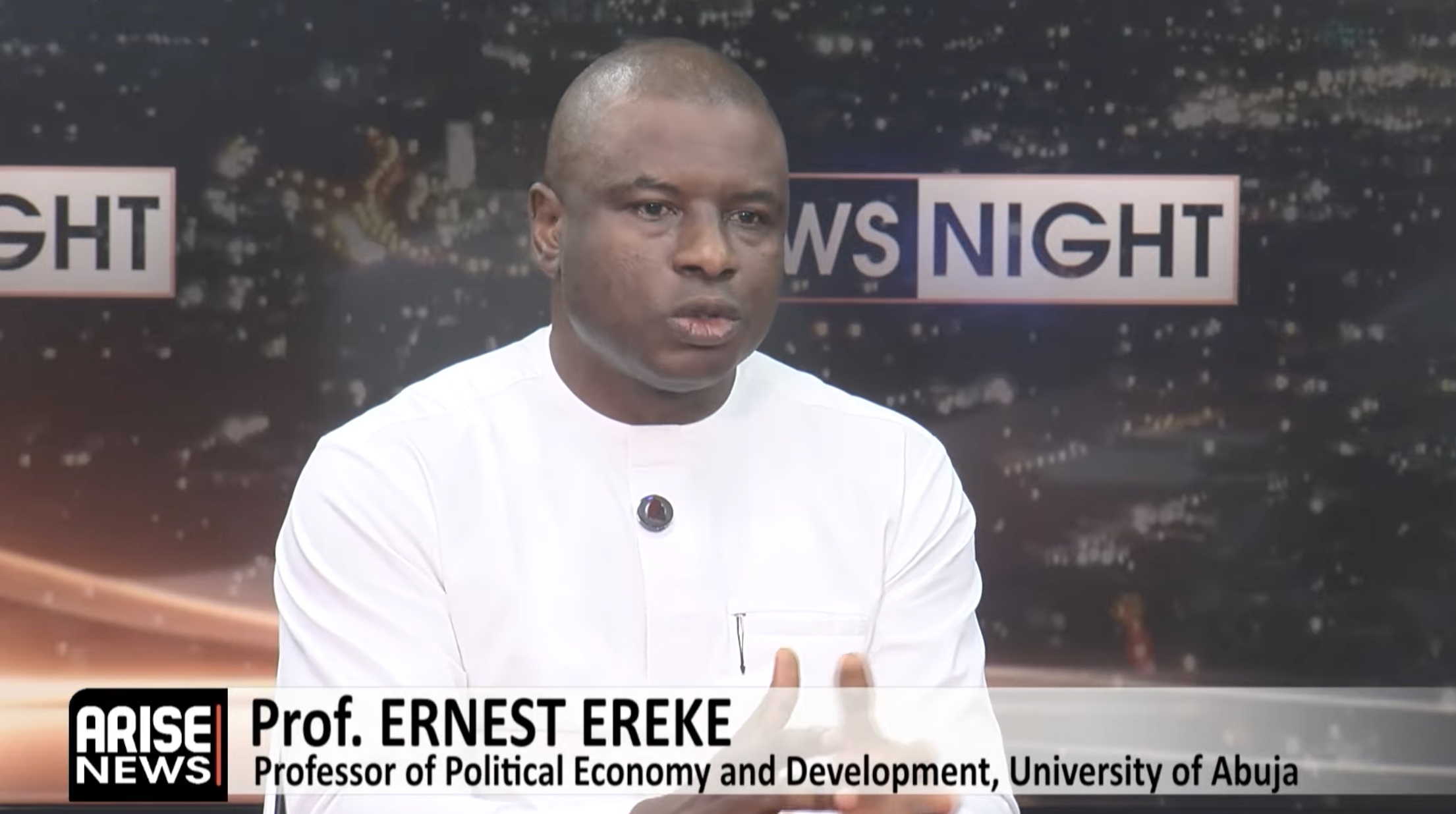
The Osun State governorship election will be a crucial test of the Independent National Electoral Commission’s preparedness to implement revised electoral guidelines ahead of the 2027 general elections, Professor Ernest Ereke has said.
Ereke, a professor of Political Economy and Development at the University of Abuja, speaking with Arise TV he said the election would provide an opportunity to assess INEC’s readiness and the effectiveness of the new Electoral Act.
He described the poll as the last major off-cycle election before the 2027 general elections, saying its conduct could offer an indication of the strategies political actors may deploy in the build-up to the national polls.
According to him, the growing tension surrounding the election is also linked to the desire of political actors to secure an early advantage ahead of 2027.
Ereke said, “Whoever prevails at this time, it gives them some electoral advantage across the country to begin to say, ‘Nigerians trust us.’”
His comments followed reports of 29 fatalities recorded in 73 incidents of political and electoral violence across Osun State.
Ereke identified Osogbo as the epicentre of the violence, saying 15 people had been killed in 27 incidents recorded in the state capital.
He said 12 of the state’s 30 local government areas had been classified as critical pressure centres, while nine were categorised as medium-pressure areas and eight as low-pressure areas.
Citing the Kimpact report, Ereke identified political disputes, criminality, cultism, perceived partisanship among state institutions, particularly security agencies, and weaknesses in election administration as factors fuelling the violence.
He specifically mentioned challenges involving the distribution and collection of Permanent Voter Cards, saying such administrative shortcomings could further undermine confidence in the electoral process.
On the role of security agencies, Ereke urged them to restore public confidence by demonstrating neutrality and protecting voters regardless of their political affiliation.
“One of the first things we need to do, particularly the security agencies, is to reignite this confidence in the people that they will be able to protect them and safeguard the process all through, both on election day and in the aftermath of the elections,” he said.
He added that security agencies must “show that they are for everybody whether you are in the opposition party or in the ruling party.”
Ereke also condemned vote buying and other forms of inducement, arguing that voters should be allowed to make electoral choices based on candidates’ policies, programmes and competence.
“I think we should condemn any form of inducement in the electoral process,” he said, warning that financial incentives presented as palliatives or allowances could be used to influence voters when deployed around an election.
The professor said the outcome and conduct of the Osun governorship election would therefore extend beyond the state, providing an important indication of the strength of Nigeria’s electoral institutions and their preparedness for the 2027 general elections.