Follow Us on Google
…As anger, frustrations swell, spread across states
From Isaac Anumihe, Abuja
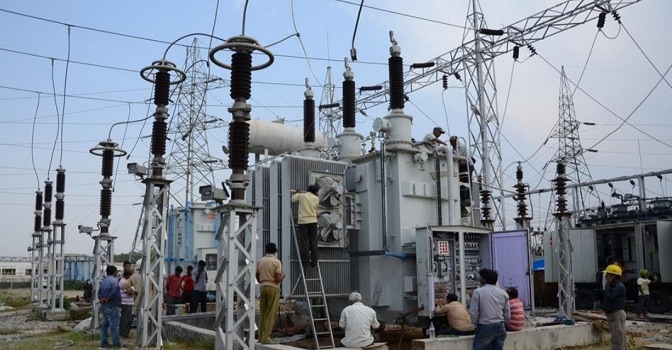
These are, indeed, not the best of times for the Nigerian Electricity Supply Industry (NESI) following incessant collapses and disturbances of the national grid that have frequently thrown the country into total blackout.
The frequency of this phenomenon has raised serious concerns by electricity consumers who are at the receiving end of the darkness associated with the collapses.
On Wednesday, December 11, the national grid again encountered a major setback and collapsed at about 2:05 p.m that resulted in blackout in most parts of the country.
The Wednesday collapse is said to be the 12th time the national grid has collapsed since this year.
Consequently, businesses are adversely affected, consumers suffer untold hardship while the nation loses revenues.
Also publuc institutions are not left out in the losses as hospitals record more casualties and deaths in their theatres.
Foods stored in the coldrooms are damaged thereby leading to food insecurity. Banditry thrives because darkness and lack of communication enhance insecurity
Going down memory lane of the unending collapses, on February 4 and 5, this year, Nigerians were thrown into a blackout which led to losses in homes and institutions.
Again, on April 15, the nation recorded another devastating grid disturbance. As usual, the nation lost a huge revenue owing to the blackout.
Also, on August 6, there was a major grid disturbance which threw a part of the country into darkness.
And on October 15, there was yet another disturbance leading to a serious blackout in the country.
Also, on October 19, the nation recorded a grid collapse followed by another one on October 22.
On November 5, the nation recorded a major grid collapse again, which threw the country into sudden darkness.
But the one of November 7 was the height of the disaster which prompted strong vituperations and condemnations from both the consumers and policymakers to the extent that President Bola Ahmed Tinubu ordered the Minister of Power, Chief Adebayo Adekola Adelabu, to seek a quick and permanent solution to the problem.
As the relevant authorities struggle to provide solution, the grid again collapsed last week, on December 11.
Reacting to the national embarrassment, the National President, Association for Public Policy Analysis and Executive Director, Consumer Protection Advocacy Centre, Chief Princewill Okorie, submitted that most of the equipment installed in the energy sector are substandard and the authorities responsible for ensuring that quality materials are used have compromised on it.
According to him, the consumers who should protect the equipment are angry because they are forced to pay for what they did not consume.
“When you use substandard materials and equipment what do you expect to happen? Sometimes these transformers are refurbished. Who provides them? The distribution companies (DisCos) provide substandard transformers. The cables and wires are substandard. How are the Customs and Nigerian Electricity Management Services Agency (NEMSA) checking the influx of substandard materials into the country? Who are the people installing them? Are they qualified? Do they have installation certificates? Who awards those contracts? Contract awards are based on bribe that is given upfront. When contractors pay the bribes, they have little left to do the job. So, rather than use quality things to work they look for substandard materials in order to make a little profit.
“Two hundred billion naira (N200 billion) was provided for metering and only N59 billion was used for the pilot scheme. The rest of the schemes nobody is hearing about them again. Then the consumers are told to pay higher for meters to cover up the stolen fund.
“How will they be happy? There’s an insider dealing. Since these things have been happening, has anybody been penalised? Remember, if the grid collapses there won’t be light, but consumers are billed as if there was light”, Okorie lamented.
Frustrated by the darkness, a consumer, Madam Patience Nana Linus, who has a coldroom business threatened to stop paying electricity bills if the darkness continued.
According to her, she preserves her fresh meat with electricity and for the period the grid collapsed, all the goods in her coldroom went bad and she lost so much money.
“I don’t understand this frequent collapses of the grid. Very soon Abuja Electricity Distribution Company (AEDC) will send a bill. Last month I paid over N700,000 on electricity bill only for me to lose millions of naira today. Is it worth it,” she asked
She threatened to be on generator if the menace continues.
Bala Ahmed is a vulcaniser. He told Sunday Sun that if he uses his generator to power his machine he charges N300 to pump a flat tyre, but with electricity he charges N200. But most customers would not want to patronise him with that kind of amount. This is making him to lose customers.
“We are losing customers with the constant collapse of the grid. When we buy patrol at a high cost our charges are high and our customers run away. We are losing our customers,” he lamented.
Unfortunately, this streak of grid collapse is coming after the Transmission Company of Nigeria (TCN) had celebrated a decline in grid collapses which it attributed to grid expansion.
During the celebration, TCN said that between 2020 till date (five years), it has recorded 14 total and six partial grid disturbances totalling 20, which represents a 47 per cent reduction in grid disturbances, when compared to the previous five years (2015 to 2019), when there were 64 total and 21 partial grid disturbances, totalling 85 times.
“This improvement is, however, not unconnected to the continuous efforts by the management under Sule Abdulaziz, an engineer, to strategically expand the grid while harnessing in-house capacities to find solutions to grid stability, pending the deployment of System Control and Adequate Data Acquisition (SCADA),” it stated.
Defending the plethora of collapses, Chief Adelabu and the Managing Director of TCN, Abdulaziz, blamed it on weak equipment, lack of enough resources and vandalism.
Abdulaziz exonerated TCN from all the grid collapses, saying that the generation and distribution companies also contribute to the collapses.
According to him, if the distribution companies failed to evacuate power from the grid it would cause grid collapse and if the generation firms do not generate enough power into the grid, it will cause grid collapse.
“On grid collapse and the blackout in the northern region, TCN is not responsible for all the disturbances or collapses. There are other reasons that can be attributed to that,” he said.
In his response to the menace, the Minister of Power said that the government is working on establishing super grids as a backup to the national grid.
“Beyond grid revitalisation projects, we are also working on establishing what is called a super grid. There is a memo with the president now, who is giving us full support about the establishment of the western and eastern super grid. Given the weakness, the dilapidation, the obsolence of the existing grid, we believe that we need a backup grid that will serve as a fallover option to the existing grid.
“If anything happens to the existing grid, there will be a backup option. There will be a fallover option, which is an alternative route of transmitting power. And this is likened to you having an expressway, just a single lane leading to a particular destination.
“If there is a breakdown of the disturbance on that single lane, it’s a problem. There are no alternatives. But once you have an alternative, you just redirect your routes and you get to your destination as planned.
“If you have this super grid, which is what exists in advanced countries, to reduce the absolute reliance on the single national grid, it will go a long way to solving the problem of collapses. And this is receiving support from Mr. President. When we have this aspect of approval, we go to the Federal Executive Council and get the approval. And we’ve got investors and financiers for this project. And that will bring a final end to grid disturbances and grid collapse. This will ensure that we also create alternative routes.
“It won’t be just a single route to transmit power to a particular location. There will be alternative routes once we have the super grids,” the minister said.
Giving reasons for the frequent grid collapses, Managing Director of Idfon Power Engineering Consultants (iPEC) Limited, Idowu Oyebanjo, traced it to lack of investments in the gas-to-power value chain investments without power system/network studies, misalignment of investments and lack of adequate protection systems.
“Others are lack of data and data management systems – SCADA; lack of adequate metering, maintenance and, load rejection by the distribution companies,” he said.
To resolve the issue, he canvassed meritocracy over mediocrity; implementation of the Electricity Act – decentralisation of the grid and empowerment of Nigerian independent system operator; deployment of renewable energy systems, as well as implementation of adequate protection co-ordination.