Follow Us on Google
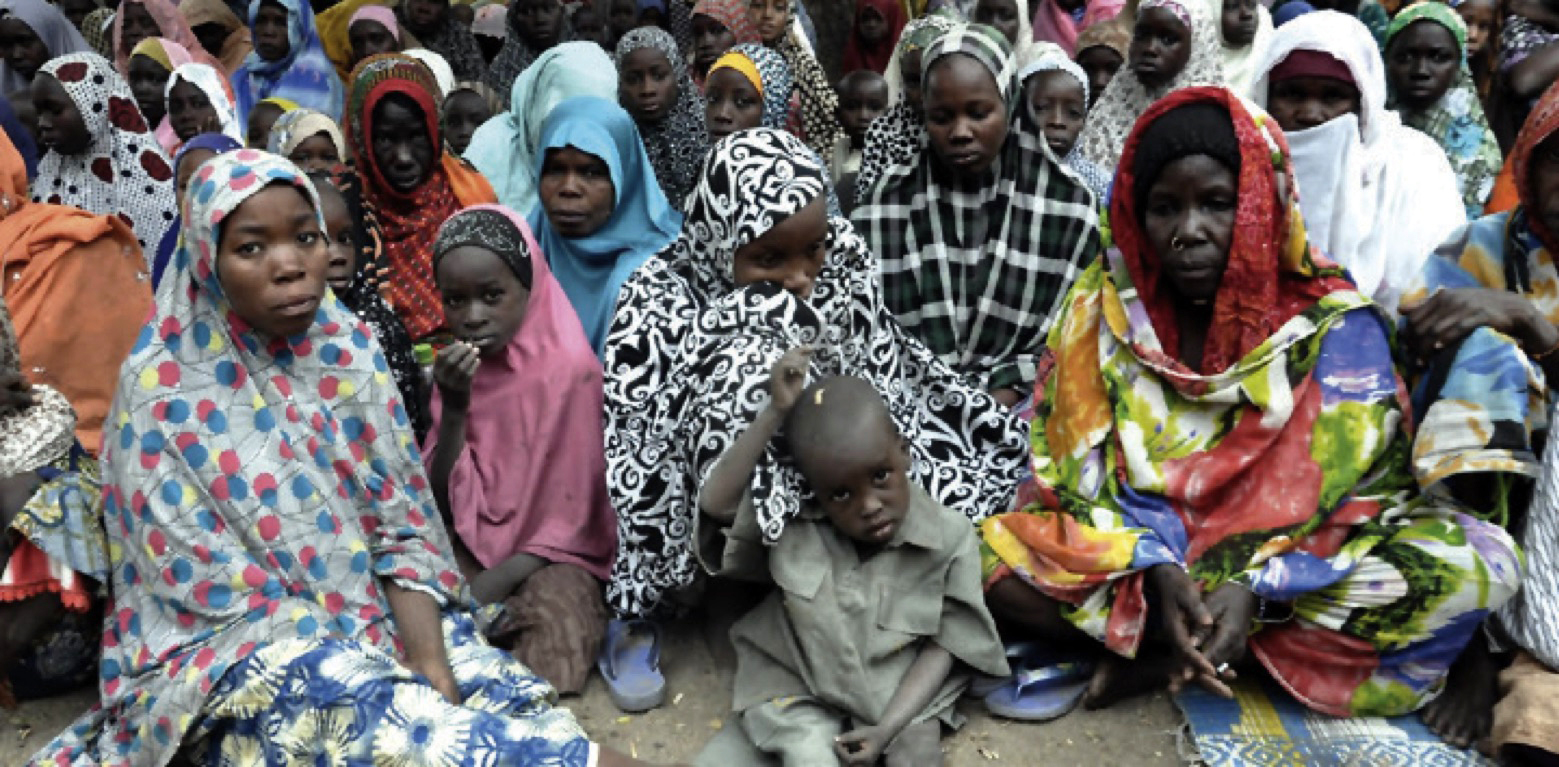
Over 63 per cent of Nigerians face multidimensional poverty and there is chronic fragmentation across MDAs, states and local govts –Doro
From Okwe Obi, Abuja
The determination of the Federal Government to eradicate poverty appears to be a herculean task given the shift in timelines and array of borrowings.
Since 2023, the Bola Tinubu administration has been touting and reeling out plans to address poverty, but to no avail.
In the last three years, the government has appointed four ministers for the ministry of humanitarian affairs and poverty reduction – Betta Edu, Yilwatda Nentawe, Bernard Doro, and Yusuf Tanko Sununu as the minister of state.
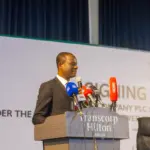
During the launch of the One Humanitarian – One Poverty Response System (OHOPRS) on March 24 in Abuja, minister of humanitarian affairs and poverty reduction, Bernard Doro, disclosed that the government plans to lift 50 million Nigerians out of poverty by 2030. The announcement raised eyebrows and questioned the sincerity of the government to drastically reduce poverty in the last three years.
According to Doro, the five-year plan which is after the deadline for the actualisation of the Sustainable Development Goals (SDGs) would elapse, would gulp N16 trillion through the unified national system known as the OHOPRS.
He explained that the initiative would involve a N3.2 trillion annual financing targeted at achieving Tinubu’s directive of lifting Nigerians out of multidimensional poverty within the next five years.
Speaking on the importance of the system, Doro said: “We put in a lot of money to curb poverty but the impact is not there. There is a gap that needs to be corrected. Over 63 per cent of Nigerians face multidimensional poverty and there is chronic fragmentation across MDAs, states, and local governments.
“It is obvious that Nigeria does not lack interventions, Nigeria lacks systems and that is why the OHOPRS is launched.
“We have been managing poverty, not ending it and it is time for a change. We need a clear national direction, and the President gave a clear instruction.
“President Tinubu’s vision is uncompromising. He wants 50 million Nigerians out of poverty by 2030. He wants us to implement real-time digital accountability.
“He wants us to align every stakeholder to a single national system. The instruction was very clear too. So, the OHOPRS is intended to be a new national backbone designed to integrate humanitarian relief, long-term development and social protection.”
Few weeks ago, after receiving a delegation from the Nigerian Economic Summit Group (NESG) in his office, Doro revealed a fresh figure of lifting up 100 million Nigerians out of poverty by 2029.
But, the World Bank, through the Nigeria country director, Lire Ersado, said lack of funds was not the key issue but coordination.
He said: “I have come to realise why a lot of efforts that go into poverty reduction are not having the kind of impact we would like to see. The first reason is lack of coordination in my view. We are not well coordinated in the humanitarian development nexus.
“We run a parallel system in silos in terms of identifying the needy, in terms of targeting them, in terms of benefit design, in principle monitoring.”
In his reaction, executive director of the Centre for Human Rights and Civic Education (CHRICED), Ibrahim Zikirullahi, in one of his public outings, raised the alarmed that Nigeria’s youth unemployment crisis had reached catastrophic proportions.
While figures vary, he said “independent analysts estimate that over 50% of young Nigerians are unemployed or underemployed, leaving millions in despair.”
He complained that “millions of young people—full of potential—are trapped in idleness, frustration, and despair. Many commentators describe this as a ‘wasted generation,’ not because the youth lack talent, but because the system has failed to provide opportunities. And so long the Nigerian State failed to provide for the youth, we will continue to grapple with insecurity and destabilization.”
Other News
On inflation, he said the hike has pushed basic commodities far beyond the reach of ordinary families. He said: “The multidimensional poverty confronting millions is no longer an abstract economic indicator – it is a daily reality of hunger, homelessness, and deepening hopelessness.
“Prices of essential goods continue to rise relentlessly. Petrol now sells for between N1,350 and N1,500, while diesel goes for over N2,000 depending on the location. A bag of cement, which cost N3,600–N4,000 in 2023, now sells for slightly above N12,000.
“These are not just numbers; they represent the painful choices families are being forced to make. Parents are skipping meals so their children can eat.
“Many are withdrawing their children from school because they can no longer afford fees or transportation. Households that once lived modestly are now struggling simply to survive.
“This widespread hardship stands in stark contradiction to Nigeria’s abundant natural and human resources. The deepening poverty across the country is a reminder that economic mismanagement has real human consequences – consequences felt most acutely by those with the least.”
Also, a public affairs analyst, Jide Ojo, said he was not surprised by the shift in timeline, given the high rate of multidimensional poverty ravaging the country.
He declared that the visibility, the optics “is not good. I do not think Nigeria is poised to end poverty, hunger or any of those Sustainable Development Goals (SDGs) within the next four years.”
Ojo argued that with 133 million poor people in Nigeria, according to the World Bank report of 2025, and deepening insecurity which has placed Nigeria as the fourth most terrorised country in the world, there will be more poverty.
He lamented that people who should provide for their families are in IDP camps in Benue, Plateau, Borno, Yobe Katsina Zamfara and Kebbi. He asked, how then does the government want to reduce poverty?
He faulted the conditional cash transfer this administration has adopted in reducing poverty, describing it as a no-go-area.
He broke down the earnings and the cost of living, saying: “While the government has increased the amount from N20,000 to N25,000 under the late President Buhari, you are only getting N75,000 now. You are expecting a household of five to spend 75,000. Is that how to eradicate poverty or reduce poverty?
“Even when that N75,000 is not sufficient for one individual to live through from the first day of a month to the 30th of that same month. Minus the cost of accommodation, transport, feeding, and other auxiliary costs you need to incur.
“So, this government and the previous ones have been deceiving themselves, saying that they are eradicating poverty or reducing poverty. These are not sustainable ways to do it.”
He pointed out that if 133 million Nigerians are multi-dimensionally poor, and citizens are only given a fraction of that, “let us say 10% of that N25,000 for 3 months. It is just like a drop in the ocean.”
He charged the government to focus on the triggers of poverty which are insecurity and harsh business environment.
“It is not as if the government has dealt with the triggers of poverty. Because one of the triggers of poverty is the rising cost of living, insecurity, unfriendly government policies. Cost of fuel, petroleum resources and cost of electricity are too high.
“Today, if assuming that we are self-sufficient in energy production, that people can afford a steady power supply, that is a means of reducing poverty.
“Because many people will be able to engage in self-employment. They will be able to do business, those who want to do gardening, hairdressing, welding, and other general professions will be able to apply their trade.
“But today, apart from insecurity, which has pushed many people from the rural communities to urban centres, you now have a situation where the so-called energy, the electricity is not available. We are generating at around 6,000 MW. But we can only evacuate 4,500 MW.
“And we need 30,000 MW of electricity to be self-sufficient. So you can see the gap to even bridge electricity supply. And then how affordable is this electricity?
“For those of us who are on Band A, I used to spend around N5,000 on recharge for my two bedrooms. Today I am spending between N30,000 to N40,000 because we have been placed on Band A even when we do not enjoy as much as up to 18 hours of electricity. So, you can just imagine how difficult it is.”