Follow Us on Google
From Tony John, Port Harcourt
For decades, the story of the Niger Delta has largely been told through barrels of crude oil, production figures, export revenues and political debates over resource control.

But, beneath those statistics lies another story, one of polluted rivers, contaminated food, dying livelihoods, and women bearing the heaviest burden of environmental devastation.
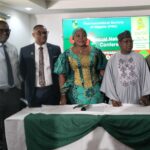
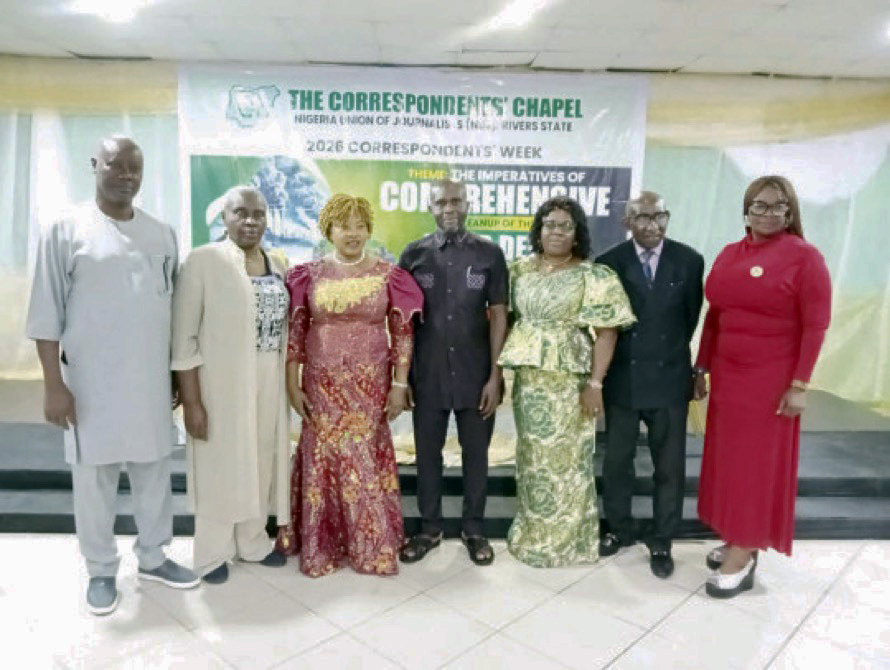
That story took centre stage during the 2026 Correspondents’ Week of the Correspondents’ Chapel of the Nigeria Union of Journalists, Rivers State Council, where environmental advocates, journalists, traditional rulers and civil society leaders converged on Port Harcourt to demand urgent action on what they described as an escalating ecological and humanitarian crisis in the oil-rich region. The event focused on environmental remediation and the role of the media in driving accountability and public awareness.
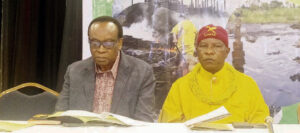
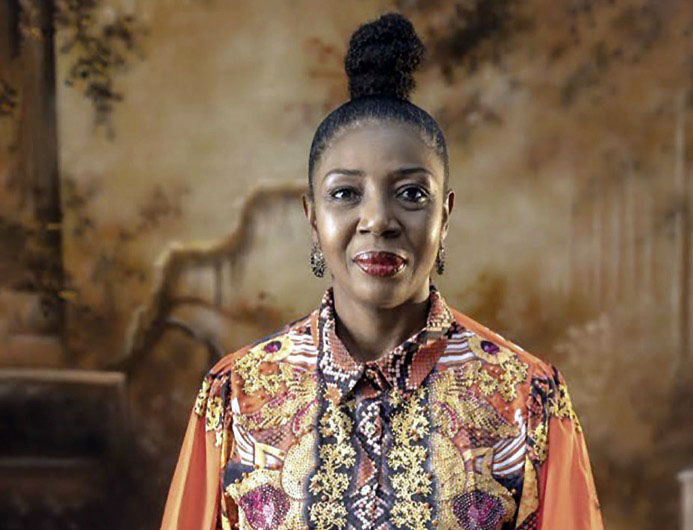
Among the strongest voices was Dr Emem Okon, Executive Director of Kebetkache Women Development Centre, who argued that the environmental crisis in the Niger Delta has gone beyond pollution and has become a question of survival for communities, especially women.

Women living with crude oil
For Okon, the statistics and scientific reports often fail to capture the human reality of life in polluted communities.
She recounted findings from environmental and health studies conducted in oil-bearing communities, particularly among women exposed to decades of pollution.
“One of the women in Otuabagi said if you cut my waist, you will not see blood, you will see crude oil.”
The statement, though symbolic, reflects findings from environmental health studies that have documented petroleum-related contaminants in affected communities, raising concerns about long-term health implications. Similar concerns have been highlighted in recent environmental advocacy around the Niger Delta region.
According to Okon, the tragedy is that many of these stories never reach policymakers, regulators or corporate boardrooms.
Instead, communities suffer in silence while environmental reports gather dust on shelves.
Beyond Ogoni: The cleanup debate
The ongoing cleanup of Ogoniland has often been presented as Nigeria’s flagship environmental restoration project.
But Okon believes the focus on Ogoni alone risks leaving the wider Niger Delta behind.
She said: “The media needs to make the government realise that we need to extend the Ogoni cleanup to the entire Niger Delta.”
She noted that the United Nations Environmental Programme’s assessment of Ogoniland estimated that restoration could take decades.
“The UNEP report said it will take 30 years to have the Ogoni environment restored. We don’t need to wait for 30 years. We shouldn’t wait till then before we begin to remediate other parts of the Niger Delta,” the environmental activist said.
Okon’s position was echoed by other speakers who argued that environmental degradation is not limited to Ogoni communities, but stretches across Rivers, Bayelsa, Delta, Akwa Ibom, Edo, Ondo, Imo, Abia and Cross River states.
Reports nobody reads
A recurring theme throughout the week was the disconnect between scientific findings and public understanding.
Okon challenged journalists to bridge that gap.
She asked: “What do you do? Provide information. So, you translate technical reports like the UNEP report, the Bayelsa report, every other report and paper that has been written.”
According to her, environmental reports often remain inaccessible to the very communities whose lives are affected by their findings.
She argued that journalists must simplify complex technical documents and make them understandable to ordinary citizens.
She also pointed to the Petroleum Industry Act (PIB), saying many host communities remain unaware of provisions that directly affect them. “Some of us just know about the Host Community Development Scheme. There are many things in that law that communities are not aware of. The media can take that up and begin to publicize them.”
Communities facing powerful forces
One of the most emotional moments during the discussions came when Okon described the fear and helplessness many communities feel when confronting multinational corporations and government institutions.
“Communities most affected are often defeated. Some of them don’t even know that they can speak out.”
According to her, many residents remain silent because they perceive themselves as powerless against institutions with enormous political and financial influence.
“They know that if they speak up, they are speaking against very powerful forces, the corporations, the government.
“They have the power, they have the authority, they have the money, they are in control.”
The result, she said, is a cycle where environmental damage continues while affected communities become increasingly marginalised.
A region running out of livelihoods
Environmental activist Chief Constance Meju offered a similar warning. According to her, pollution has transformed not only the landscape, but also the economic foundation of the Niger Delta.
“In the time past, as kids, when we needed money, we used to go and fish. Because of the devastation, our youths are no longer working,” she stated.
She linked rising social challenges in the region to the destruction of traditional occupations such as fishing and farming.
“Crime has continued to increase in the region because we have lost our sources of livelihoods,” she added
The warning resonated with concerns raised throughout the week that environmental degradation is directly connected to poverty, unemployment and insecurity.
The media as last line of defence
Perhaps, no message was repeated more often during the week than the call for journalists to take ownership of the environmental conversation.
Okon described the media as uniquely positioned to influence institutions that communities and civil society groups struggle to reach.
She said: “The media is more privileged and positioned to reach those stakeholders that communities cannot reach.”
“The media can reach the government. You can even reach the corporations. So, it is your responsibility to take our voices and messages down to those corridors.”
Chief Meju shared similar sentiments, urging journalists to use their influence to sustain pressure for environmental accountability.
“Anybody that is powerful in this country respects journalists. He fears journalists. So, let us use that power.”
For National Vice President of the NUJ Zone F, Opaka Dokubo, the media’s role goes beyond reporting events.
“If we don’t set the agenda for urgent environmental remediation of the Niger Delta, politicians will continue to do what they are doing.”
An environmental reckoning
The environmental concerns raised during the Correspondents’ Week reflect a broader campaign gathering momentum across the Niger Delta.
Renowned environmental activist, Nnimmo Bassey, had earlier warned that the region faces a narrowing window for remediation, arguing that waiting until the global shift away from fossil fuels is complete could leave the Niger Delta permanently abandoned.
He also called for comprehensive environmental and health audits across the region and stronger accountability for decades of pollution.
Taken together, the speeches painted a picture of a region at a crossroads.
Bassey said: “The debate is no longer whether the Niger Delta has been polluted. That question was settled years ago by scientific reports, court rulings and lived experiences.
“The real question now is whether government, regulators, oil companies and political leaders will act before the damage becomes irreversible,” he said.
As the week-long conversations drew to a close, one message stood out above all others: environmental justice in the Niger Delta can no longer be postponed.
For the women of Otuabagi, the fishermen of Bille, the farmers of Ogoni and countless other communities across the region, clean-up is no longer an environmental project. It has become a struggle for health, livelihoods, dignity and survival.