Follow Us on Google

Prior to the 2015 presidential election, I attended a meeting where Vice President Yemi Osinbajo, then running mate to President Muhammadu Buhari, tried to sell the All Progressives Congress (APC) agenda to the media in Lagos. It was a frank meeting, where senior journalists not only asked questions but also expressed their feelings about the Buhari-Osinbajo ticket against the then President, Dr. Goodluck Jonathan. One of my colleagues had asked Osinbajo a germane question, which always plays back in my mind whenever I think about the Buhari-Osinbajo presidency. It is something that really gives me genuine concern.
The editor had asked Osinbajo if he did not feel “unequally yoked,” finding himself in politics, where he, a pastor in one of the foremost Pentecostal churches in Nigeria, was a vice presidential candidate to a Muslim seen as being strong and rigid in character, will and conviction. Osinbajo had said he did not find himself in any difficult suitation, as a politician and running mate. He was quite confident and did not waver in his answer.
Whenever the Vice President gets embroiled in some controversies, that question, which has its root in the Bible, leaves me in serious thought. I have always gone back to read and reread 2 Corinthians 6:14, which says: “Be ye not unequally yoked together with unbelievers: for what fellowship hath righteousness with unrighteousness? and what communion hath light with darkness?”
We are not talking about believers versus unbelievers. We are not talking about light versus darkness. Or righteousness versus unrighteousness! We are talking about the weight and manner of the partnership in the Buhari-Osinbajo presidency. Is it possible that our dear Vice President is “unequally yoked” in a government where he is Number 2 and, therefore, now prevaricating in his comments and actions? Is it possible that because Osinbajo is “unequally yoked,” he has suddenly become shifty in his positions and actions. Or is it possible that he has been sucked into politics and is, therefore, “playing politics?” Or is it that some forces are working against him?
It is really worrisome that the Vice President has been in some difficult situations that have made people to doubt his intentions and sincerity. The now suspended Ruga settlement project for herdsmen, with Osinbajo at the centre, is a big issue. Some people said the Vice President was in charge of the Ruga project, while expressing surprise that a southern Christian would be at the apex of a plan to establish Fulani settlements in states, including in the South. The Vice President had come out, however, to say he was not the champion and supervisor of the controversial Ruga project. He admitted chairing a committee on a livestock transformation plan and not Ruga.
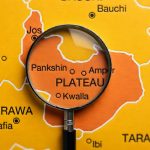
However, Plateau State governor, Simon Lalong, who is the chairman of the Northern Governors Forum, said the Vice President was head of a committee set up by the federal government to find a lasting solution to herders/farmers’ clashes. Insisting that the project was the same, while blaming those giving it different names, he said: “I think, the Ruga thing should not bring controversy with the level of sensitisation we’ve already made. I am a member of the food security committee. I am a member of the herdsmen/farmers’ committee; we’ve gone a long way on this issue and we’ve said that the only thing that can address some of these insecurity issues between herdsmen and farmers is the ranching policy. You remember that, one time, we had gone far when some people called it colony, this and that, and it created controversy.
“Again, we have gone far under the leadership of Mr. Vice President, and then we are hearing other terms; what they are talking about is the same thing that we are talking about. But I think when they mentioned Ruga, it may be particular to a particular tribe but what we are doing is all-encompassing; it’s for the benefit of Nigeria.”
If Osinbajo heads a committee saddled with the responsibility of finding solutions to the herdsmen’s saga or about livestock, as Lalong said, it follows that he knows about the Ruga settlement, ranching or cattle colony. As the committee feels persuaded that ranching is solution to the clashes, it also follows that the Vice President is abreast of the programme. The name may be different, but the principles and modalities are the same. However, if what members of the committee Osinbajo heads agreed upon were different from what was eventually announced for implementation, then something is wrong. When a Vice President says he is not part of a government’s project, more or less, there is a disconnect.
It is becoming common for Osinbajo to be on the spot. Not long ago, he was in the midst of a controversy over comments on kidnapping and insecurity, which made the pan-Yoruba socio-cultural organisation, Afenifere, made up of his Yoruba kinsmen, to question his honour. The Vice President was quoted as saying, in New York, the United States, that most kidnapping had political undertones. This position sparked outrage, with Afenifere, pan-Igbo socio-cultural organisation, Ohanaeze Ndigbo, Pan-Niger Delta Forum (PANDEF) and others coming hard on the Vice President. Specifically, Afenifere, in its caustic statement, pointedly called Osinbajo a liar and advised him to seek forgiveness for allegedly breaking one of the “commandments of Christianity.”
In the first term of the Buhari government, Osinbajo was mentioned in the power play at the Nigerian National Petroleum Corporation (NNPC), when former Minister of State for Petroleum, Ibe Kachikwu, accused the immediate past group managing director, Maikanti Baru, of insubordination. Kachikwu had said Baru awarded contracts and effected reorganisation in the NNPC without referring to him, as supervising minister, and the NNPC board. Osinbajo’s spokesman, Laolu Akande, had said the Vice President approved the NNPC contract in question, only for the Vice President himself to say later that it was an NNPC loan he approved.
The Vice President has also been accused of giving the government some legal advice, which people didn’t find pleasant. One of such is the position that the federal government is not obliged to send the name of the chairman of the Economic and Financial Crimes Commission to the Senate for confirmation. Osinbajo has his reasons for his advice and conviction, but many are not impressed.
Taking all these together, I am really afraid for Osinbajo. A fine gentleman, a cerebral, hard-core professional, professor of law and cleric at that, should not put himself, consciously or unconsciously, in precarious situations. Granted that leadership has its price, but the tragedy of people doubting Osinbajo is too big a price to pay. Let it not be that politics has taken the better part of the Vice President or that there is a deliberate ploy to do him in. I subscribe to the admonition of Afenifere chieftain, Mr. Yinka Odumakin, who said: “We further admonish him (Osinbajo) not to allow whatever ambition and political interest he serves to push him to make such infuriating comments again.”
Our dear Vice President should not, under whatever circumstance, be unequally yoked.
Certainly, one can’t help but sympathise with Osinbajo. There are things others can get away with, which he won’t, even on mere suspicion. His actions and inactions are interpreted and judged with his ecclesiastical calling in mind. Although this will put him under pressure, it should guide him. He has no choice than to live above board. He should know that politics and religion are no twins. He should not be led into temptation by politics and politicking.