Follow Us on Google
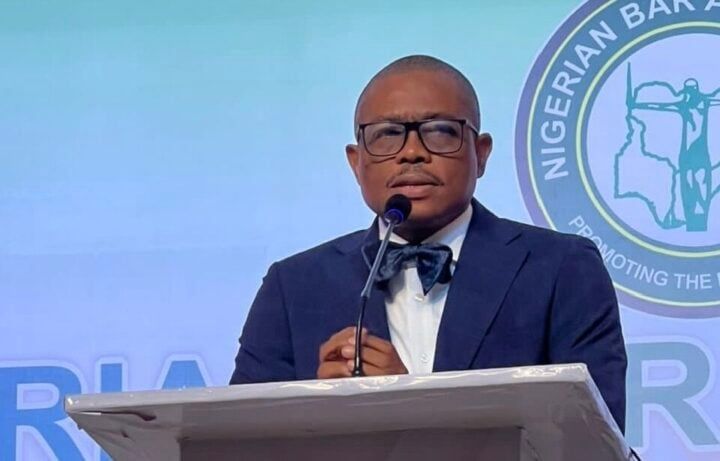
It is public knowledge that there is serious rot in the Nigerian judiciary. Corruption, which is rife in the institution, dominated the annual conference of the Nigerian Bar Association (NBA) in Enugu last year with many speakers decrying the menace. Earlier this month, the NBA President, Afam Osigwe, raised a fresh alarm on the deepening corruption in the institution. According to him, corruption in the third arm of government is a threat to democracy, social justice and public confidence in the rule of law.
Osigwe, who spoke at the Ralph Opara memorial lecture in Enugu, said many Nigerians had steadily lost faith in the judiciary due mainly to the growing perception that justice could be delayed, manipulated or purchased outright by the highest bidder.
“When rulings are allegedly influenced by envelopes rather than evidence, when adjournments are engineered for personal gain rather than procedural necessity, the judiciary ceases to be the last hope of the common man and becomes instead the first refuge of the powerful and the corrupt,” he said in his paper titled, “Judicial Corruption in Nigeria: A Menace to Democracy and Social Justice.”
The NBA President justified his position by citing findings from recent surveys by the United Nations Office on Drugs and Crimes (UNODC) and the National Bureau of Statistics (NBS). The survey estimated that Nigerian public officials received about N721 billion in cash bribes in 2023, with judges ranking among top recipients. Referring to the 2018-2020 survey by the Independent Corrupt Practices and other related offences Commission (ICPC), Osigwe said lawyers accounted for the highest proportion of bribe-givers in the estimated N9.4 billion paid as bribes within the justice sector.
He also quoted the Chatham House report, which indicated that 61 per cent of Nigerians believe judges are likely to accept bribes to influence their rulings, attributing the perception to political interference, nepotism and lack of transparency in judicial appointments. In 2022, the Body of Senior Advocates of Nigeria (BoSAN) decried a system where some justices of the Court of Appeal and Supreme Court were appointed on quota system basis without much consideration for merit. Obviously, these judges displayed crass incompetence in the discharge of their duties.
Other News
Osigwe has rightly captured the major malaise afflicting the nation’s judiciary. But he is not the first person to have raised the alarm. Following his retirement in October 2023, a former Supreme Court justice, Dattijo Muhammad, had, in his valedictory address, described the Nigerian judiciary as being in a state of advanced rot. According to him, the institution’s integrity had been severely compromised by political influence, administrative inefficiencies and unethical practices.
He lamented that the public perception of the judiciary had over the years become witheringly scornful and monstrously critical. “It has been in the public space that court officials and judges are easily bribed by litigants to obviate delays and or obtain favourable judgements,” he said. Not surprisingly, former President Muhammadu Buhari ordered security agents to break into the houses of some judges and arrest them in 2016 over allegations of corruption. In 2019, the Buhari government also arrested and arraigned the then Chief Justice of Nigeria (CJN) Walter Onnoghen, at the Code of Conduct Tribunal for some alleged misconduct. The case was later abandoned after the retirement of Onnoghen.
Nigerians have lost confidence in the judiciary on account of questionable rulings, including some from the apex court. Not a few people were disappointed and shocked when the former senator representing Bauchi North Senatorial District, Adamu Bulkachuwa, confessed at the ninth Senate valedictory session in 2023 that he influenced his wife, Zainab, to help his colleagues in their cases when she was the President of the Court of Appeal.
Nigerian judiciary needs total redemption. The NJC should be bold enough to sanction corrupt judges as it has done in the recent past. Any judge caught in corrupt practices should not just be suspended; he should be arrested and prosecuted. The recent action of the Federal Judicial Service Commission (FJSC) in dropping 34 out of 62 judge-nominees from becoming judges of the Federal High Court is a step in the right direction. The nominees were dropped for failing integrity test.
To strengthen the judiciary and make it independent, it must be granted financial autonomy. It is not proper that the executive arm of government will be giving car and house gifts to judges. This will definitely compromise them. The third arm of government does not have to go begging for funds from the executive. Judges must be well remunerated so that politicians will not exploit their condition to manipulate them for their selfish interests. The judiciary must wean itself off corrupt officials. In the absence of an impartial judiciary, our democracy is doomed.