Follow Us on Google
• We need policies from govt, not pity, they tell Nigerians
• Disabled children, women, spinal cord survivors need special attention
From Sola Ojo, Abuja
For many persons with disabilities (PWDs) in Nigeria, exclusion is not just on paper, it is on the ground, lived daily. In classrooms, they are discriminated against. In hospitals, they struggle to reach the facilities and struggle to access care. And even transporting from point A to point B remains a nightmare for this category of people.
So from children denied education to women with spinal cord injuries unable to access maternal healthcare, disability remains one of the most entrenched yet underreported human rights challenges in the country.
Advocates and survivors argue that the problem stemmed from not a lack of laws or commitments, but rather a persistent failure to translate rights into reality.
Causes of disability vary. Some are inborn, some are caused by unexpected life experiences, while others are caused by the failure of the government in terms of the right policies and implementation with regard to issues of security and welfare of all, irrespective of their social status.
At the centre of the crisis are children with disabilities, many of whom never step into a classroom. Nigeria currently has one of the highest numbers of out-of-school children in the world, estimated at over 10 million, despite recent efforts.
Evidence from disability-focused organisations and education stakeholders showed that children with disabilities make up a disproportionately large share of this number, with estimates suggesting that between half and two-thirds of all out-of-school children live with one form of disability or another.
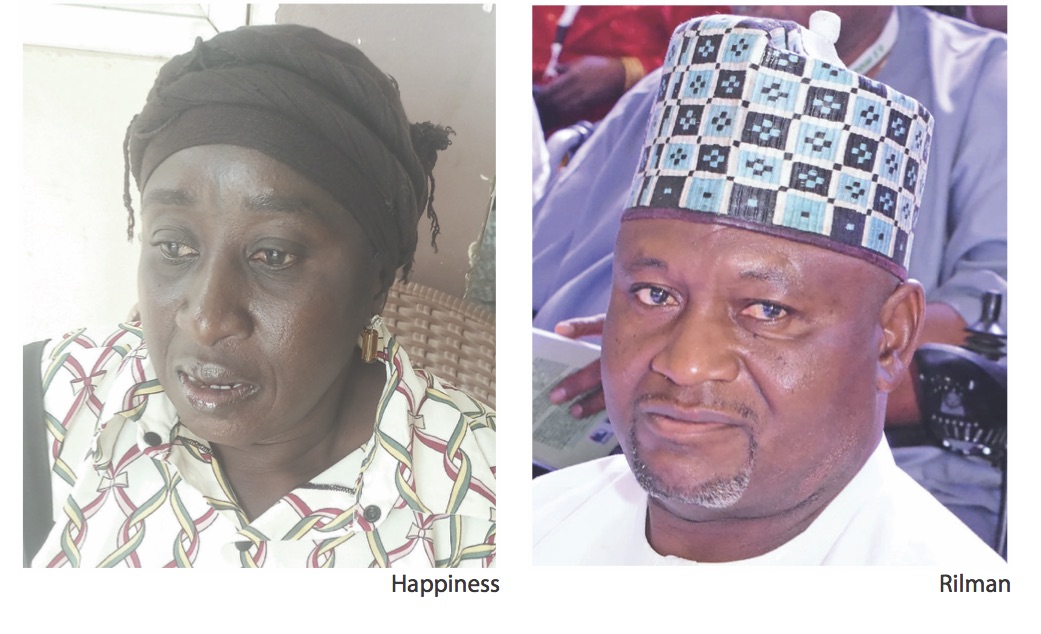
For Rilwani Mohammed, Chairman of the Organisation of Persons with Disabilities (OPDs), this reality represented a systemic failure.
“Children with disabilities continue to face deep and systemic exclusion, particularly in access to quality education.
“Despite the universal right to education, many children with disabilities are denied enrolment, appropriate learning support, and safe, inclusive school environments,” he said.
The barriers are multiple and include reinforcing stigma from communities, inaccessible school buildings, a shortage of trained teachers, a lack of assistive learning materials, and weak data systems that render children with disabilities statistically invisible.
“Public education systems frequently fail to recognise that enrolling children with disabilities is not an act of charity, it is a moral, legal, and developmental obligation,” Rilwan insisted.
In addition, findings have shown that where children with disabilities do manage to enrol, they are far more likely to drop out early than their peers.
This is because many of them attend schools without ramps, accessible toilets, learning aids, or teachers trained in inclusive education.
“Where they are enrolled, insufficient assistive materials, inaccessible facilities, and lack of tailored learning interventions further undermine their learning outcomes,” Rilwan added.
The reality is that, exclusion of children with disabilities from education has long-term social and economic consequences. For example, persons with disabilities are more likely to live in poverty, less likely to complete formal education, and more likely to be unemployed or underemployed in adulthood.
For Rilwani, the implications include, “When children with disabilities are denied education, they are also denied dignity, independence, and future economic opportunity.
“The cycle of poverty, dependency, and social marginalisation is reinforced,” he decried.
Chairman of the Joint National Association of Persons with Disabilities in Kaduna State, Suleiman Abdul Aziz, noted that exclusion was rooted in poor public understanding of disability itself.
“Disability takes different forms. Not all disabilities are visible. A person may have low vision. If such a person does not tell you, you may not even know that they live with a disability. So, if you cannot read without your reading glasses, you are in this community.
“There are also hearing disabilities. A deaf person may not appear physically disabled, and unless they tell you, you may not realise it.
“Even physical disabilities vary. Some people with spinal cord injuries can still walk and carry out many normal activities, but they may experience limitations in other aspects of life,” he said.
To him, public misunderstanding fuels discrimination, “Some people see persons with disabilities as irrelevant to society, believing that they cannot contribute to national development. This perception is completely false.”
He stressed that disability should not be framed as dependence, “Disability is not a matter of charity. It is a human rights issue. It is about rights, dignity, inclusion, and equal opportunities.”
While children struggle for education, adults with disabilities, particularly women, face severe barriers in healthcare.
Mrs Happiness Bature, Women Coordinator of the Spinal Cord Injury Association, lamented that, “Most of our members cannot move freely because of their condition.
“Often, many of them need to be carried from their homes to hospitals.
“As spinal cord injury patients, many of our members have serious medical issues that require constant medical attention, but hospitals are often difficult to access,” Happiness explained.
According to her, data consistently show that women with disabilities experience poorer health outcomes than both men with disabilities and women without disabilities.
She said access to sexual and reproductive healthcare is also minimal.
“Women living with spinal cord injuries in Nigeria face even more challenges.
“Pregnant women among us struggle to access proper maternal healthcare,” she added.
She noted that women with disabilities are often excluded from maternal health programmes entirely.
“Women generally need more attention and care, but we are often neglected.
Madam Happiness became disabled as a teenager.
“I am also an accident survivor. I fell into a well during the holiday, and that was what led to my spinal cord injury,” she revealed.
Her injury occurred while she was still in secondary school, “My accident happened on January 20, 1991, when I was in SS1. It happened when we went for a friend’s wedding.”
Her story mirrors national patterns, like road traffic crashes, falls, and workplace accidents, which are among the leading causes of spinal cord injuries in Nigeria.
“Most spinal cord injuries are caused by accidents. “The majority of our members are accident survivors,” she said.
This survivor, who moves about with crutches, believes access to healthcare should not depend on personal income or charity.
“My call to the government is that spinal cord injury patients should be allowed to access healthcare free of charge. We need special medical support.”
“This should also be extended to women, especially pregnant women. The government should give us more attention and take responsibility for women’s health,” she urged.
Also, Executive Director, Women with Disabilities Self-reliant Foundation, Riskat Muhammed, harped on the need for deliberate planning for the disabled community.
To her, exclusion from planning, budgeting and implementation remains a strong issue PWDs are suffering from.
“The truth is that every challenge that the able people face, the disabled persons are facing times two of such and disabled women in particular face three times more,” she said.
These disability community leaders insisted that change must begin with an ideological shift, away from charity and towards a firm human rights approach.
To them, inclusion is not a favour but a matter of survival, requiring proper care, deliberate attention, and full government responsibility, and until schools, hospitals, infrastructure, and public attitudes are fundamentally reformed, persons with disabilities in Nigeria would continue to confront not only physical barriers but deeply rooted social exclusion, making urgent action unavoidable.