Follow Us on Google
“Is it possible to be overzealous, to destroy that which you hope to save-so that nothing is left but emptiness. ”
— Jerome Lawrence
The Economic and Financial Crimes Commission (EFCC) has once again thrust itself into the centre of a brewing political storm, and as has become painfully routine, for all the wrong reasons.
Barely a week before the highly anticipated, off-cycle governorship election in Osun State scheduled for August 15, 2026, the anti-graft agency took the drastic step of imposing a Post-No-Debit (PND) restriction on the state government’s primary statutory allocation account domiciled with First Bank. According to a statement issued by the commission’s Head of Media and Publicity, Dele Oyewale, the intervention followed ongoing investigations into alleged financial improprieties surrounding Ecological Funds, Intervention Funds, and Federal Account Allocation Committee (FAAC) allocations totaling roughly ₦11 billion.
However, the timing, manner, and legally questionable nature of this action raise profound concerns about the fundamental principles of justice, due process, and institutional integrity. The fundamental flaw in the EFCC’s action lies in its premature execution. Investigations, by definition, are fact-finding operations designed to uncover truth through rigorous evidence-gathering, audit trails, and fair hearing. They are meant to precede punitive measures, not follow them. By freezing the Osun State Government’s central operational account prior to completing its probe or establishing clear, judicially tested liability, the EFCC effectively pronounced judgment before completing its trial.
Governor Ademola Adeleke swiftly pushed back against the freeze, revealing that the EFCC instructed First Bank on August 5, 2026, to place a PND restriction on the state’s statutory allocation account without obtaining a prior or concurrent court order. State authorities maintained that the agency relied on administrative directives under Section 38 of the EFCC Act and Section 24 of the Money Laundering Act rather than seeking judicial authorisation. This administrative shortcut represents a concerning circumvention of constitutional safeguards. Freezing a state’s statutory account is not merely an administrative manoeuvre; it halts the governance mechanism of an entire federating unit. It paralyses civil service payroll, stops healthcare funding, disrupts essential public services, and creates an artificial economic crisis. To inflict such far-reaching consequences on a state based on an uncompleted investigation flies in the face of natural justice.
Other News
Conflicting accounts quickly emerged regarding the legal footing of the directive. President Bola Tinubu, while directing the EFCC to vacate the restriction, stated that the agency had secured an ex-parte court order on August 5, 2026. Conversely, investigative media reports and official state filings indicate that the primary directive served on First Bank was an administrative freeze letter bearing no reference to a specific judge or court division.
Either way, executing such a heavy-handed action midway through an active probe reveals a troubling institutional habit: shoot first, ask questions later. This latest episode does little to dispel the persistent public perception that the EFCC functions primarily as a political tool—an institutional “attack dog” deployed to harass, weaken, and intimidate political opponents on behalf of the ruling party. When an anti-graft agency suddenly develops an acute sense of urgency to freeze a state’s funds a few days before a critical election, public cynicism is not just predictable; it is entirely justified. In governance and law enforcement, timing is everything.
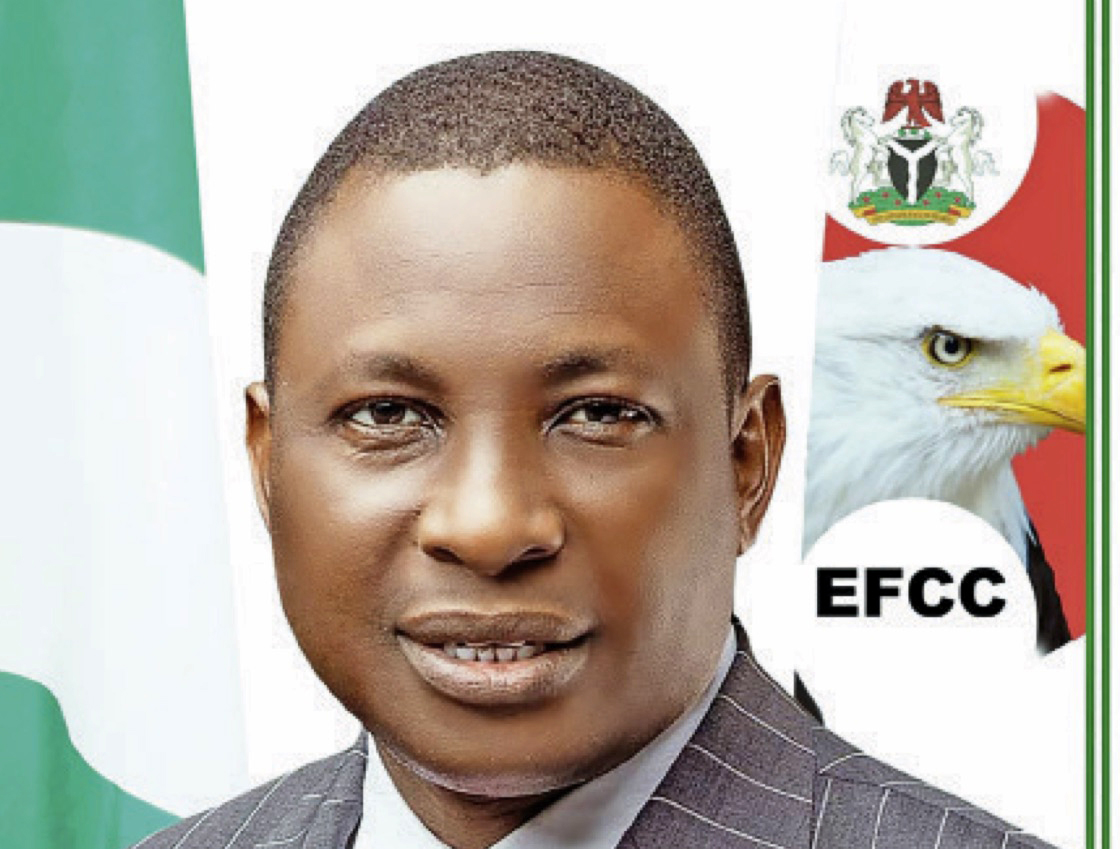
The EFCC has had months, if not years, to investigate municipal fund allocations. To choose the exact eve of a highly competitive election to cripple the financial capacity of an opposition-led state government strips the agency of any pretence of neutrality. This pattern of selective action severely undermines Nigeria’s democratic culture. Historically, Osun is one of the most politically volatile states in the federation. Campaign seasons are regularly marred by intense partisan rivalries, political harassment, and civil unrest. In such a hyper-sensitive environment, neutral federal agencies are expected to act with extreme caution, fairness, and strict adherence to the rule of law. Instead, by wading into state finances at this precise moment, the EFCC actively altered the political playing field. Selective enforcement—where opposition figures and states are subjected to swift, aggressive oversight while petitions against ruling-party figures gather dust—destroys public trust. When law enforcement is perceived as partisan, its legitimate combat against corruption loses moral authority and devolves into mere political warfare. This recent misstep fits into a broader pattern under the leadership of Ola Olukoyede. Since assuming the chairmanship of the EFCC, Olukoyede has displayed a visible desire to demonstrate performance through high-profile actions, dramatic raids, and aggressive public announcements. While zeal in fighting financial crime is commendable, over-performance driven by a desire for media headlines frequently leads to procedural shortcuts and institutional overreach. There have been allegations that under Olukoyede’s watch, the commission has increasingly prioritised “media trials”—publicising allegations, freezes, and arrests long before securing convictions or thoroughly verifying evidence. The strategy creates a public impression of hyper-efficiency, but it frequently falters under serious judicial scrutiny or basic constitutional standards. The primary metric of a successful anti-corruption leadership is not the number of accounts arbitrarily frozen or press releases issued; it is the quality of investigations, the strict adherence to due process, and the securing of legally sound convictions that withstand appellate review. When an agency prioritises theatrical displays of power over meticulous legal groundwork, it inevitably commits high-profile blunders—such as forcing the President to step in publicly to reverse an overzealous administrative freeze.
In a fragile political climate like Osun State, the leadership of the EFCC should have exercised maximum restraint to avoid disrupting a delicate peace. Instead, the agency threw caution to the wind, presenting itself as an active participant in state politics rather than an impartial arbiter of financial integrity. If the EFCC is to regain public trust and shed its reputation as a partisan instrument, its leadership must embark on fundamental structural reforms.
First, the agency must abandon the practice of using administrative letters to freeze state government accounts, ensuring that any restriction on public funds is subjected to rigorous, transparent judicial review. Furthermore, unless there is an active, irreversible flight of funds, high-profile enforcement actions against political candidates or incumbent state governments during active campaign periods should be deferred to avoid electoral distortion.
Finally, the leadership under Olukoyede must shift focus away from sensationalist press announcements toward thorough, quiet, and legally sound investigation techniques. Anti-corruption is a vital pillar of national development, but it cannot succeed when built on flawed procedures, selective enforcement, and political opportunism. Until the EFCC learns to separate its statutory duty from partisan politics and procedural impatience, its actions will continue to be met with deep public cynicism—and rightfully so.