Follow Us on Google
By John Mayaki
Do you remember when Nigeria had a good economic run and there was a saying that the country has enough money but did not know what to do with it? That was a statement that the country came to regret. The person who made that statement has not repeated it anywhere to the best of my knowledge. It shows lack of planning and vision.
In Edo state, the same is not the case. The removal of fuel subsidy and masterful accounting of the renewed hope administration in Nigeria has meant that allocations to the states have improved. Moreover, under the administration of Governor Monday Okpebholo, internally generated revenue in Edo State increased substantially. But Edo State is not at a loss for how to spend money.
There is a particular philosophy of governance that is content to announce press releases with MoUs signed before cameras and projects pencilled into budgets that hardly become tarmac or timber or working engines. Nigeria has seen more of this kind of governance than its long-suffering citizens deserve. But Governor Monday Okpebholo’s approach to the equipping of Edo State’s institutions stands out with a clarity that even the most hardened skeptic would find difficult to dismiss.
In barely 18 months, his administration has placed more working machinery, more functioning vehicles, and more operational equipment into the hands of Edo’s security agencies, local governments, transport companies, farmers, and road workers than the state has seen in many years combined.
Just take a look at the commissioning ceremonies, EXCO approvals, photographic records, and the testimony of police commissioners, traditional rulers, local government chairmen, and ordinary Edo citizens who have watched vehicles roll off grounds and machinery move into communities that had never seen a grader before.
The story of what Okpebholo has procured, deployed, and put to work is the story of a governor who understands a simple but frequently forgotten truth: governance is not what you say. It is what you deliver.
When Governor Okpebholo armed security agencies with new equipment and vehicles, Senator Adams Oshiomhole, who stood at the commissioning ceremony in February 2025 said, with genuine candour: “Those that borrowed so much money could not afford to buy a new vehicle for security agencies. Yet, in just 100 days, you have achieved this for the people of Edo.”
The governor unveiled 78 brand new Toyota Hilux patrol vans and 16 Prado Jeeps, all fitted with communication gadgets, for the security agencies across the state. In November 2025, during a project inspection tour of Edo Central, he also commissioned and handed over an additional 10 brand new Toyota Hilux patrol vehicles to the Nigeria Police Force, Irrua Area Command. The Onojie of Uromi, Anselm Aidenojie II, described the governor’s security approach as practical, inclusive, and results-driven.
Other News
In September 2025, the Edo State Executive Council (EXCO) approved the purchase of a further 111 motorbikes for use by security agencies in addition to the over 300 units previously procured. The governor’s budget presentation to the Edo State House of Assembly in December 2025 confirmed the cumulative total of 80 Hilux patrol vans and 400 motorcycles supplied to security agencies, alongside the passage of a stronger anti-cultism law and the recruitment and training of 2,500 officers into the Edo State Security Corps.
What of intrastate transportation? Look at Edo line. The answer is there. In February 2025, the governor commissioned 56 brand new Toyota Hiace buses for the New Edo Line transport company, part of a planned procurement of 100 buses to be completed before the end of that month. The vehicles were procured directly without consultants, and without the layers of bureaucratic intermediation that have historically slowed and inflated government procurement in Nigeria. Senator Oshiomhole noted this pointedly: the governor had simply identified the need, found the resources, purchased the vehicles, and commissioned them. The directness was itself a statement.
In September 2025, EXCO approved a second tranche: 50 additional Toyota Hiace buses (2024 model) to complement the 100 units already procured for the New Edo Line. At the same EXCO meeting, the council approved the acquisition of 50 Compressed Natural Gas (CNG) buses, 2025 model, for the Edo City Transport Service (ECTS). We are not talking about refurbished buses. We are talking about deliberate effort to make Edo Line work with top-tier equipment.
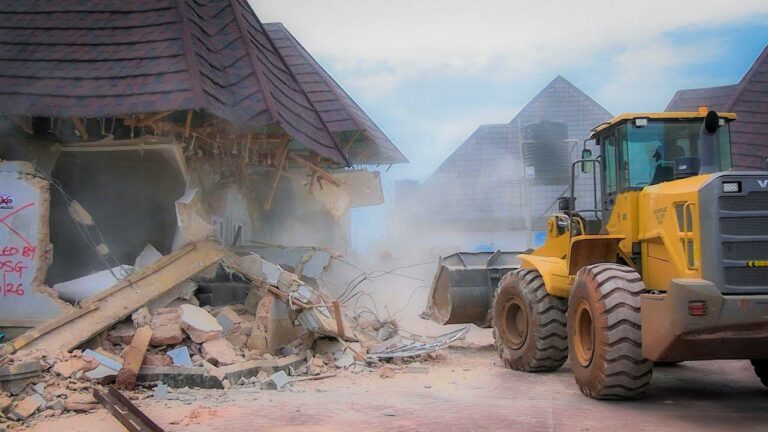
In February 2026, the governor distributed 54 units of heavy construction equipment to all 18 Local Government Councils in Edo State, and the respected minister of the FCT, Nyesom Wike, was there to commission them. The equipment package comprised graders, excavators, rollers, and other heavy-duty machinery specifically designed for road construction, rural access improvement, drainage rehabilitation, and community infrastructure works.
Again, in March 2026, the governor commissioned newly procured light and heavy-duty road maintenance equipment at the Ministry of Works on Sapele Road in Benin City. He explained that for many years Edo residents had endured poor road conditions that led to accidents, increased transportation costs, slower movement of goods, and missed economic opportunities. The new equipment directly addresses the capacity gap that had made those endurances necessary.
Now, he also touched agriculture. Governor Okpebholo’s administration allocated N70 billion to agriculture in the 2025 budget. Again, under the Back to Farm Initiative, the government committed to preparing large farmlands across all three senatorial districts for large-scale farming, grouping farmlands to give farmers better access to tractors, improved seeds, fertilisers, and modern farming methods.
In September 2025, EXCO approved the procurement of five bulldozers and one lowbed truck for the Ministry of Agriculture and Food Security. The governor also approved N1.6 billion for the LIFE-ND Project, an agricultural empowerment programme for rural farmers, expanding it from 10 to all 18 local government areas of the state. Okpebholo’s approval of the expanded funding brings the programme to communities that had been excluded from its benefits since inception.
Meanwhile, the machines that Governor Okpebholo has put into the hands of Edo’s security agencies, local government chairmen, road workers, transport operators, and farmers represent the conversion of political will into operational capacity. The security motorcycles speak. The patrol vans speak. The graders working through rural roads in communities speak. The buses carrying Edo commuters along routes that Edoline had abandoned decades ago speak. The CNG buses speak. The farm equipment that farmers now own rather than rent speaks. The maintenance machinery that will keep roads functional rather than leaving them to decay back into potholes speaks.
Now, while history is being written and speaking for itself, where do you want to stand? Do you want to stand as an antagonist of the new, modern and shining Edo state? Or do you want to be a proponent of the modern Edo State. Go and verify. For someone who people insult that he is not a good public speaker, he is quietly reorganizing the economics of the state and, because he has a vision, he knows exactly what to do with every penny that enters the state coffers.