Follow Us on Google

Oando Plc has reduced its total borrowings to N2.16 trillion, representing a 22 per cent decline from its peak at the end of 2024, while cash generated from operations reached N285 billion in the nine months ended September 30, 2026, as the energy company intensifies efforts to strengthen its financial position and fund further production growth.
The company disclosed this in its unaudited financial results for the nine-month period, which also showed a nine per cent increase in revenue to N2.78 trillion, compared with the corresponding period of 2025. Despite the reduction in borrowings, the company invested N110.7 billion in capital expenditure during the period, primarily directed towards drilling activities across Oil Mining Leases (OMLs) 60–63.
Oando’s operating performance also improved, with the company recording an operating profit of N159.7 billion, compared with an operating loss of N109.7 billion in the corresponding period of 2025. Gross profit rose by 483 per cent to N174.5 billion from N29.8 billion in the previous year.
The improved financial performance was supported by higher crude oil liftings, increased gas and Natural Gas Liquids (NGL) sales volumes, improved realised prices and lower production costs. Average daily production increased by 14 per cent to 42,985 barrels of oil equivalent per day (boepd), from 37,614 boepd in the corresponding period of 2025. Crude oil production rose by 12 per cent to 12,193 barrels per day, while gas production increased by 13 per cent to 28,689 boepd. NGL production recorded a 53 per cent increase to 2,103 barrels per day.
The increase in output was accompanied by higher sales volumes, with crude oil liftings rising by 43 per cent to 3.97 million barrels, while natural gas sales increased by five per cent to 34.01 billion standard cubic feet. NGL sales also grew by 90 per cent to 0.57 million barrels.
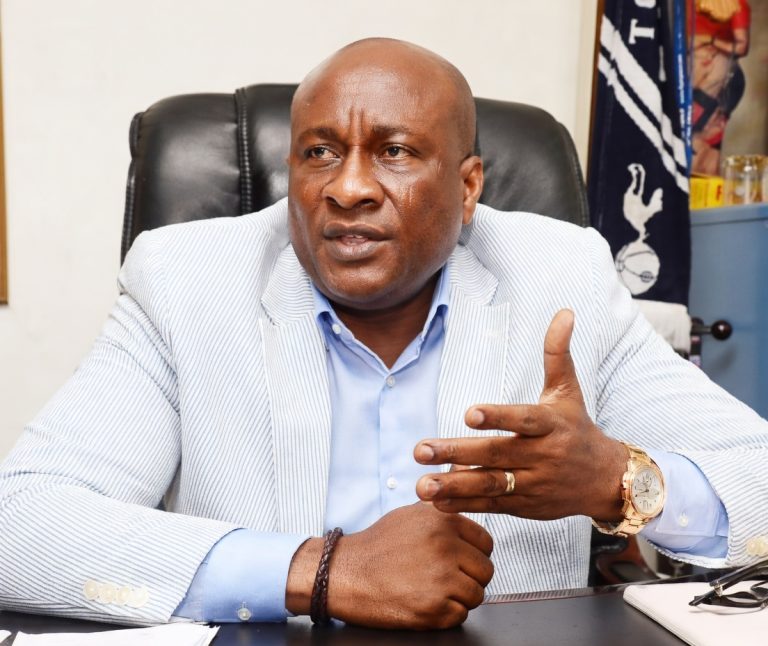
Overall, exploration and production sales volumes increased by 21 per cent to 10.21 million barrels of oil equivalent. Commenting on the performance, Group Chief Executive of Oando, Wale Tinubu, said, “Our performance in the first nine months of 2026 demonstrates how diligent execution under our operatorship, supported by our renewed investment drive, is delivering greater efficiency, improved reliability, lower unit costs and ultimately higher production across our expanded upstream portfolio. Production averaged 42,985 boepd, up 14 per cent year-on-year, while facility uptime improved to 96.1 per cent and production operating costs declined by 22 per cent to US$15.39 per boe. These gains were achieved with zero fatalities and zero lost-time injuries across approximately 14.9 million hours worked.”
Other News
The company attributed the improvement in production to better operational efficiency, reporting that facility uptime increased to 96.1 per cent from 85 per cent in the corresponding period of 2025.
Production operating costs also declined by 22 per cent to $15.39 per barrel of oil equivalent, reflecting cost reductions across transportation, logistics, services and information and communications technology, as well as increased output across a largely fixed field cost base. Oando said it recorded zero fatalities and zero lost-time injuries during the period, covering approximately 14.9 million hours worked, representing a 55 per cent increase in total hours worked from the corresponding period of 2025.
The company is also implementing a seven-well drilling programme across its operated assets in 2026, with two wells, Idu 6ST and Idu 15, completed and brought on stream. Workovers at Samabri 4T and Samabri 7T have also been completed, while drilling continues at Idu T and Samabri A50. The final well, Ogbainbiri, is scheduled to commence drilling in December.
Oando said it had narrowed its full-year 2026 production guidance to between 40,000 and 45,000 boepd, while projecting capital expenditure of between $90 million and $100 million for the year, largely focused on upstream activities. The company also indicated that an impending equity raise would form part of its efforts to reduce leverage, strengthen shareholders’ funds and provide additional capacity to finance future growth.
“For the remainder of 2026, our priorities are to progress the seven-well development programme, sustain operational reliability and strengthen shareholders’ funds through our impending equity raise. These initiatives are intended to reduce leverage, enhance our capacity to fund growth and support future shareholder distributions. We have demonstrated what we can achieve across our strategic assets and are confident in the opportunities ahead. Our commitment remains to realise the full potential of our substantial resource base and deliver lasting value for our shareholders,” Tinubu added.