Follow Us on Google

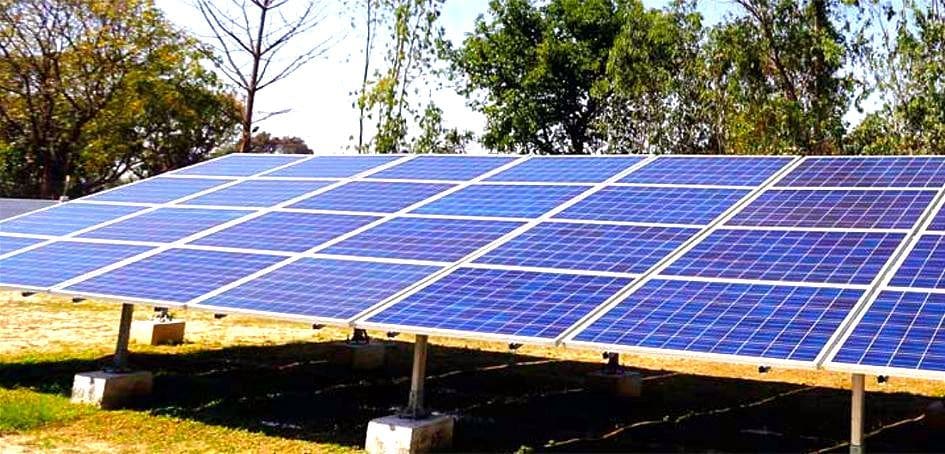
Nigeria’s drive to close its energy insufficiency gap and deliver electricity to millions of underserved communities risks stalling if state governments continue to impose regulatory charges that expose mini-grid developers to foreign exchange risks, increase project costs and weaken investor confidence.
Raising the alarm is the African Mini Grid Developers Association (AMDA), which warned that dollar-denominated licensing fees and inconsistent regulatory charges across state electricity markets could discourage private investment in mini-grid projects, potentially slowing the deployment of electricity infrastructure in rural and underserved communities.
The association said the growing differences in licensing costs, currency denomination and regulatory requirements across states were creating additional financial and administrative burdens for developers, with implications for the commercial viability of projects and Nigeria’s broader electrification ambitions.
In a recent position paper titled The Cost of Regulation: Nigerian State Electricity Market Fees, shared by its Chief Executive Officer, Mr. Olamide Niyi-Afuye, AMDA, alongside the Renewable Energy Association of Nigeria (REAN), argued that the design of state-level regulatory fees could determine where investors deploy their capital and how quickly communities gain access to electricity.
Of particular concern is the decision by some state regulators to peg certain categories of mini-grid licensing fees to the United States dollar, despite the fact that developers generate their revenues in naira and consumers pay for electricity in the local currency.
Dollar fees raise investment risks
The association said this currency mismatch exposes developers to exchange rate fluctuations between the time they prepare their project financial models and when regulatory payments become due, including at the point of licence renewal.
Kogi State provides a notable example. Under its 2025 electricity licensing regulation, the processing fee for mini-grid projects between one megawatt and 10 megawatts is fixed at N200,000, while the licence fee is $7,500 or its naira equivalent. The renewal and extension fee for the same category is also $7,500 or its naira equivalent.
Using an illustrative exchange rate of N1,380 to the dollar, the combined upfront processing and licensing cost for a project within this capacity range amounts to approximately N10.55 million.
For developers planning investments across several states, such dollar-linked obligations introduce an additional layer of uncertainty into project financing, particularly where revenues are earned in naira and project costs must be carefully managed over several years.
The position paper noted that while Nasarawa State has revised its applicable mini-grid fees to naira denomination, concerns remain over dollar-denominated charges in certain categories under other state regulatory frameworks.
Niger State, on its part, prices isolated mini-grid projects entirely in naira but applies dollar-denominated fees to a separate category of mini-grids interconnected to the transmission grid.
According to AMDA and REAN, the problem goes beyond the currency in which fees are charged. The considerable variations in licensing costs and regulatory requirements across states could make some jurisdictions less attractive to investors, particularly developers seeking to establish multiple projects.
The associations argued that investors compare regulatory costs and predictability when deciding where to deploy scarce capital. Consequently, states with lower and more predictable naira-denominated charges could attract investments ahead of jurisdictions with higher and foreign exchange-exposed regulatory obligations.
The implication, they warned, is that capital already committed to Nigeria’s mini-grid industry could be deployed first in states offering more favourable regulatory conditions, leaving communities in higher-cost jurisdictions waiting longer for electricity projects.
Electricity access targets at risk
According to stakeholders, this presents a significant concern for a country struggling with one of the world’s largest electricity access deficits.
The 2026 Tracking SDG7 Energy Progress Report, cited in the position paper, estimates that approximately 87.2 million Nigerians lacked access to electricity in 2024, the largest national electricity access deficit globally.
With rural electricity access still below 30 per cent, mini-grids have become an important part of efforts to extend reliable electricity to communities that conventional grid expansion may not reach quickly or economically.
Nigeria’s participation in Mission 300, the World Bank and African Development Bank initiative to connect 300 million Africans to electricity by 2030, further underscores the importance of mobilising private capital for distributed renewable energy projects.
Under the World Bank-funded Distributed Access through Renewable Energy Scale-up (DARES) programme, Nigeria has committed $750 million towards expanding mini-grids and other electricity access technologies, with a target of connecting 17.5 million people and replacing more than 250,000 polluting diesel generators.
However, AMDA argued that achieving these ambitions would require state electricity regulators to establish fee structures that encourage investment rather than introduce additional barriers to project development.
Disparities in state licensing charges
Beyond foreign exchange exposure, the associations identified high upfront licensing charges as another major threat to the expansion of mini-grids, particularly smaller projects serving dispersed rural settlements.
Their analysis of the official fee schedules of the Nigerian Electricity Regulatory Commission (NERC), Nasarawa State Electricity Regulatory Commission (NASERC), Kogi State Electricity Regulatory Commission (KERC) and Niger State Electricity Regulatory Commission (NSERC) revealed significant disparities in the cost of obtaining regulatory approvals.
For instance, while NERC does not charge registration fees for mini-grids and has no annual operating fees, the state regulatory frameworks examined impose different combinations of processing, permit, renewal and recurring operating charges.
In Nasarawa, the combined processing and permit fees for a mini-grid project between 500 kilowatts and 999 kilowatts amount to N2.3 million. The corresponding charges in Niger State stand at N550,000, while Kogi’s applicable 50-999 kilowatt category attracts N450,000 in processing and licence fees.
The disparity becomes more pronounced in the one-megawatt to 10-megawatt category, where the combined upfront cost in Nasarawa is N5.5 million, compared with N850,000 in Niger and approximately N10.55 million in Kogi, using the paper’s illustrative exchange rate.
Other News
AMDA and REAN said such variations could undermine investment predictability, particularly for developers operating across multiple jurisdictions, as they have to contend with different capacity classifications, licensing procedures, fee structures and licence validity periods.
They also warned that fixed regulatory charges could disproportionately affect smaller developers because such costs represent a larger proportion of their project expenditure than they do for bigger operators.
This is particularly significant because mini-grids below one megawatt are often suited to dispersed rural communities where conventional electricity infrastructure remains inadequate.
The associations maintained that excessive regulatory charges could make projects serving low-income communities commercially unattractive, while additional operating costs could ultimately be reflected in electricity tariffs paid by consumers.
Their concern is that the consequences of poorly structured fees could extend beyond investment decisions to the affordability and sustainability of electricity supply in communities that already face significant energy challenges.
Operators face additional regulatory costs
The position paper also raised concerns about the requirement for existing developers with valid NERC permits to undergo fresh state-level application and regularisation processes, potentially attracting substantial additional charges.
While acknowledging the authority of states to regulate electricity markets within their jurisdictions following the Electricity Act 2023, AMDA and REAN argued that the transition to decentralised regulation should not result in unnecessary duplication of regulatory costs and procedures.
They further called for portfolio authorisation arrangements that would allow developers operating several similar mini-grid projects within a state to obtain a single initial assessment and pay reduced fees for additional sites, rather than undertake a full application process for every project.
Another concern is the duration of licences. While Kogi provides a 10-year validity period for its generation licences, Nasarawa and Niger prescribe five-year terms for mini-grid permits.
The associations argued that shorter licence periods could create additional uncertainty for investors because mini-grid infrastructure, including generation, battery storage and distribution assets, typically has a useful life of between 10 and 20 years, while project financing is often structured over comparable periods.
They maintained that a 10-year renewable licence would better align regulatory approvals with the economic life of projects and their financing arrangements.
Mini-grids offer wider economic benefits
The economic implications of getting the regulatory framework right are considerable.
According to the position paper, the Nigeria Electrification Project, supported by the World Bank and implemented by the Rural Electrification Agency, facilitated the development of about 180 mini-grids across 23 states within six years.
The programme, alongside the commercial sale of more than one million solar home systems, helped extend electricity access to over 5.5 million Nigerians and created more than 5,000 private-sector jobs.
Under the DARES programme, 67 mini-grids had been deployed, against a target of 1,170 isolated mini-grids by December 2028, according to figures cited in the document.
These figures, the associations argued, demonstrate the capacity of public programmes and private-sector investment to accelerate electricity access when supported by an enabling regulatory environment.
They also highlighted the wider economic benefits of mini-grids, including their ability to power agricultural processing, cold storage, irrigation facilities, small businesses and other productive activities in rural communities.
For the associations, the challenge before state electricity regulators is therefore how to balance the legitimate need to recover regulatory costs with the commercial realities of mini-grid development.
AMDA seeks naira-denominated fees, 10-year licences
They recommended that all processing, permit and licensing charges should be denominated in naira and fixed for the applicable licence period to eliminate foreign exchange uncertainty.
They also called for lower and proportionate fees across capacity bands, free or nominal-cost registration for smaller mini-grids, and simplified regularisation arrangements for existing operators holding valid NERC permits.
Other proposals include portfolio authorisation for developers operating multiple sites within a state, clearly defined operating fees based on revenue actually collected after commissioning, and renewable 10-year licence terms.
The associations further advocated greater consistency in capacity classifications, fee methodologies and renewal procedures across states, while recognising the regulatory autonomy granted to them under the Electricity Act 2023.
Ultimately, the argument is that the success of Nigeria’s decentralised electricity market will depend not only on the powers granted to state regulators but also on how those powers are exercised.
For millions of Nigerians living in communities beyond the reach of reliable grid electricity, the cost of regulation could become a decisive factor in determining how soon private investment translates into actual electricity connections.
If regulatory charges make projects commercially unattractive, the consequences may not simply be fewer investments or lower returns for developers. They could also mean delayed electricity access, constrained rural businesses and communities left waiting for an electricity supply that mini-grids are specifically designed to provide.