Follow Us on Google

From Adanna Nnamani, Abuja
The Nigeria Revenue Service (NRS) has identified inadequate data availability and poor record-keeping among relevant government agencies as major challenges undermining efforts to combat illicit financial flows (IFFs) in Nigeria.
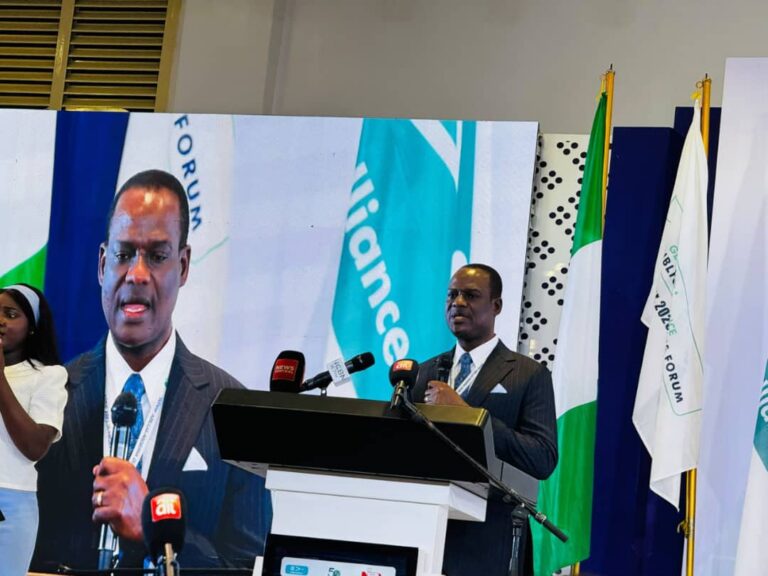
The Head of Anti-Graft and Law Enforcement Liaison at the NRS, Idris Abdullahi, said the fight against IFFs was largely data-driven, making the availability, proper organisation and presentation of relevant information critical to estimating the scale of the problem and developing effective policies.
Abdullah spoke at a one-day Stakeholders Engagement on Illicit Financial Flows (IFFs) with the Nigerian Media, held on Tuesday in Abuja.
He said that although relevant agencies had data that could support the exercise, ensuring that such information was properly organised and presented in an analysable format remained a major challenge.
Abdullah, who also heads the Anti-Money Laundering and Counter-Terrorist Financing Unit at the NRS and serves as Secretary of the Technical Working Group on IFFs, said the group had engaged relevant agencies to improve their understanding of the type of information required for effective IFF estimations.
According to him, the Technical Working Group comprises the NRS, which serves as its secretariat, the Economic and Financial Crimes Commission (EFCC), the Independent Corrupt Practices and Other Related Offences Commission (ICPC), the National Bureau of Statistics (NBS), the Nigerian Financial Intelligence Unit (NFIU) and the Bureau of Public Procurement (BPP).
He explained that strengthening the capacity of these institutions to generate and analyse data was central to understanding the magnitude of illicit financial flows and developing appropriate interventions.
Abdullah said findings from IFF estimations would also help identify companies and other entities involved in illicit financial activities, as well as sectors more vulnerable to such practices.
He noted that identifying high-risk sectors would enable the government to deploy resources more effectively and develop targeted strategies to address the problem.
On measures to address the challenge, he said the Technical Working Group had prioritised capacity building for agencies responsible for conducting IFF estimations, alongside public awareness and stakeholder engagement.
He stressed the need to work with the media, government and the general public to deepen understanding of illicit financial flows, noting that many Nigerians were still unfamiliar with the concept, its implications and the activities that could constitute IFFs.
Abdullah said the group’s secretariat had been engaging journalists to improve public understanding and encourage accurate reporting of issues relating to illicit financial flows.
He added that the group had also commenced engagements with the private sector, including sensitisation programmes organised in collaboration with the Manufacturers Association of Nigeria (MAN) last year and this year.
He said: “The fight against illicit financial flows is data-driven. Therefore, the availability of data from the relevant agencies responsible for generating it has been one of the major challenges.
Other News
“Another issue has been ensuring that such data is properly organised and presented in a format that can be analysed and translated into meaningful information.
“We have engaged most of these agencies, and they now understand the kind of data they need to maintain for the purpose of conducting IFF estimations.
“The first and foremost priority is to build the capacity of the agencies responsible for carrying out IFF estimations. These estimations are important because they help policymakers understand the scale of the problem and develop appropriate policy directions.
“By identifying sectors that are more vulnerable to illicit financial flows, the government can determine where to deploy more resources and develop targeted strategies to combat the problem.”
Also speaking at the engagement, financial crime investigator, chartered accountant and forensic expert Adedayo Adeyinka Kayode said commercial and tax-related activities account for more than 60 per cent of global illicit financial flows, indicating that the problem goes beyond corruption.
Kayode identified trade misinvoicing, profit shifting by multinational companies and aggressive tax avoidance through tax havens as major channels through which illicit financial flows occur.
He also identified crude oil theft, illegal bunkering, manipulation of production and export data, contract inflation, diversion of public funds and cyber fraud as some of the practices driving illicit financial flows in Nigeria.
According to him, Nigeria’s vulnerability is heightened by its heavy dependence on oil revenue, large informal economy, weak data integration among government agencies and gaps in enforcement and prosecution.
He warned that illicit financial flows undermine government revenue, increase borrowing, weaken public trust and limit funding for critical sectors such as education, healthcare and infrastructure.
On compliance measures, Kayode urged businesses to strengthen internal controls, conduct proper due diligence, verify beneficial ownership and improve transaction monitoring to prevent illicit financial activities.
He also called for stronger inter-agency cooperation, effective whistleblowing mechanisms, responsive justice systems and political leadership to strengthen the fight against illicit financial flows.
He urged journalists to go beyond reporting allegations by following financial transactions, examining ownership structures and tracking the prosecution of offenders and the recovery of stolen assets.
Kayode said: “Commercial and tax-related activities account for over 60 per cent of global illicit financial flows. Tackling the menace requires strong laws, data sharing, international cooperation and effective enforcement.”