Follow Us on Google

• Says false tax claims sparked panic among small businesses; urges action against misinformation
____________________________
From Juliana Taiwo-Obalonye, Abuja
Nigeria, Africa and other developing economies are losing an estimated $500 billion annually to negative narratives, stereotypes and misinformation that inflate investment risks and increase the cost of capital, the Minister of Finance and Coordinating Minister of the Economy, Taiwo Oyedele, has said.
Oyedele warned that misinformation was not merely a communication challenge but an economic burden capable of discouraging investment, undermining public confidence and making capital more expensive for developing countries.
He therefore challenged public relations professionals, journalists and other communicators to go beyond telling the truth by actively confronting false narratives, warning that their silence allows misinformation to thrive.
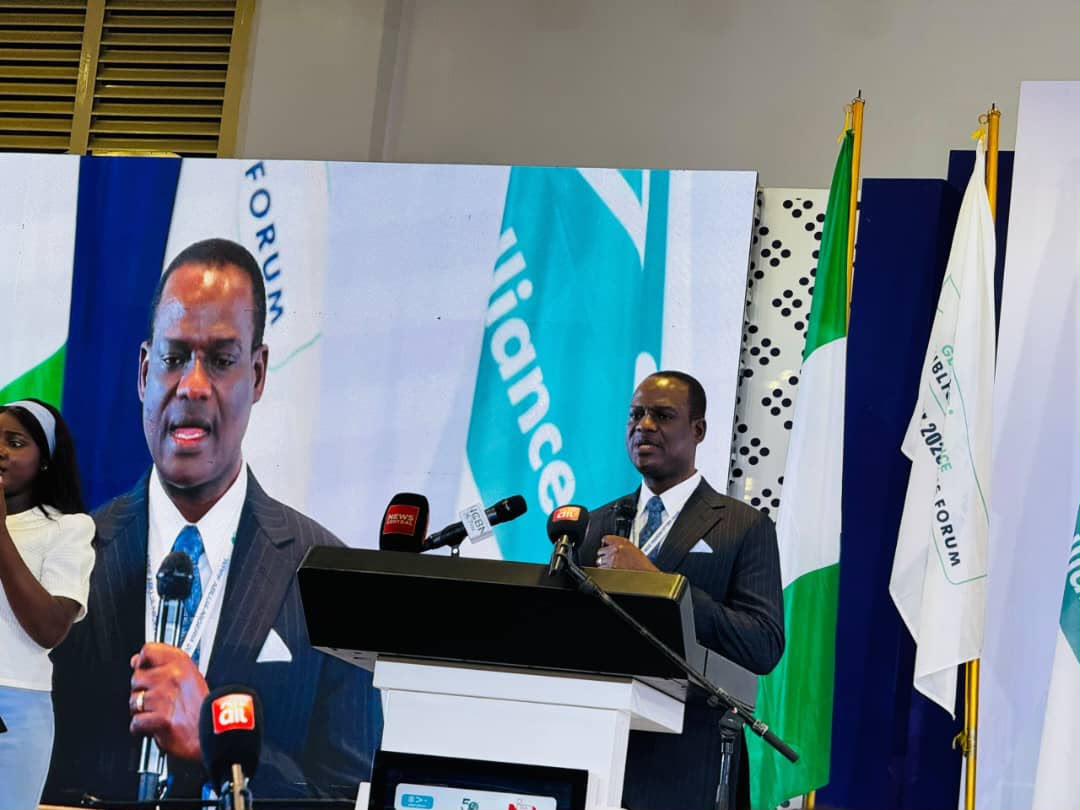
The minister spoke during a high-level dialogue on Responsible Business Communication: Building Trust and Financing Investments for Sustainable Human Development at the 2026 World Public Relations Forum (WPRF), organised by the Global Alliance and the Nigerian Institute of Public Relations in Abuja.
He said Nigeria and other developing economies were paying what he described as a prejudice premium, narrative cost and stereotype tax, which had significant implications for their economic prospects.
“As we speak today, Nigeria, Africa, and the rest of the developing world pay a prejudice premium, a narrative cost, a stereotype tax combined. On time, estimated that it’s about 500 billion dollars a year, including billions of dollars we pay in Nigeria for this narrative cost,” he said.
Oyedele, however, cautioned against presenting Nigeria as a perfect destination, insisting that responsible communication required acknowledging realities rather than manufacturing favourable impressions.
“We’re not saying you should tell everybody Nigeria is paradise. It is not. We’ll say it as it is,” he said.
He explained that deliberately withholding relevant information could amount to manipulating the truth, even where the information communicated was not technically false.
“When you communicate and you intentionally add information, you may not have lied, but you have manipulated the truth. When you hold back a useful and substantive part of the information, it has the same consequences as misinformation,” he said.
Illustrating the economic consequences of misinformation, the minister recalled the controversy surrounding the Federal Government’s tax reforms, particularly claims that bank accounts belonging to small businesses and low-income earners would automatically be debited when the new tax laws took effect.
He said the government had provided exemptions for small businesses and low-income earners, but misinformation about automatic deductions dominated public discussions, leaving many beneficiaries unaware of the exemptions.
“Some people were running to the bank to close their accounts. We were actually scared,” he said.
According to him, 10 months after the controversy, no such accounts had been debited, but the damage had already been done as small business owners had been frightened by claims that their accounts would be automatically charged.
“When we asked those small businesses, every single one of them heard about their account to be debited. Many of them did not hear that they have been exempted,” he said.
Oyedele lamented that those who circulated the misinformation had not been held accountable, despite the anxiety and confusion it generated.
“My message is this. We must hold public servants to account. We must hold ourselves to the same level of accountability, because it matters,” he said.
He maintained that the same standards of transparency expected from government must also apply to the private sector and the general public, stressing that accountability was essential to attracting and retaining investments.
The minister further urged communicators to challenge misinformation whenever they encountered it, rather than merely concentrating on communicating accurate information.
“Not enough for you to say the truth and say it well. When you see misinformation, you also have an obligation to call it out. When you are silent, evil will prevail because good people keep quiet,” he said.
He also cited the controversy surrounding the Federal Government’s fuel price stabilisation measures, saying 17 measures introduced to reduce and maintain stable fuel prices were overshadowed by the mischaracterisation of one of them as a subsidy.
According to him, the misleading narrative became the dominant issue in public discourse instead of the actual policy measures.
He advised governments to communicate transparently and tell the whole truth, while urging citizens and communication professionals to take responsibility for challenging falsehoods.
Also speaking, the Director of External Affairs at the World Bank Group, Edith Jibunoh, said responsible communication required institutions to demonstrate what they had done with feedback received from communities and stakeholders, rather than merely claiming to have listened.
She explained that the World Bank’s Country Partnership Framework, which determines its investment priorities in countries such as Nigeria, was developed in collaboration with governments and aligned with national development priorities.
She explained further that the process also involved consultations with communities and other stakeholders, adding that the credibility of such engagements depended on institutions reporting what they had done with the feedback received.
“We heard a lot about listening today, but I would say that the test is not just listening. The test is making transparent what you heard, and then the further test is actually showing people what you’ve done with what you heard,” she said.
Jibunoh challenged development institutions and governments to have the courage to disclose what they could accommodate and what they could not implement based on public feedback.
She said transparency was particularly important when development projects encountered challenges, including instances where contractors or subcontractors failed to comply with established policies and regulations.
According to her, the World Bank had a responsibility to disclose such challenges, explain corrective measures and involve affected communities in finding solutions.
“We are now going to tell you what exactly we’re going to do about it, and we seek your help. Come and be a part of the solution to help us resolve that,” she said.
On Africa’s investment prospects, Jibunoh urged countries to distinguish between perceived risks and actual risks, arguing that credible information and data could help close the gap between what investors believe and the reality.
“We have to separate perceived risk from real risk. I think there’s always a challenge there. There’s what people think is happening and what is actually happening. And usually, the gap is information,” she said.
Other News
She explained that investors priced risks into their investment decisions, making it important for governments to provide credible data that could strengthen confidence and prevent unnecessary increases in the cost of capital.
On his part, the Chairman and Chief Executive Officer of United Nigeria Airlines, Prof. Obiora Okonkwo, said organisations could not use strategic communication to compensate for poor service delivery, insisting that truth remained the foundation of effective public relations.
He admitted that the airline’s communication team worsened the reputational damage following an incident in which one of its aircraft landed in Asaba instead of Abuja by falsely attributing the incident to bad weather.
He explained that the aircraft was scheduled to fly from Lagos to Abuja but landed in Asaba because the dispatcher mistakenly entered Asaba as the destination in the flight documentation.
According to him, the pilots followed the destination indicated in the documents, while the cabin crew, believing they had arrived in Abuja, welcomed passengers to the Federal Capital Territory.
However, the airline’s communication team subsequently issued a statement blaming bad weather in Abuja, an explanation Okonkwo said was untrue.
“Our own communication team, in a little bit to protect us or probably not verify, just quickly came out with a statement that the aircraft went to Asaba because there was bad weather in Abuja,” he said.
He said the false explanation attracted widespread criticism, comic satire and media reports in different languages, worsening the airline’s reputational crisis.
“I really think that if a little bit of verification was done and if the truth was told, it probably would have put us in a better position and saved us some trouble,” he said.
Okonkwo added: “The best way of public relations is to tell the truth, but tell it responsibly.”
He also recounted how a passenger threatened never to fly with the airline again because it departed 10 minutes earlier than its advertised 11.30am departure time.
He said he responded by apologising for the airline’s decision to leave on time, an experience which illustrated the importance of understanding customer expectations and communicating appropriately.
Reacting to the incident, Oyedele said building trust required organisations to adhere to communicated schedules, whether they were delivering earlier or later than expected.
“Sometimes building trust requires that you be on time, not earlier and not later. And if you go earlier than you communicated previously, you must explain,” he said.
The minister drew a parallel with government revenue performance, saying some departments under the Ministry of Finance exceeded their revenue targets without explaining the reasons.
He said where an agency projected revenue of 10 but generated 12, it was important to establish whether the initial target was too conservative or whether the additional revenue was a one-off occurrence.
“I need to know whether your 10 was too conservative. Maybe it should have been 15. I also need to know whether this extra 2 is sustainable or whether it’s one-off,” he said.
The founder of Honor Public Relations, United Kingdom, Sharon Ezzeldin, said governments must be willing to communicate their failures and explain how they intend to address them, rather than concentrating exclusively on achievements.
Ezzeldin, who has worked in communications for about 20 years, particularly supporting government institutions and ministries in the Middle East and Africa, cited her experience working with the Egyptian government.
She said building credibility and trust among international stakeholders in Egypt had taken nearly 10 years, particularly in the areas of finance and economic diplomacy.
“It’s critical that governments, for example, when they reach challenging points, when communicating certain mandates, that they communicate their failures because you need to be able to clearly articulate what’s going right and what’s going wrong and how you plan to fix that particular issue,” she said.
She also highlighted the importance of connecting governments, international finance organisations and civil society to ensure that development financing addressed the needs of communities.
Citing a project focused on food, energy and water in Egypt, she said her work involved bringing together development finance organisations and relevant government ministries to match financing with identified development needs.
She disclosed that the initiative involved 36 projects valued at about $9 billion, including interventions focused on farmers in the Nile Valley.
The Comptroller-General of the Nigeria Customs Service, Adewale Adeniyi, said trust was central to modern customs administration, particularly in balancing trade facilitation with border security and revenue collection.
He explained that international customs authorities had adopted tools, including the World Customs Organisation’s SAFE Framework of Standards, to facilitate legitimate trade while identifying and sanctioning non-compliant businesses.
He cited the Authorised Economic Operator programme as an example of a trust-based system that rewards businesses with established records of compliance through faster clearance and other trade facilitation benefits.
“We want to put some element of speed, but we don’t want to lose the element of control,” he said.
Adeniyi said customs communication must consistently highlight both the sanctions for violations and the benefits available to businesses that comply with regulations.
He also urged institutions to understand how the media would interpret their messages before releasing them, noting that sensational headlines and public perceptions could influence how information was received.
In her closing remarks, the moderator, Kyembe Kyalusanza, Head of Corporate Communications at Zambia National Commercial Bank (Zanaco), said communication professionals were not merely storytellers but custodians of reputation and contributors to national development.
“As communicators, we hold power and with power comes responsibility. We’re not just simply storytellers. We’re custodians of reputation and also we are country builders,” she said.
She added that communication professionals served as intermediaries between businesses and society and played an important role in building investment confidence.
“What we actually do in our jobs affects real humans. So, let us communicate responsibly, build trust deliberately, and also ensure that investments we mobilise ultimately improve people’s lives,” she said.
The dialogue was part of the 2026 World Public Relations Forum, holding in Abuja under the theme, Responsible Communication: The Voice of the World.