Follow Us on Google

• Says communication team failed to verify facts before issuing statement; insists truth, not reputation management, is best PR strategy
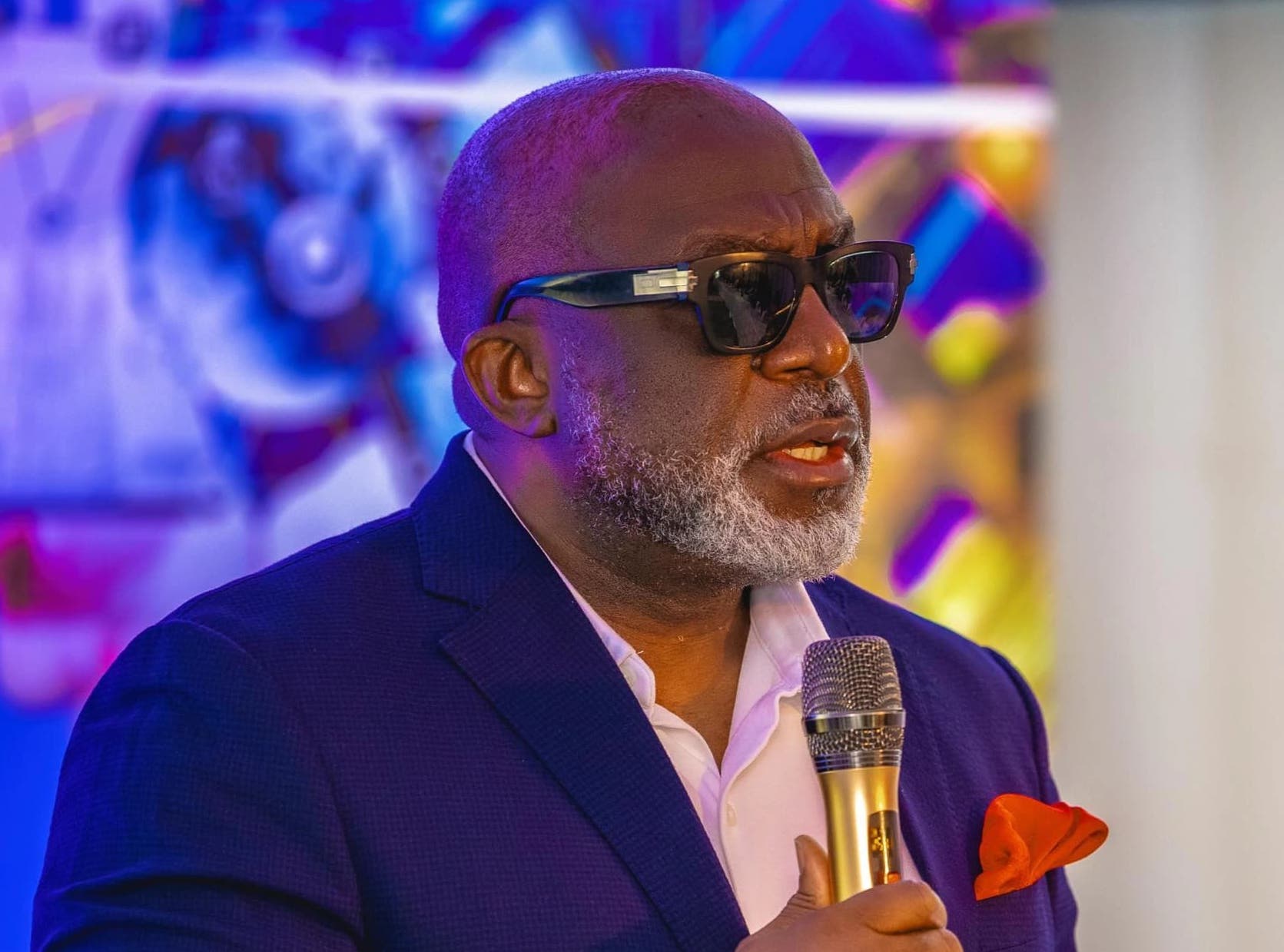
Chairman and Chief Executive Officer of United Nigeria Airlines, Obiora Okonkwo, has admitted that the airline’s attempt to manage public perception following an incident in which one of its aircraft landed in Asaba instead of Abuja was worsened by a false explanation issued by its communication team.
Okonkwo said the airline’s communication team, in an attempt to protect the company’s reputation, attributed the incident to bad weather in Abuja, despite the fact that the aircraft had landed in Asaba because of an error in its flight documentation.
He said the explanation, which was not properly verified before being released, triggered widespread criticism and ridicule on social media and in international media, turning what could have been a manageable operational error into a major reputational crisis.
The airline chairman spoke during a high-level dialogue on Responsible Business Communication: Building Trust and Financing Investments for Sustainable Human Development at the 2026 World Public Relations Forum (WPRF) in Abuja.
Recounting the incident, Okonkwo explained that the aircraft was scheduled to fly from Lagos to Abuja but landed in Asaba following an error by the dispatcher, who mistakenly entered Asaba as the destination in the flight documentation.
He said the pilots followed the destination indicated in the documents and landed accordingly, while the cabin crew, believing they had arrived in Abuja, welcomed passengers to the Federal Capital Territory.
According to him, the incident itself was not necessarily a major crisis until the airline’s communication team issued an inaccurate explanation.
“Our own communication team, in a little bit to protect us or probably not verify, just quickly came out with a statement that the aircraft went to Asaba because there was bad weather in Abuja,” he said.
“That’s just a lie because of it that naturally, took over all the whole airways because the weather was as good as just anything you can imagine.”
Okonkwo said the false explanation gave critics more ammunition, with the incident attracting widespread attention, including comic satire and reports in different languages.
He argued that proper verification and a truthful explanation would have spared the airline the additional reputational damage.
“I really think that if a little bit of verification was done and if the truth was told, it probably would have put us in a better position and saved us some trouble,” he said.
The airline chief maintained that organisations must not confuse reputation protection with withholding or manipulating facts, warning that attempts to conceal the truth could eventually cause greater damage than the original crisis.
“The best way of public relations is to tell the truth, but tell it responsibly,” he said.
He added that telling verified truths demonstrated respect for stakeholders and helped build confidence in an organisation, irrespective of how uncomfortable the information might be.
Okonkwo also cited another experience involving a passenger who threatened never to fly United Nigeria Airlines again, not because of a delayed flight but because the airline departed earlier than its advertised time.
He said the passenger complained that the airline had advertised an 11.30 a.m. departure but took off at 11.20 a.m.
Recounting his response, he said: “I wanted to get angry, I wanted to shout back at him, but again my experience being a member of this forum came into play and I simply sent him a message. I apologise for United Nigeria leaving on time.”
He said the experience illustrated the importance of understanding customer expectations and communicating appropriately, even when complaints appeared unusual.
Reacting to the incident, Minister of Finance and Coordinating Minister of the Economy, Taiwo Oyedele, said building public trust sometimes required organisations and government institutions to adhere strictly to communicated timelines, whether they were delivering earlier or later than expected.
He said the passenger’s complaint was a reminder that organisations must explain deviations from what they had communicated, even when such deviations appeared to be positive.
“Sometimes building trust requires that you be on time, not earlier and not later. And if you go earlier than you communicated previously, you must explain,” Oyedele said.
Drawing a parallel with government revenue performance, the minister said some departments under the Ministry of Finance occasionally exceeded their revenue targets without providing explanations.
He said where an agency projected revenue of 10 but generated 12, it was important to establish whether the original target was too conservative or whether the additional revenue was a one-off occurrence.
“I need to know whether your 10 was too conservative. Maybe it should have been 15. I also need to know whether this extra 2 is sustainable or whether it’s one-off,” he said.
The minister’s intervention reinforced the importance of transparency and accountability in institutional communication, stressing that stakeholders deserved explanations for outcomes that differed from prior commitments.
Okonkwo, who welcomed the inclusion of private-sector representatives in discussions on responsible communication, stressed that communication must go hand in hand with service delivery.
He said organisations could not rely on strategic communication to compensate for failures in delivering on their promises.
His remarks formed part of discussions involving the Minister of Finance and Coordinating Minister of the Economy, Taiwo Oyedele; Director of External Affairs at the World Bank Group, Edith Jibunoh; and Founder of Honor Public Relations, United Kingdom, Sharon Ezzeldin.
The session was moderated by Kyembe Kyalusanza, Head of Corporate Communications at Zambia National Commercial Bank (Zanaco).