Follow Us on Google
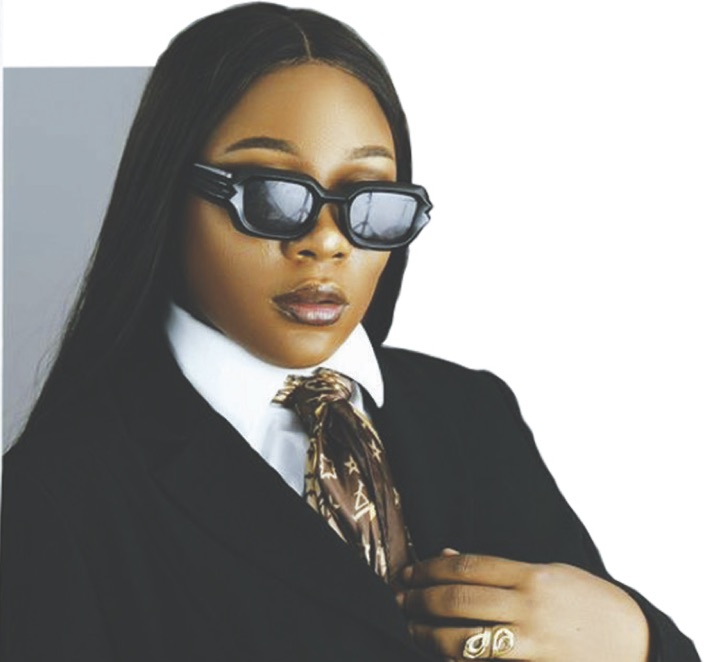
By Rita Okoye
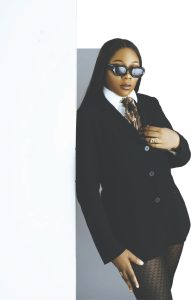
Chiamaka Uzokwe is a lawyer, actress, and entrepreneur whose career defies easy categorisation. Seamlessly weaving her legal and business background into a growing Nollywood career, she brings depth, discipline, and authenticity to every role she plays.
In this interview with Saturday Sun, the Imo State indigene opens up about her journey into the film industry, the delicate balance between law and acting, navigating relationships, and the personal convictions shaping her path.
How did your journey in the movie industry begin?
My journey in the movie industry began in my first year in the university. I was called upon in church to participate in a stage play. I didn’t know I could act, but I knew I was very dramatic. Growing up, everyone always told me I was dramatic and that I should be an actor, a pastor, or even a lawyer—which is probably why I’m a lawyer today.
I liked the idea of pretending, and when the opportunity came, I jumped at it. I did really well in that stage play, and from there, I started getting acting opportunities. I got my first role through Instagram via a monologue challenge on ROKtv. That became my debut film, and I played the lead character. It’s still currently showing on ROKtv.
After that, I got one of my big breaks in Sista by Biodun Stephen. People may not believe this, but I didn’t audition for that role it was purely grace and favour. From Sista, I started getting calls nonstop, and I pray the calls continue.
You are also a lawyer. What really attracted you to the entertainment industry?
What’s funny is that law and entertainment actually go hand in hand. When you’re growing up and you can talk well, people often say you can be one of two things: a lawyer or an entertainer, either an actor or a comedian. The traits I have span both law and entertainment. Initially, I never really wanted to be a lawyer. My dad, who is also a lawyer, said, ‘You talk really well, you’re fluent in English—why don’t you come into this field?’ At the time, I wanted to be an actor, so we agreed that I would go to school, earn a degree with good grades, and then pursue acting if I still wanted to.
Now, I genuinely love the legal profession. It’s a beautiful and noble career. I still practice in a way, although I don’t litigate. I focus more on counseling indigent women and children who can’t afford legal services. What attracted me to entertainment was the beauty of the industry—the freedom to be yourself. Growing up, I was often told I was too hyper or too dramatic. With acting, you don’t have to hide those traits. It’s the one place where my personality is not just accepted but respected.
Have you ever had to choose between a legal obligation and a movie role?
I haven’t really had to choose between the two because I don’t work a regular 9–5. I volunteer with FIDA, an NGO for indigent women and children. I attend legal clinics on days when I’m available, so it doesn’t clash with acting.
Acting isn’t an everyday job unless you’re constantly booked. On days when I’m not on set, I dedicate my time to legal work. I’m not in court, but I help with legal advice, case strategies, and brief other lawyers. So far, I’ve been able to balance both without conflict.
Nollywood is quite dramatic. How do you balance that with the law?
I’m naturally very dramatic, so I thrive in Nollywood. Even law, though calm and noble, has its own form of drama. I’m an ambivert—I have both calm and lively sides. When it’s time for legal work, I become very serious and composed. When it’s time to act, you see a completely different side of me. The balance already exists within my personality. I know how to adapt to whatever situation is required, and that’s one of the beauties of acting—you can be whoever the role demands at that moment.
Are there certain roles you will not accept, even if the pay is enticing?
Absolutely. There are roles I don’t accept, especially intimate or nude scenes. I’m not just an actor; I’m also a lawyer and a business woman. There’s an image I want to portray. I own a company called Beauce and Sassy, one of the biggest crafting businesses in Africa. I’m intentional about how I present myself publicly. It’s not about judging others; it’s simply my personal choice. Even if I were to be offered a ₦100 or ₦200 million, I wouldn’t accept roles involving nudity or explicit intimacy. I also think about my future family. I don’t like unnecessary drama, and I prefer to stay away from roles that could invite it.
What was your parents’ reaction when you ventured into acting after law school?
My parents had very different reactions. My mum was extremely supportive. She believed I could be as big as Mercy Johnson or Funke Akindele. She’s always believed in me—whether in acting or business. My dad, on the other hand, struggled with it. As a lawyer, he couldn’t understand why I wanted to act. He believed acting didn’t pay and carried many stereotypes about the industry. It caused a lot of tension at first—even to the point where I had to leave home temporarily. Over time, he began to understand my values and personality. My faith also helped reassure him. He still asks when I’ll get a ‘real job,’ but progress has been made.
What’s the biggest lesson entrepreneurship has taught you about surviving Nollywood?
Entrepreneurship has taught me that everything is a business—including acting. Nollywood is transactional, just like business. You must learn how to sell yourself, build your brand, and understand people. The biggest lesson is self-belief. Self-doubt is one of the biggest problems in Nollywood. Business taught me to trust myself because people already believe in what I offer. If you don’t believe in yourself, you can’t go far.
What would you do if your future partner asked you to quit Nollywood?
I honestly don’t think my future partner would ask for that. These are conversations I’ve had earlier on. I believe in submission and partnership. If there were valid reasons discussed as a family, I’d consider adjustments—but not an abrupt change. It’s something that must be mutually understood.
Can you tell us more about your business?
I run Beauce and Sassy, a crafting supply business. We provide semi-raw materials—many made in Nigeria for cosmetics, candles, gypsum, and more. We help brands manufacture locally instead of importing. We operate in Nigeria and Ghana, with a presence in Canada, and we plan to expand across Africa. My goal is to make materials affordable and reduce shipping costs while boosting African production and exports.
Did you start and own Beauce and Sassy yourself; and at what age?
Yes, I’m the sole founder and owner. I started the business around age 20. It began very small and has grown steadily. I currently have about 11–12 staff members, and we’re expanding across Africa. I’m open to investors and partners because growth is faster when you don’t walk alone.
Are you currently single and ready to mingle?
I’m currently in a very loving relationship with someone I consider the love of my life.
Can you describe the kind of man you desire?
I value physical attraction, support, generosity, vision, ambition, faith, humour, emotional affirmation, and faithfulness. Support and generosity are non-negotiable. I want someone who dreams big, takes risks, prays with me, makes me laugh, and remains loyal.
What are some of your dream roles in Nollywood?
Yes, I want to be in an action film. I want roles where I get to fight because I’m very athletic. People don’t really know this, but I used to play football and basketball, and I also did gymnastics, so I’m very flexible. I would love to be in a Nollywood film that requires a lot of action—where I’m somersaulting, punching, playing football—those kinds of tomboy roles. Maybe the character then falls in love with someone who’s more of a ‘girly’ guy. That might sound like a funny film, but I want roles that truly showcase my skills.
I’m also a singer, and I used to be a rapper as well. People who knew me during the EbonyLife days remember when I used to rap. I’m a spoken word artist too, and I have so many talents that I want to showcase. So I want films that allow me to show my football skills, basketball skills, gymnastics, somersaulting—maybe not dancing, because I’m not a great dancer—but definitely those other skills. I also really want to work with Funke Akindele. She’s one person I haven’t properly worked with yet. I did work with her when I first started, but that was as an extra. I haven’t worked with her at this stage of my career, because I no longer take on extra roles. Once you’ve been acting for a while, you don’t take certain roles again. What people now call extras are sometimes referred to as cameo roles, but even then, they usually involve more substance.
The role I did back then was literally just two lines—that was all I did in the entire production. So yes, I would really love to work with Funke Akindele. Beyond her, I also want to work with Mo Abudu. I haven’t worked with Ruth Kadiri before either. There are quite a few people on my list—about five in total. Kunle Afolayan is one, and Kemi Adetiba as well. Those are the people I truly hope to work with someday, and I hope they get to see this and know that I want to collaborate with them.
Can you share a bit of your background with us?
I’m an Igbo girl from Oguta in Imo State—and I’d like to say it’s the best place in the world to be from. My dad is from Imo State and my mum is from Anambra State, so I’m a typical Igbo girl.
I come from a family of six: two parents and four children. I have three siblings—one sister and two brothers. I attended some of the best schools. For primary school, I went to Pampers Private School. For secondary school, I attended the ‘indefatigable’ Rainbow College. I then went on to the University of Lagos—the university of first choice; every other university is second, as they always tell us, including Nsukka.
I also attended the Nigerian Law School in Lagos and I’ve been called to the Nigerian Bar, which is the largest bar in Africa. We do big things here. I’d say I come from a middle-class family—not high, not low, just comfortably in the middle—and that’s basically it.
What is the one thing you’ve had to sacrifice the most to successfully juggle acting, law, and entrepreneurship?
I think the biggest sacrifice has been time—time for myself. Recently, though, I’ve been learning how to pull myself together and create time for everything. But overall, time has been the biggest sacrifice. Friendships too, sometimes. A lot of friends don’t really understand how demanding my life can be. You tell them you’re busy or that you’re on set, and when you’re on set, you can’t always take calls because of sound issues, especially if you’re acting. Many people don’t understand that.
With business especially, I always tell people that my business money is not my personal money. You can’t borrow business funds. If I have personal money, I can help, but business money belongs to the company. Even if it’s just me for now, it’s still registered under a company name, and it has to be treated that way.
That lack of understanding has cost me some friendships. People say, “You can’t give what you don’t have”—I’m not sure if that’s the exact maxim, but that’s what applies here. As lawyers say, a lawyer isn’t someone who knows all the laws, but someone who knows where to find them—period.