Follow Us on Google
…As a fallen general laid to rest
From Bimbola Oyesola
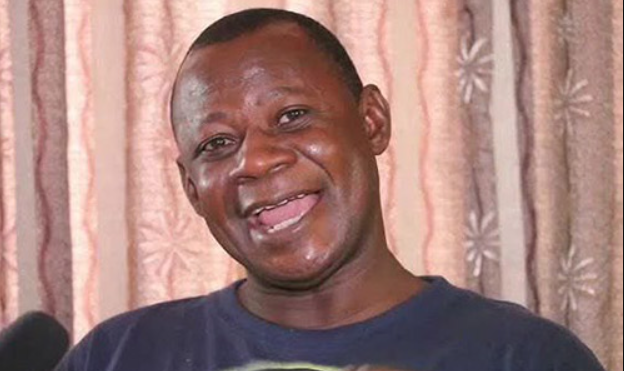
The Nigerian Labour Congress (NLC) turned the quiet town of Ifo into a sea of red flags, clenched fists, and revolutionary chants on Thursday as comrades, friends and workers gathered to pay thunderous tributes to one of labour’s brightest flames, Abiodun ‘Fidelista’ Aremu, the fearless organiser, thinker and teacher whose sudden death has shaken the nation’s activist community to its core.
“This is not a funeral,” declared Joe Ajaero, president of the NLC, in tribute read by the Acting General Secretary of the Congress, Benson Upah. “This is a roll call of the living, and, though our General has fallen, his spirit still answers ‘Present!’ among us.” The gathering roared in response, fists raised, voices echoing: “Aremu, presente!”
Aremu, who was killed in a brutal hit-and-run incident, was remembered not as a victim, but as a soldier of the people who died in the line of duty.
“He was snatched from our ranks in a manner as cruel as the system he fought to dismantle,” the NLC statement read. “But they can break the body, they can never extinguish the ideas for which that body stood.”
For many, Aremu represented the very soul of Nigeria’s labour resistance, a man whose life intertwined intellectual depth with street-level struggle.
“He was an organic intellectual,” Ajaero said, “a man whose classroom was the picket line, whose pen was the mobilised masses, and whose thesis was justice for the working class.”
Indeed, Aremu’s contribution to the labour movement stretched far beyond slogans. He was one of the brains behind LASCO (Labour and Civil Society Coalition) and the Joint Action Front (JAF) — two powerful platforms that forged solidarity between workers, students, traders, and civil activists.
“He built bridges where others built barriers,” recalled Hassan Soweto of the Education Rights Campaign. “He knew the chains binding us could only be broken by unity.”
He also believed deeply in the ideological training of the next generation. His founding of the Amilcar Cabral Institute of Ideological Studies (ACIS) became a legacy project aimed at raising cadres armed not with guns, but with ideas.
“He was convinced that the battle for Nigeria’s soul would be won in the minds of the youth,” said Tokunbo Korodo, a longtime ally. “Through ACIS, he left us a weapon no bullet can silence consciousness.”
Beyond Nigeria, Aremu was an internationalist who embodied the spirit of solidarity across borders. His leadership in the movements for the liberation of Western Sahara and solidarity with Cuba earned him the affectionate nickname ‘Fidelista’ — a tribute to his ideological kinship with Cuba’s late leader, Fidel Castro. Just weeks before his death, he had led a symposium in Abuja to mark Castro’s passing. “We didn’t know it would be our last outing with him,” Ajaero reflected solemnly.
Aremu was also a passionate historian of the labour movement, championing the immortalisation of labour icons such as Pa Michael Imoudu and Kolagbodi. Through the Kolagbodi Foundation, he preserved the memory and lessons of Nigeria’s labour vanguard. “He never allowed us to forget where we came from,” said Omotola Adewale. “He was our bridge to the movement’s past — and the torchbearer for its future.”
As the sun dipped over Ijako in Sango Ota, Ifo axis, the NLC’s leadership turned grief into a renewed call to struggle.
“The greatest tribute we can pay him,” the statement declared, “is not in our tears but in our actions.” The crowd chanted in response: “The struggle continues, until liberation is complete!”
To his family, the NLC offered both comfort and solidarity. “He was your father, your husband, your pillar,” Ajaero said, addressing Aremu’s widow and children. “But he was also ours — our comrade, our leader, our teacher. We promise his mission will not be abandoned.”
In death, Aremu joins the pantheon of revolutionary ancestors, immortal among those who gave their lives for a just Nigeria. “His body has fallen,” the Congress concluded, “but his ideas and his zeal remain invincible. Nigerian workers will remember. Nigerian masses will rise.”
As the final salute echoed, “Abiodun Aremu, Presente!” tears mixed with resolve, the banners fluttered once more, red against the dimming sky, and from the crowd came a defiant whisper that soon grew into a chant:
“Let the cadre arise! Let a thousand Aremus bloom!”