Follow Us on Google
By Adewale Sanyaolu
The Nigerian Midstream and Downstream Petroleum Regulatory Authority (NMDPRA) has called for the establishment of an African fuel price benchmark.
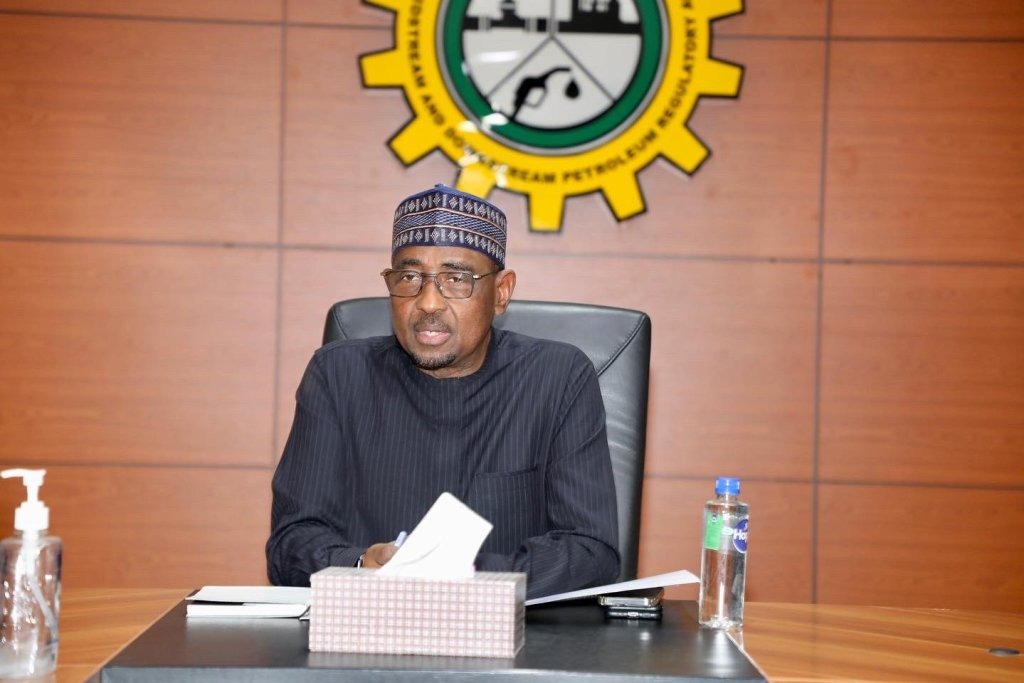
Chief Executive Officer(CEO) of NMDPRA, Mr. Rabiu Umar, stated this on Thursday ahead of the second West Africa Refined Fuel Conference scheduled for August 11 and 12 in Abuja, with the theme: “Funding West Africa Infrastructure & Distribution to Create a Transparent Market for Regional Price Benchmarks,”.
Umar argued that the continent can no longer continue to rely on pricing indices determined outside its borders despite its growing refining capacity.
The NMDPRA boss said Africa remains one of the world’s largest producers of crude oil, yet prices for much of its refined petroleum products are still benchmarked against international indices in Europe, the United States and the Gulf, describing the development as inconsistent with the continent’s expanding role in global energy markets.
Umar, said every major energy-producing region already operates a recognised pricing benchmark, adding that Africa should establish its own reference market to improve price discovery, deepen regional trade and attract investment.
“Every region in the world today has its own pricing benchmark. Whether you’re talking about Europe, America, the Mediterranean or the Gulf countries, there is a trading index that reflects the realities of that region and Africa should not be an exception,”.
He explained that regional benchmarks take account of local demand and supply dynamics, transportation costs and logistics, enabling prices to reflect market realities rather than external conditions.
According to him, Europe’s Amsterdam-Rotterdam-Antwerp (ARA) trading hub has become the continent’s principal pricing and supply centre, providing a model that West Africa should emulate.
“The whole point of having a regional pricing benchmark is to create a hub where activities within a region are concentrated. That improves market discovery and ensures prices accurately reflect regional realities,” he said.
Umar noted that the rapid expansion of refining capacity across Africa, particularly with facilities such as the Dangote Petroleum Refinery, has strengthened the case for creating a continental pricing benchmark.
“We are moving towards refining more of our petroleum products within Africa. The more we refine locally, the more relevant it becomes to establish our own reference pricing and create competitive advantages, particularly within West Africa,” he said.
He added that while Lomé currently serves as a reference point for parts of the regional market, the emergence of large refining hubs could eventually shift that role elsewhere.
“Today, we have Lomé. Tomorrow, who knows, we may have that reference price move to Lagos or somewhere around there,” he said.
The NMDPRA boss stressed that developing a regional pricing benchmark would require substantial investments in infrastructure, warning that increased refining capacity alone would not guarantee efficient petroleum trade.
“Infrastructure is the single most important aspect of the oil and gas industry. You can produce all you want, but if you cannot move products to the market, then you have a problem,” he said.
He identified inadequate port capacity, shallow draft depths, limited pipeline networks and weak logistics infrastructure as major constraints to regional petroleum trade, while citing the West African Gas Pipeline as evidence that cross-border infrastructure can drive energy integration.
Umar also called for harmonised fuel quality standards across African countries, saying varying product specifications remain a major obstacle to regional trade.
“If the product used in Nigeria is materially different from that used in neighbouring countries, then it becomes difficult to move products freely across borders,” he said.
Responding to questions on fuel quality, he maintained that Nigeria currently produces cleaner petroleum products than several countries in the region, noting that domestic refineries operate with sulphur specifications of no more than 50 parts per million (ppm), compared with up to 200 ppm in some West African markets.
He further credited the Dangote Petroleum Refinery with strengthening fuel availability in Nigeria and neighbouring countries, saying the refinery helped cushion supply disruptions during the Strait of Hormuz crisis.
“Thanks to the Dangote refinery, we saw how supply into the local market remained stable despite the Strait of Hormuz crisis. We have also seen products reaching neighbouring countries, strengthening regional collaboration,” Umar said.
He disclosed that this year’s West Africa Refined Fuel Conference, organised by NMDPRA in partnership with S&P Global Commodity Insights and the West Africa Regulators Forum, will focus on attracting investments into pipelines, storage terminals, marine infrastructure, logistics corridors, digital commodity exchanges and other assets required to establish a transparent regional petroleum pricing and trading hub.
According to Umar, the inaugural conference held last year had already delivered significant outcomes, including the establishment of the West Africa Regulators Forum, the publication of West African reference prices and the opening of S&P Global Commodity Insights’ regional office in Abuja.
He said this year’s edition would build on those achievements by promoting investments that would improve market transparency, strengthen cross-border petroleum trade, reduce supply costs and lay the foundation for Africa’s first credible regional petroleum pricing benchmark.