Follow Us on Google


• Says PR professionals must prioritise human judgement, accountability, moral courage
________________________________________________________________________
From Juliana Taiwo-Obalonye, Abuja
The Nigerian Institute of Public Relations (NIPR) has warned that artificial intelligence (AI) is making deception cheaper, faster and increasingly convincing, urging public relations professionals to strengthen ethical standards, accountability and human judgement in an era of technology-driven communication.
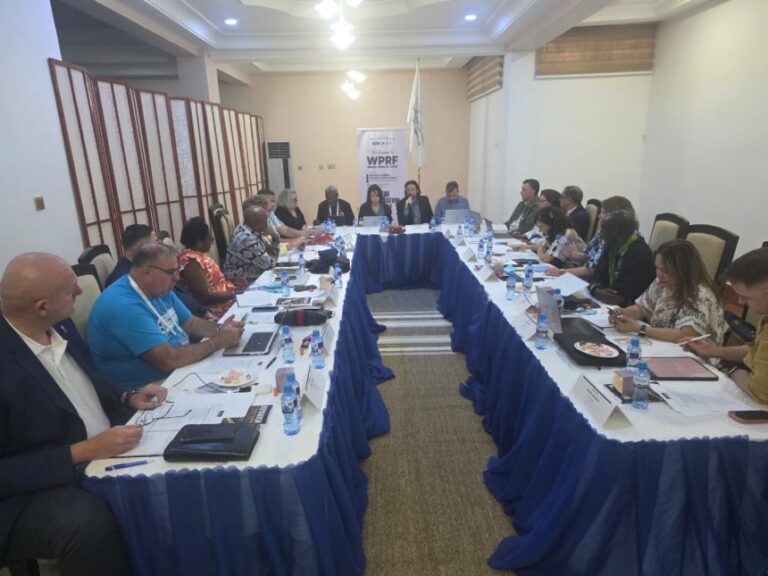
Nigeria’s Vice President of NIPR, Emmanuel Dandaura, gave the warning while delivering a presentation titled “Redefining Public Relations: Nigeria’s Gold Proposition for a Changing World” at the Global Alliance World Public Relations Forum in Abuja, themed “Responsible Communication: The Voice of the World”.
He said the rapid advancement of artificial intelligence, alongside the proliferation of misinformation, disinformation and malinformation, had made it increasingly difficult to establish trust in public communication.
According to him, the growing capacity of machines to generate information and persuasive content meant that public relations professionals must offer more than message production to remain relevant.
“This matters particularly in an age when artificial intelligence makes deception cheaper, faster, and increasingly convincing,” he said.
Dandaura maintained that the enduring value of public relations practitioners must lie in their ability to exercise sound judgement, uphold accountability, demonstrate moral courage and counsel institutions towards responsible conduct.
“Our competitive advantage must remain our ability not just to produce persuasive content, because machines can do that better, but most importantly, our enduring value must lie in judgment, accountability, moral courage and the ability to counsel institutions toward responsible conduct,” he said.
He argued that the challenge confronting the profession went beyond technological disruption, pointing to a widening gap between the growing volume of communication and declining public confidence.
“We communicate so much, yet we struggle so profoundly to trust one another,” he observed.
He questioned why trust had become increasingly fragile despite the availability of more communication platforms, sophisticated technologies and powerful algorithms.
The NIPR Vice President said the development underscored the need to redefine public relations from a profession primarily concerned with publicity and strategic communication to one that exercised strategic leadership and promoted responsible institutional behaviour.
Other News
He disclosed that the NIPR Governing Council adopted a new definition of public relations on July 22, 2025, as “a strategic leadership role that builds trust, reputation, relationships and drives inclusive development through ethical, transparent and respectful communication”.
Explaining the new definition, Dandaura identified five key elements: strategic leadership, trust, inclusive development, cultural respect, and ethics and transparency.
He said public relations practitioners should be involved in institutional decision-making processes from the beginning, rather than being invited only after decisions had been taken to manage public reactions.
According to him, involving practitioners at the communication stage after major decisions have been concluded compromises their ability to ensure responsible communication.
He also stressed that institutions must demonstrate responsible conduct rather than rely on favourable publicity to secure public confidence.
“An institution can enjoy visibility without enjoying credibility. It may achieve favourable publicity without public confidence,” he said.
Dandaura further challenged practitioners to make inclusive development a central component of their responsibilities, arguing that organisations must create value beyond their immediate institutional interests.
He said corporations could not claim to enjoy good community relations when host communities bore the costs of their operations without meaningful participation or benefits.
On cultural respect, he said African societies had historically employed consultation, mediation, storytelling and consensus-building to sustain relationships and social confidence, long before public relations became an established profession.
He urged practitioners to respect the cultural contexts through which different communities interpret information and construct meaning.
He emphasised that ethics and transparency must remain central to professional practice, not optional additions, particularly as artificial intelligence increased the sophistication of deceptive communication.
“The future of public relations is not simply about communication and how to communicate better. It is indeed about helping humanity to trust better, relate better and live better,” he said.