Follow Us on Google

• Call for ethical communication, accountability, inclusion in AI-driven world
• Urge PR practitioners to challenge falsehoods and give young people seat at the table
___________________________________________________________________________
From Juliana Taiwo-Obalonye, Abuja
Public relations professionals from different parts of the world have warned that misinformation and disinformation increasingly threaten public trust, weaken institutions and deepen divisions in societies. They called for greater ethical responsibility, transparency and accountability in public communication.
They also urged communication practitioners to leverage their influence to promote truthful information, strengthen social cohesion and ensure that people with disabilities and other marginalised groups are not excluded from access to information.
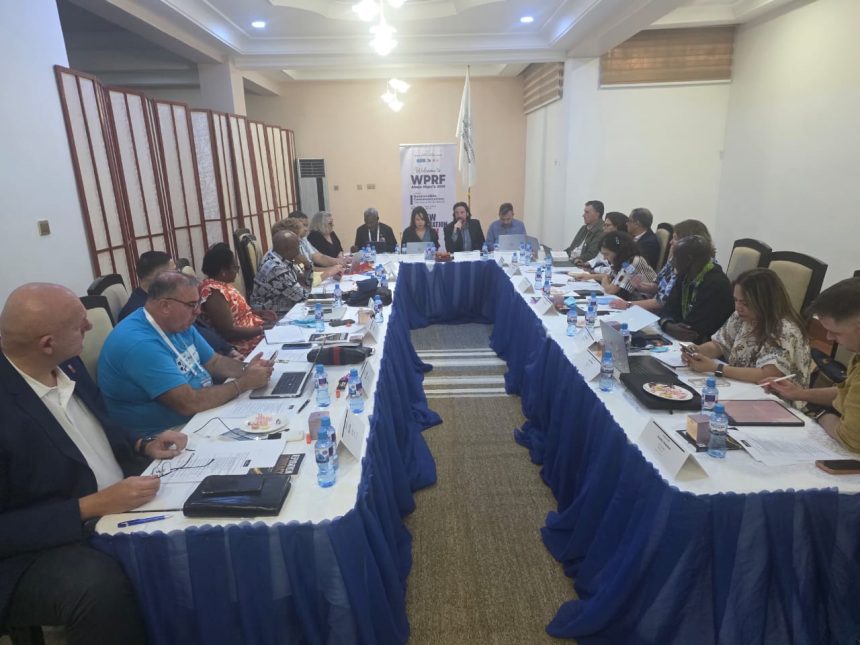
The experts spoke during a panel session titled “Misinformation and Social Cohesion: Rebuilding Trust through Responsible Public Relations” at the Global Alliance World Public Relations Forum (WPRF) in Abuja.
The panel featured the Chief Executive Officer of the Chartered Institute of Public Relations, United Kingdom, Mr Alastair McCapra; the Chief Executive Officer of Ardent Communications and President of the Public Relations Society of the Philippines, Ms Ana Pista; an Enterprise AI Governance Architect from Egypt, Dr Mohamed Hussien Abdelaziz; David Obinna Anyaele of the Abia State Disability Commission; and Australian communication expert Adrian Cropley.
The session was moderated by Peter Mutie, Chief Executive Officer of Peterson Communications Limited, Kenya.
Speaking on the growing threat of misinformation, Pista said the spread of false information fuelled division, weakened institutions and eroded public confidence, particularly as artificial intelligence continued to transform the communication landscape.
She said public relations professionals had a critical responsibility not only to correct disinformation but also to promote truthful communication, ethical practices, transparency and accountability.
Pista argued that professionalising public relations had moved beyond an industry aspiration to become a societal responsibility, given the profession’s influence in shaping narratives, public opinion and institutional reputations.
“With the power comes the responsibility to protect the truth,” she said, advocating stronger professional standards, ethics, education and responsible digital governance.
She added that responsible public relations should not seek to control people’s thinking but provide them with truthful information to enable them to think, decide and act responsibly.
On his part, Anyaele said responsible communication must go beyond the accuracy of information to address accessibility, warning that people with disabilities were often excluded when communication materials were not provided in formats they could understand.
He said a message could be factually correct but remain inaccessible to a deaf person without sign language interpretation or a blind person without audio alternatives.
Anyaele cited Nigeria’s more than 35 million persons with disabilities, warning that the failure to make public information accessible left millions vulnerable to exclusion.
“Responsible communication must be for all. There is nothing about us without us,” he said.
He maintained that communication processes and publications must be designed to accommodate everyone, stressing that exclusion from information was a form of injustice.
He commended the Independent National Electoral Commission (INEC) for its efforts to make its communication mechanisms more inclusive and called on government institutions at federal and state levels to strengthen accessibility.
Anyaele also welcomed the participation of persons with disabilities at the WPRF, noting that the provision of sign language interpretation had helped make the conference more inclusive.
Other News
Contributing, Cropley cautioned against the tendency to dismiss every disagreement or expression of opinion as misinformation, saying communication professionals must distinguish between falsehood, legitimate criticism and differing perspectives.
He said rebuilding public trust required establishing the credibility of messages through facts, background information and proper context.
According to him, public relations should be about building relationships rather than merely controlling narratives, particularly in a post-truth environment where people increasingly questioned information from institutions and authorities.
Cropley said emotional intelligence and the ability to build meaningful connections would be critical to restoring confidence and bringing communities together.
On the ethical challenges confronting the profession, he said practitioners must understand how ethical principles applied within the specific organisational, national and cultural contexts in which they operated.
He also emphasised the need for continuous education and a stronger conversation around morality, arguing that responsible communication required more than simply adhering to written professional codes.
Abdelaziz identified the growing gap between what technology, particularly artificial intelligence, makes possible and what professional conscience permits as one of the greatest ethical challenges facing public relations.
He advocated a combination of emotional and moral intelligence to guide practitioners in determining what is right and wrong in their use of emerging technologies.
McCapra, in his contribution, warned of a widening disconnect between organisations and younger generations, particularly Generation Z, saying communication professionals must understand their expectations, concerns and relationship with technology.
He noted the apparent contradiction in the attitude of young people towards artificial intelligence, explaining that while they were among its biggest users, many also feared that the technology could undermine their career prospects and future employment.
He urged practitioners to listen before speaking, stressing that even open and transparent communication could fail to gain public acceptance if organisations did not understand their audiences.
Cropley, however, challenged communication professionals to be courageous enough to speak up when organisations engaged in questionable practices, rather than simply complying with instructions from their employers.
He said practitioners must be prepared to challenge wrongdoing, even when doing so could be uncomfortable or threaten their professional interests.
According to him, the growing influence of artificial intelligence should also push public relations professionals towards more strategic advisory and leadership responsibilities within organisations.
Pista also called for greater involvement of young professionals in shaping policies on ethics, disinformation and responsible communication.
She said younger generations needed to be heard and given meaningful opportunities to contribute to decisions that would shape their professional future.
“They should have a seat at the table because, at the end of the day, the future is theirs,” she said.
The panel discussion formed part of the knowledge conference and parliamentary sessions of the 2026 Global Alliance World Public Relations Forum, themed “Responsible Communication: The Voice of the World”.