 Follow Us on Google

• Says subsidy removal, forex reforms restored investor confidence, paved way for shared prosperity
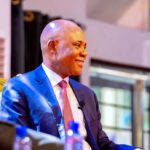
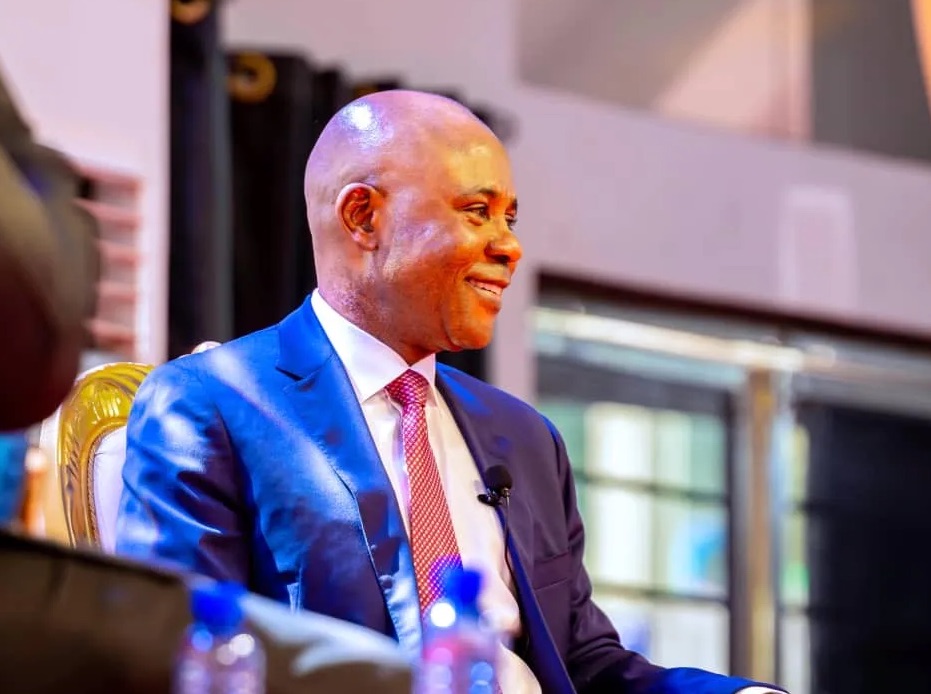
Governor Peter Mbah of Enugu State has said Nigeria was on the brink of economic collapse before President Bola Tinubu assumed office in 2023, arguing that the removal of fuel subsidy and unification of the foreign exchange rates were difficult but necessary decisions that saved the country from a looming economic catastrophe.
Mbah said successive administrations had merely postponed the inevitable by sustaining an economically ruinous subsidy regime and a foreign exchange system that encouraged corruption, arbitrage and loss of confidence in the naira, insisting that Tinubu demonstrated uncommon political courage by confronting both challenges at the beginning of his administration.
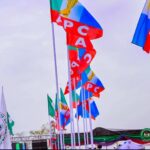
The governor spoke during the launch of As Tinubu Mbah Moves (ATM), a political support group convened by the Minister of Innovation, Science and Technology, Kingsley Udeh, to mobilise support for the re-election of Tinubu and Mbah in 2027.
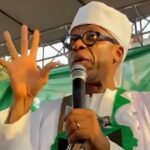
Addressing supporters at the event, Mbah said the President could have chosen the politically convenient option of maintaining the status quo but instead embarked on reforms he considered essential to securing Nigeria’s economic future.
“It would have been a lot easier for any leader to just continue with the status quo and carry on on the basis of business as usual. But for Bola Ahmed Tinubu, it was business unusual that led to the bold initiatives.
“As a person who had played very actively in the oil and gas sector, I had written quite a lot of features and articles arguing against the fuel subsidy regime long before now, for it was clear to me, even from the point of a major player in that sector, that the subsidy regime was not sustainable because of the economic devastation it was causing to us as Nigerians. We were just basically postponing the evil day.
“We were just digging our poverty pits continually. We were actually digging deeper into that pit of poverty. And it would have taken a very courageous leader in his first term to say, ‘Look, if we have to build for the future, if we have to think about our children, then we must take out the subsidy and we must also unify the exchange rate regime.’”
Mbah also criticised the foreign exchange system inherited by the Tinubu administration, describing the wide disparity between official and parallel market exchange rates as a major source of corruption that enriched a privileged few at the expense of the wider economy.
According to him, the situation had deteriorated to the point where Nigerians were increasingly unwilling to hold their earnings in naira, a development he said reflected a dangerous erosion of confidence in the national currency.
“We got to a point in this country where even salary earners, once they get paid, would run to the bureau de change to change it rather than hold their salary in naira. Confidence was completely eroded in the naira. Nobody wanted to touch it with the tip of their finger. And that was the recipe for a failed nation.
“If you wanted to do a study or research of any failed nation, it is when the country, the citizens themselves, begin to lose confidence in their currency. And that was the environment that this President inherited.
“It was a major cesspool of corruption. The arbitrage was obvious and people were being taken advantage of. What was happening between the official and the parallel market was terrible. And some people were benefiting from that arbitrage at the expense of the economy. But it took this President’s understanding of the economy to be able to make those bold decisions,” he said.
The governor maintained that the reforms had begun to stabilise Nigeria’s macroeconomic environment, restore investor confidence and attract foreign direct investment, particularly in the oil and gas sector, although he acknowledged that the benefits had yet to translate fully into improved living conditions for ordinary Nigerians.
He explained that sustainable economic growth depended largely on private capital, which could only be attracted through stable policies, improved foreign reserves, a credible foreign exchange system and an investment climate that guaranteed reasonable returns.
“This essentially is something that is largely driven by private capital. But government enables it by policies because I can tell you that private capital does not go to where you do not have stability.
“If your macro indicators are under pressure; if you have not addressed your foreign reserve, your foreign exchange regime, your inflationary rates, and all that, you do not have any chance of attracting private capital because private capital is blind. It is not emotional. It goes to where it makes return on investment, where it can be guaranteed some high level of security.
“Because we did not have all those before now, private capital was not coming. So, what the bold policies and initiatives this President took have done is that those macro pressures have largely been eased. And what you are now witnessing in our economy is a growth trajectory.”
Mbah said the renewed investor interest was already translating into concrete investment commitments rather than mere expressions of interest, pointing to final investment decisions involving billions of dollars across several sectors.
“So, private capital is now looking towards our country. You can see quite a number of FDI deals being closed – not MoA (Memorandum of Agreement) or MoU (Memorandum of Understanding). These are final investment decisions being made across different sectors, particularly in the oil and gas sector. You can see billions of dollars coming towards this direction today.
“People who have dollars are now going back to exchange their dollars because that confidence has been restored,” he said.
The governor expressed optimism that the next phase of the administration’s economic programme would deliver shared prosperity through increased household incomes, employment opportunities and improved living standards, as investment-driven growth gradually filtered through to ordinary Nigerians.
“So, now that we have stabilised our macro indicators, we have now started witnessing growth, albeit not to the level we aspire.
“The next thing is going to be shared prosperity because you are going to see that growth cascade. You are going to see it get to the households. You are going to see it create employment. So, our unemployed youths would be gainfully employed. That is the way it works,” he explained.
Citing developments in Enugu State, Mbah also credited Tinubu’s subsidy removal policy with freeing resources that would otherwise have been spent on fuel subsidy, thereby increasing the financial capacity of state governments to undertake infrastructure projects and other development programmes.
He argued that abandoning the reforms midway would undermine the sacrifices already made by Nigerians and jeopardise the prospect of achieving sustainable economic recovery.
“Nations are not built by abandoning challenges halfway through. If we have gone through this whole process of difficult periods when it appeared as if all was doomed to a point where we are beginning to see the light at the end of the tunnel, we cannot abandon what has been started. No great sailor abandons his ship because of a rough sea, mid-sea. You have to sail to get to your destination,” he said.
Mbah consequently urged Nigerians to support Tinubu’s re-election in 2027 to enable him to consolidate the reforms, while charging members of the ATM support group to take the message of the administration’s economic policies and infrastructure interventions, particularly in the South-East, to voters.
Meanwhile, the Minister of Innovation, Science and Technology, Kingsley Udeh, said the support group would concentrate its mobilisation efforts on voters outside the All Progressives Congress (APC), with particular attention to the 4,145 polling units across Enugu State.
Udeh explained that the group would deploy technology to register supporters, track their participation and coordinate mobilisation activities through an online portal as part of preparations for the 2027 general elections.