Follow Us on Google

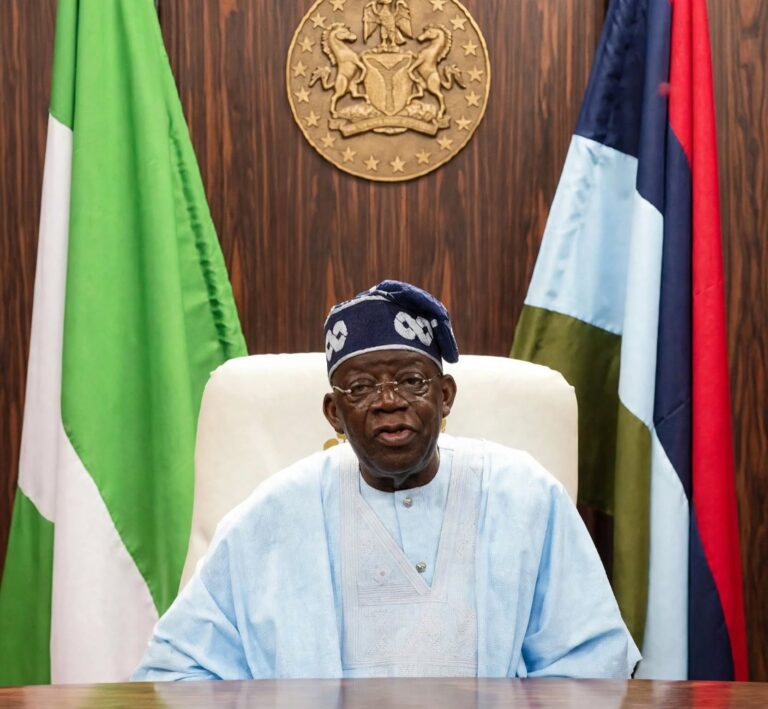
Despite warnings by experts against excessive borrowing, President Bola Tinubu’s request to borrow an additional $37.2 billion has been approved by the Senate. There are fears in some quarters that, if the borrowing binge is not curbed, the future of the country would be mortgaged. For the first time, Nigeria’s debt stock has increased to N187 trillion, and may reach N200 trillion by the end of 2025. Until the approval of the new loan, Nigeria’s total debt profile stood at N149.39 trillion.
This has arisen from a combination of factors that include extensive external borrowing, currency depreciation, inadequate financial governance and reckless spending. The latest external borrowing plan approved by the Senate comprised US$21billion, €2.2billion, and ¥15billion from China’s credit institutions. In a letter addressed to the Senate President, Godswill Akpabio, President Tinubu said the loans are meant for the 2025-2026 fiscal cycle. This has thrown up fresh concerns about Nigeria’s rising debt.
Before the recent rebasing of the economy by the National Bureau of Statistics (NBS), the first time since 2014, Nigeria’s nominal Gross Domestic Product (GDP) was N269.2 trillion (about $180billion). Figures from the Central Bank of Nigeria (CBN) showed that the federal government had borrowed about 70 per cent of the nation’s previous GDP. Even after rebasing, an exercise that the Manufacturers Association of Nigeria (MAN) said has shown ‘no evidence of economic progress,’ Nigeria’s GDP has risen to N372.8trillion (about $243.7billion), an expansion of 18.3 per cent.
However, statistics show that the present administration has borrowed over 50 per cent of the new GDP, the highest debt-to-GDP ratio in the nation’s history. The year-on-year increase is about N27.72trillion, representing quarter -on-quarter rise of about N4.72trillion. In 2024, Nigeria’s debt payment rose to a 4-year high of $4.65billion, reflecting federal government’s continued reliance on borrowing. Data from the CBN revealed that last year, the government spent $4.65billion in debt servicing, a 32.9 per cent year-on-year increase compared to $3.5billion spent in 2023.
The last time the government spent more money to service debt was in 2020 when debt payment was $5.8billion. The lowest debt payment was recorded in 2021 when $2.1billion was spent on servicing debts. After then, debt payment rose again to $2.5billion in 2022. The rise in debt obligations also resulted in the uptick in the Foreign Exchange (FX) market during the period. According to figures from NBS, Nigeria’s external debt in the first Quarter (Q1)2024 stood at N56trillion (about $42.12billion), while total domestic debt was N65.65trillion ($49.35billion).
The surge was attributed to escalating debt level and higher borrowing costs in the international debt market. This was driven mainly by global monetary tightening aimed at controlling inflationary headwinds. The latest loan may face repayment challenge. Last year, the Senate approved $2.2billion foreign borrowing to cover 2024 budget shortfall. This comprised of $1.7billion in Eurobonds and $500million in Sukuk. Eurobonds are long-term debt instruments, while Sukuk is an Islamic or Sharia compliant investment certificate that represents a portion of ownership in a portfolio of eligible existing or future assets. The attraction in Sukuk loan is that it is interest-free.
Although there is nothing wrong with borrowing, Nigeria’s binge borrowing is disturbing. The government should watch the excessive borrowing before the country is thrown into unsustainable debt. We must avoid falling into debt repayment default trap. There are many African countries that have had their precious national assets taken over by the institution lender as a result of default in loan repayment. If our excessive borrowing is not checked forthwith, the country may witness soaring inflation and strained public finances.
To ensure long-term economic stability, the government should balance debt management with improved revenue generation. It should also control inflation. Failure to do this will lead to elevated debt-to-service cost and exchange rate volatility. Let the government be cautious in borrowing. The loan must be tied to projects that will have positive impact in the lives of the people. The National Assembly should appraise every loan request from the executive arm of government, even if the country has not exceeded its borrowing threshold.
When borrowing becomes expedient, the primary focus should be on productive projects capable of repaying the loans. Besides, such loans should be capable of accelerating economic growth and employment opportunities. As millions of Nigerians are grappling with economic hardship arising from the federal government’s harsh economic policies, let the government reduce its penchant for loans.