Follow Us on Google
By Pat Onukwuli
There is something deeply troubling about a country where millions dream of owning a decent home, yet it remains out of reach for most. In Nigeria, housing is too often reduced to building, counting units and commissioning estates. But a home is more than walls and a roof; it is security, dignity, stability and access to the basic services that make life possible.
Nigeria’s housing deficit remains enormous, with recent estimates placing the shortfall at about 15 million units and millions more homes structurally inadequate. Rapid population growth and urbanisation are worsening the crisis. Yet the deeper failure is conceptual: housing is still treated mainly as construction, with too little regard for water, electricity, broadband, roads, drainage, schools, healthcare, security, transport and recreation.
A house without these services is neither truly affordable nor liveable in the twenty-first century. A family may buy cheaply on the city’s outskirts, only to lose much of its income to commuting. An estate may look impressive at commissioning yet depend on generators, boreholes and poor roads. Building houses without building communities remains one of Nigeria’s great housing failures.
Again, housing need is not the same as effective demand. Nigeria may face a severe housing shortage, but weak purchasing power sharply limits affordability. The NBS’s latest multidimensional poverty survey classified about 133 million Nigerians, 63 per cent of the population, as poor. At the same time, the World Bank’s 2025 assessment put about 30.9 per cent below the national poverty line. For households struggling to afford food and other essentials, a mortgage is rarely a priority. Nigeria’s vast housing deficit, therefore, should not be mistaken for an equally vast pool of bankable demand.
Poverty reduction must, therefore, be at the heart of housing policy. A security guard in Lagos struggling with food, transport, school fees and rent, or a widow in Kano supporting her children through petty trading, cannot meaningfully consider a house costing tens of millions of Naira “affordable.” The problem is not aspiration but income. Nigeria cannot mortgage poverty; stronger, more reliable household purchasing power must come first.
Several obstacles continue to undermine sustainable housing. Mortgage finance is limited, interest rates are high, land acquisition and title registration remain cumbersome, and construction costs continue to rise. Slow approvals, weak building enforcement, speculative landholding, insecurity, poor planning and inconsistent policies further widen the gap between housing supply and what ordinary Nigerians can afford.
Other News
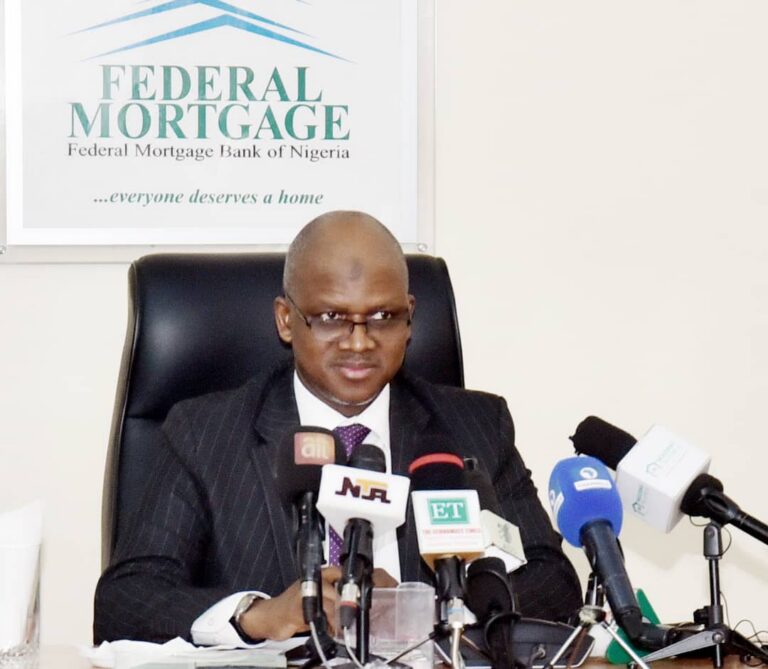
The government has made only marginal efforts. Renewed Hope housing initiatives, Federal Housing Authority projects, and Federal Mortgage Bank schemes are steps in the right direction, alongside projects in Abuja, Kano, and Lagos, and efforts to improve land access and administration. Private developers have also expanded supply, but largely where returns are highest, favouring wealthier buyers over those most in need. The result is a troubling paradox: luxury apartments stand empty while millions lack decent shelter. Nigeria is building real estate faster than it is building inclusive cities, and the response remains far too small for a deficit measured in millions of homes.
Other parts of Africa offer useful lessons. Morocco’s Cities Without Slums programme combined public land, finance, serviced sites, and urban upgrading, rather than treating housing purely as construction. South Africa demonstrated that mass public housing delivery is possible, though its experience also shows the danger of locating poor households far from jobs and services. The lesson for Nigeria is clear: scale matters, but integration matters as much. Housing must be planned alongside transport, utilities, and livelihoods.
The way forward requires a shift from housing policy to human-settlement policy. The government should provide serviced land with roads, drainage, power, water and broadband before or alongside construction. Mortgage finance must be deepened, while rent-to-own schemes, cooperative housing, social rental housing and serviced plots should complement outright home ownership. Land registries should be digitised, approvals simplified, building codes enforced, and major housing developments tied to transport corridors, schools, clinics and employment centres.
Nigeria must also measure success differently. The question should no longer be “How many houses were built?” but “How many people gained access to safe, shousing deficitine ihousing deficitts expressways. It is adequately housed when teachers, nurses, artisans, civil servants, traders and young graduates can reasonably secure decent homes without sacrificing food, education or healthcare.
Nigeria therefore faces a clear choice. It can continue producing roofs without roads, estates without electricity, houses without water, and policies without sufficient results. Or it can recognise housing as integral to economic productivity, social dignity, and national stability. Until ordinary citizens are lifted out of poverty and housing is planned as part of complete communities rather than isolated construction projects, the Nigerian dream of home ownership will remain painfully familiar: a roof beyond reach.
•Dr. Onukwuli, a legal scholar and public affairs analyst, writes via [email protected]